How Stark Raving Dad Simplified His Business With beehiiv
A podcast, newsletter, and community, together on beehiiv.
Table of contents
With his newsletter, website, and podcasts in one place, Issy Butson had more time to help the families listening. Five weeks after migrating to beehiiv, he launched a community that attracted close to 300 parents in its first month.
Here's the story.
At a Glance
Creator: Issy Butson, known as Stark Raving Dad
Publication: Life Without School
Audience: Parents raising or considering raising their children outside of school
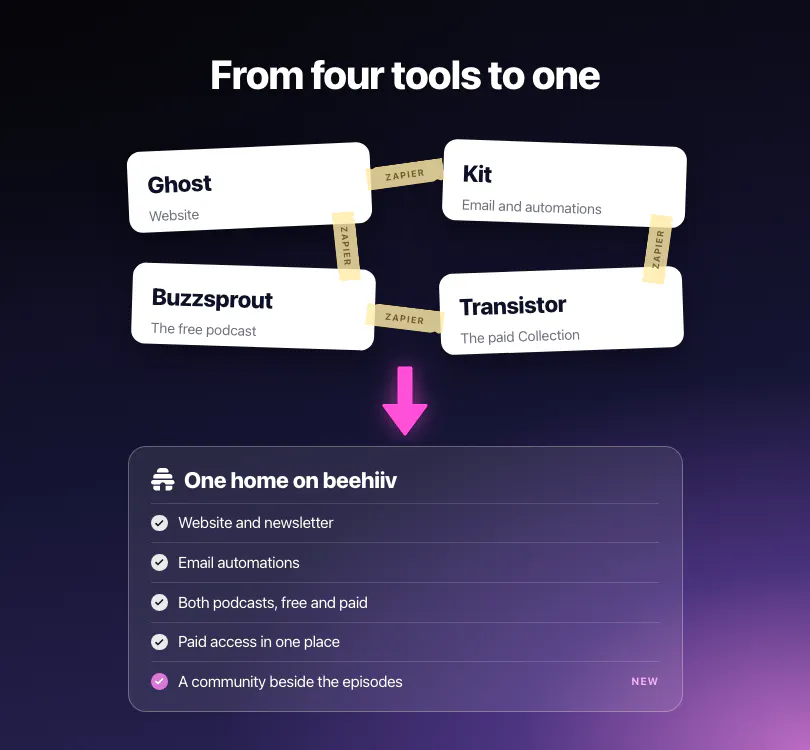
Previous setup: Ghost, Kit, Buzzsprout, and Transistor, connected through Zapier
Migration: 1,200 paying subscribers moved in one week without having to resubscribe
Community launch: Five weeks after moving to beehiiv
First month: Close to 300 paid community members
Membership: $10 per month, with an optional $20 supporter tier
Situation
Listeners Wanted Help Beyond the Episode
Parents would listen to Issy Butson’s ideas about raising children outside of traditional school systems. They would recognize their own worries, rethink an assumption, or want to try something different. Then they would email him.
Issy Butson’s podcast episodes regularly prompted the same kind of message.
“People would get in touch saying, ‘Yes, this makes SO much sense to me, but how would it actually work with MY child?’”
Known as Stark Raving Dad, Issy is a home-educating father of four, with an audience of over 140,000 across social media. His work helps parents think through the everyday realities of learning outside the classroom.
His main offering is a private podcast, “the Life Without School Collection”, with a new in-depth episode every week. Episodes run from 20 minutes to more than an hour, and the catalog includes over 90 episodes.
He also produces the free Life Without School Podcast every few months and publishes a newsletter.
That gave parents plenty to listen to and read. But they also wanted somewhere to discuss what those ideas might look like in their own homes.
For Issy, those messages pointed to a natural next step: a community where he could help families directly, and where parents could learn from one another.
Challenge
Running the Publication Already Took Four Platforms
Before beehiiv, delivering Issy’s work meant keeping several tools connected.
His website lived on Ghost. His emails went through Kit. Buzzsprout hosted the free podcast, while Transistor hosted the paid Collection. Zapier held the setup together “like cellotape,” in his words.
Every episode created a second round of work after the recording was finished: publishing the audio, updating the website, sending the email, and managing access across platforms.
“Researching, writing and recording the episodes is a pretty huge job already, but then there’s publishing them, updating the website, sending the emails, managing access across different platforms etc. etc.”
Launching a community would require time to answer questions, join discussions, and help members find their way around. Issy needed room for that work.
He also had an established paid publication to protect. Moving platforms meant bringing 1,200 paying subscribers with him, without making them go through checkout again.
Solution
Bring Publishing Together, Then Make Space for Conversation
Move the Existing Publication First
In August 2026, Issy moved his website, newsletter, and both podcasts to beehiiv.
With support from beehiiv’s solutions team, the migration took one week. All 1,200 paying subscribers moved without needing to re-enter their payment details or resubscribe.
Consolidating the publication reduced the work involved in delivering each episode.
“Bringing everything into one place has massively cut down the work of delivering my content, giving me more room to help families directly.”
Five weeks after the move, Issy launched the community.
Give the Podcast a Place for Follow-Up Questions
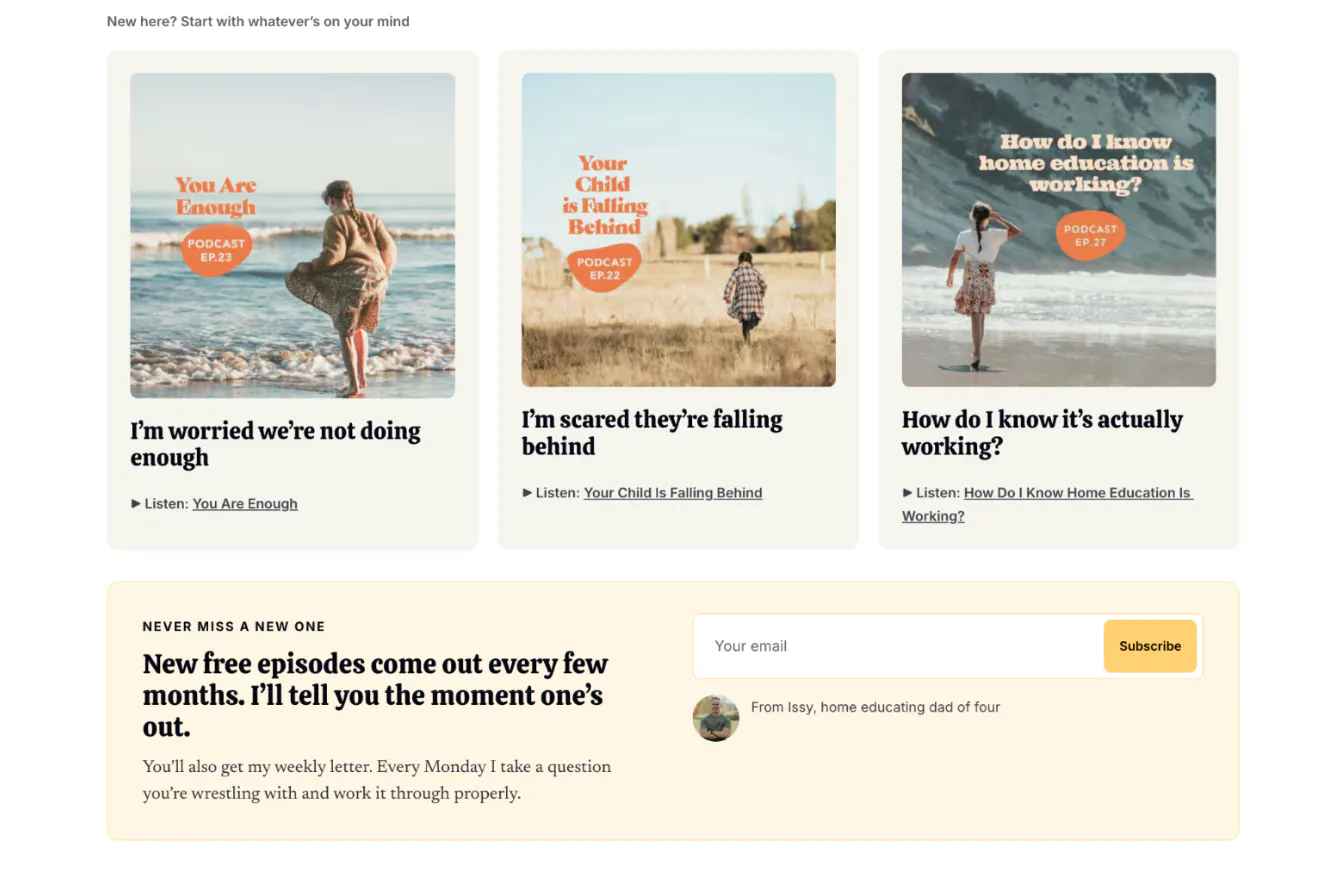
The community became part of the Life Without School Collection.
For $10 a month, members get the full private podcast catalog, a new episode every week, and a space to talk with Issy and other parents. An optional $20 monthly tier lets members contribute more to support the work.
The offer follows the way his audience already uses the podcast. An episode introduces an idea. The community gives parents somewhere to ask about applying it.
“There was so much more to talk about once they’d finished listening, and I wanted somewhere we could do that together. Where I could help families quite directly, and where other parents could join in and share what things looked like in their families too.”
As Issy describes it, the community is “part mentoring space, part gathering space.”
Put the Discussion Beside the Content
Both podcasts and the newsletter sync into the community, so members can discuss an episode or issue where they encounter it.
Issy also gives listeners a starting point.
When “Have we got ‘learning’ all wrong?” arrived on September 26, he left the first comment himself:
“When you’ve listened, I’d love to hear...”
The discussion reached 13 comments. Listeners had a specific invitation to respond, with the episode right there for context.
Keep the Community Easy to Navigate
Issy’s community has four channels, three of which are read-only. Members start their own threads in “Questions & conversations.”
That gives parents one clear destination for asking questions and joining discussions.
Another channel, “Find your next listen,” helps members navigate the podcast archive.
With more than 90 episodes available, a new member could easily struggle to choose where to begin. Issy describes the catalog as “a lot to be plonked into when you’re already feeling overwhelmed about something.”
Instead of leaving parents to browse episode titles, the channel starts with familiar concerns:
- “Are we doing enough?”
- “Our days aren’t working for us.”
Each concern points to relevant episodes. A parent can arrive with a problem and find a useful starting point, while older recordings continue reaching people who need them.
Results
Close to 300 Paid Members in the First Month
Close to 300 parents joined the paid community in its first month.
More than half of members also added it to their mobile home screens, giving them an easy way to return to conversations from their phones.
The community soon began contributing to Issy’s editorial work, too.
“The podcast is really the heart of my work, and the community is where those conversations continue.”
At the end of September, members started two separate threads about screen time. On October 11, Issy published a newsletter titled “Why complete freedom over screens didn’t work for us.”
The newsletter synced back into the community, where members could continue discussing the subject.
Parents’ questions helped surface a topic worth exploring. Issy’s response then returned to the same place, available to the families already talking about it.
The early results included:
- A one-week migration of all 1,200 paying subscribers.
- No need for existing subscribers to resubscribe.
- Four publishing platforms brought together on beehiiv.
- A community launched five weeks after migration.
- Close to 300 paid community members in the first month.
- More than half of members adding the community to their mobile home screens.
For Issy, bringing everything together reduced the work of running his membership to such an extent that he has been able to redirect meaningful time into supporting his members directly.
What Other Creators Can Take From This
Issy’s community grew out of a request he was already hearing. Listeners wanted help applying the material, and they were contacting him to ask for it.
That gave the community a clear purpose from the beginning.
His setup also makes participation straightforward. Members have one place to start conversations, prompts beneath episodes, and a guide to finding useful material in the archive.
For creators considering a similar move, there are three practical lessons:
Look at the questions arriving in your inbox. Repeated questions can show you what your audience wants to work through together.
Help people take the first step. A specific prompt beneath an episode gives members something concrete to respond to.
Organize your archive around your audience’s needs. A list of common concerns can make older content easier to discover and use.
Issy had spent years creating episodes that helped parents think differently about learning. Bringing his publication onto beehiiv gave him more time to help with what happened after they listened.
Want to bring your newsletter, podcast, and community together? Get started with beehiiv.
Related Case Studies
How Ramp Turns Business Data Into a Must-Read Newsletter
Inside Leading Indicators, the weekly publication bringing readers into Ramp’s world through original research
How AI Central Built a 300,000-Reader Media Brand on beehiiv
Alex Fiore treats his newsletter like an investment portfolio, and beehiiv's data, API, and monetization tools are how he manages it.
How a Newsletter for Senior IT Pros Hit a 52% Open Rate and 2× Ad Revenue in One Quarter
How a Content-First Strategy Turned Readers Into Revenue
