- Home
- Posts
- Creator Commerce Platforms Ranked Best To Worst for 2026
Creator Commerce Platforms Ranked Best To Worst for 2026
Real Costs, Real Tradeoffs, and One Clear Winner for Creators

Moses Agbonmabi
May 19, 2026

How much revenue potential are you missing because your creator commerce platform was not built for how creators earn in 2026?
Most creators I talk to are running three or four disconnected tools just to sell one digital product. One tool for payments, another for delivery, another for your email list, and yet another for analytics. They all work fine on their own, but the moment you try to add a second revenue stream, you're basically starting from zero again.
Another thing I noticed from the creators who actually earn from multiple streams is that they tend to pick one platform that handles subscriptions, products, ads, and audience growth together instead of duct-taping four or five tools into something that sort of works. Once everything lives in one place, launching a new offer takes days, not weeks.
This guide breaks down which platforms actually deliver that, which ones fall apart at scale, and how to evaluate the right fit for the way you work.
Table of Contents
Quick Verdict: Best & Worst Creator Commerce Platforms
If you're short on time, here's where things stand:
Best overall for newsletter creators: beehiiv offers paid subscriptions, Ad Network, Boosts, and digital products with 0% platform revenue cut, all in one tool.
Best for social-first sellers: Stan Store has a built-in clean link-in-bio checkout at $29/month with built-in upsells.
Best for merch and physical goods: Fourthwall acts as the merchant of record, so fulfillment, taxes, and shipping are off your plate.
Best for low-risk testing: With Gumroad, you won't pay a monthly fee, but that 10% cut on every transaction adds up faster than most creators expect.
Worst for scaling: Platforms where fees climb with every sale, and the growth tools don't keep up.
If your earning strategy goes beyond a single income stream (and at this point, it really should), keep reading.
What a Creator Commerce Platform Really Includes in 2026
A modern creator commerce platform should cover all of this without leaving the ecosystem:
Sell digital products. E-books, templates, courses, guides, or any downloadable asset.
Run paid subscriptions. Recurring revenue from premium content your audience actually values.
Earn through advertising. Sponsor placements, ad network integrations, or direct deals with brands.
Grow through referrals. Paid recommendations, Boosts, or affiliate-style income from promoting aligned creators.
Own your audience data. Subscriber lists, engagement metrics, and purchase history that belong to you.
Why Trust Me: With five years of marketing experience, I've honed my ability to develop profitable marketing funnels and campaigns. I share some of my strategies in this article. Feel free to reach out to me on LinkedIn anytime!
How I Evaluated These Creator Commerce Platforms
I looked at revenue flexibility, fee structure (flat pricing vs. per-transaction cuts), audience ownership, ease of setup, analytics quality, and integration depth. Revenue flexibility and audience ownership carried the most weight because they determine whether a platform helps you build a business or just process transactions.
Creator Commerce Platform Comparison Table
Platform | Best For | Monthly Cost | Transaction Fee | Revenue Streams |
beehiiv | Newsletter creators | Free, $49+ | 0% (Stripe only) | 5+ (ads, Boosts, subscriptions, products, referrals) |
Stan Store | Social-first sellers | $29+ | 0% (Stripe only) | 3 (products, bookings, courses) |
Fourthwall | Merch + physical goods | Free, Pro $19+ | 5% on digital/memberships, 0% on merch | 3 (merch, memberships, digital) |
Gumroad | Indie product testers | Free (10% + $0.50 per sale) | 10% + $0.50 direct, 30% Discover | 2 (products, memberships) |
Kajabi | Course-heavy educators | $179+ | 0% (Kajabi Payments) | 3 (courses, coaching, communities) |
Substack | Writer-first subscriptions | Free (10% cut) | 10% of revenue | 1 (paid subscriptions) |
Best Creator Commerce Platforms in 2026
Different platforms excel in different areas, so the right choice depends on how you plan to earn. Here is how the top options stack up across the five main revenue categories.
Digital Products & Downloads

Gumroad is the fastest way to test a product idea because there is no monthly fee, and setup takes minutes, but the 10% fee plus $0.50 per transaction eats into margins quickly once sales pick up.
Stan Store offers a cleaner storefront with flat $29/month pricing and zero platform cut, making it stronger for creators driving traffic from social media.
beehiiv takes a different approach by letting you sell digital products directly inside your newsletter with embedded product blocks, so readers can buy without leaving the email. beehiiv also takes 0% of your revenue.
Subscriptions & Memberships
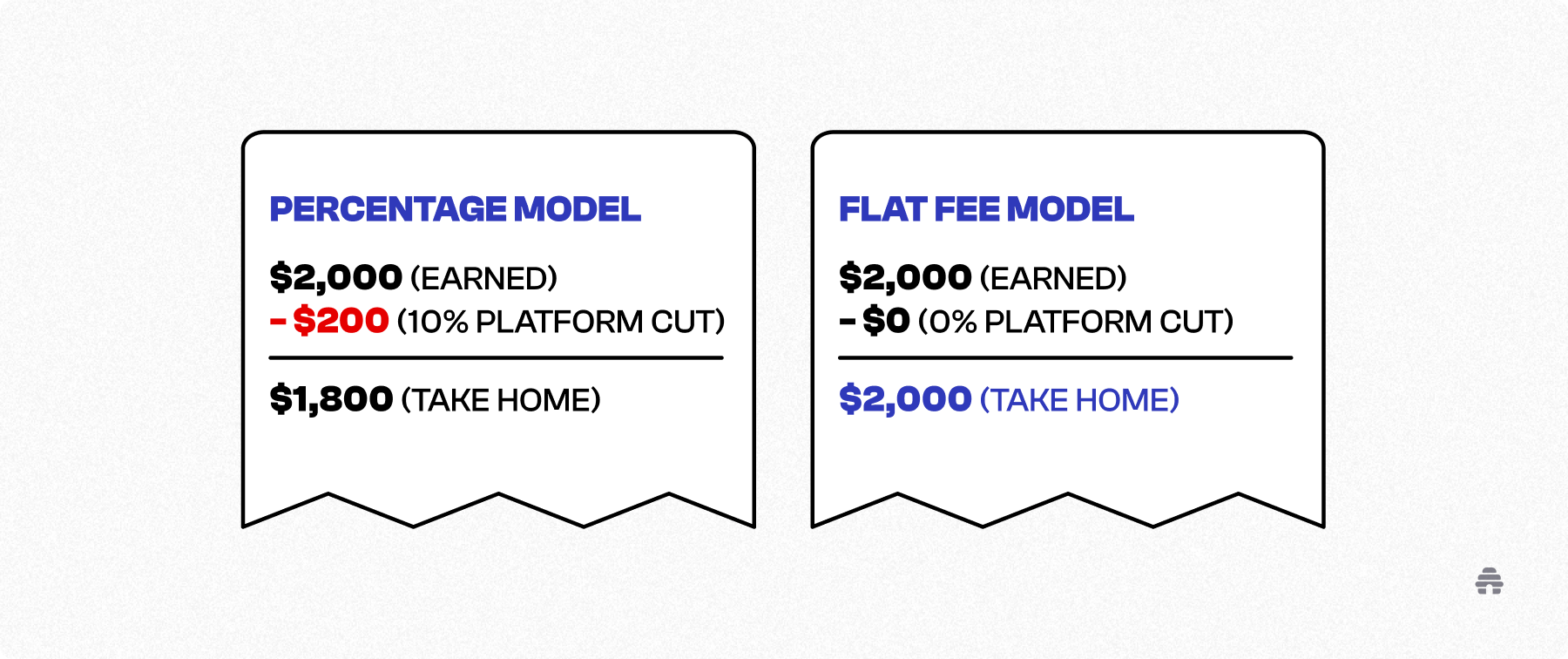
Substack made paid newsletters mainstream and remains the simplest way to start charging for content with no monthly fee upfront. The tradeoff? They take 10% of every dollar your subscribers pay you. So if you're pulling in $2,000/month in subscription revenue, that's $200 gone right off the top, every single month. Over a year, that's $2,400 you never see.
beehiiv charges 0% on paid subscriptions, so the only fees you're paying are Stripe's processing costs. You also get the "Name Your Price" feature, which lets your subscribers choose what they want to pay for premium content.
Kajabi is worth a look if your subscriptions are built around structured courses, but with plans starting at $179/month, it's a much bigger financial commitment upfront.
Sponsorships & Advertising
The beehiiv Ad Network pairs the publishers on its platform with premium brands like Notion, Netflix, and HubSpot, and they take care of everything from sourcing deals to creative delivery, performance reporting, and payouts. This Network currently pays creators over $1 million per month in revenue sharing.
Other platforms in this category either offer no built-in ad solution or require you to source and manage sponsors on your own.
Services & Consulting Offers
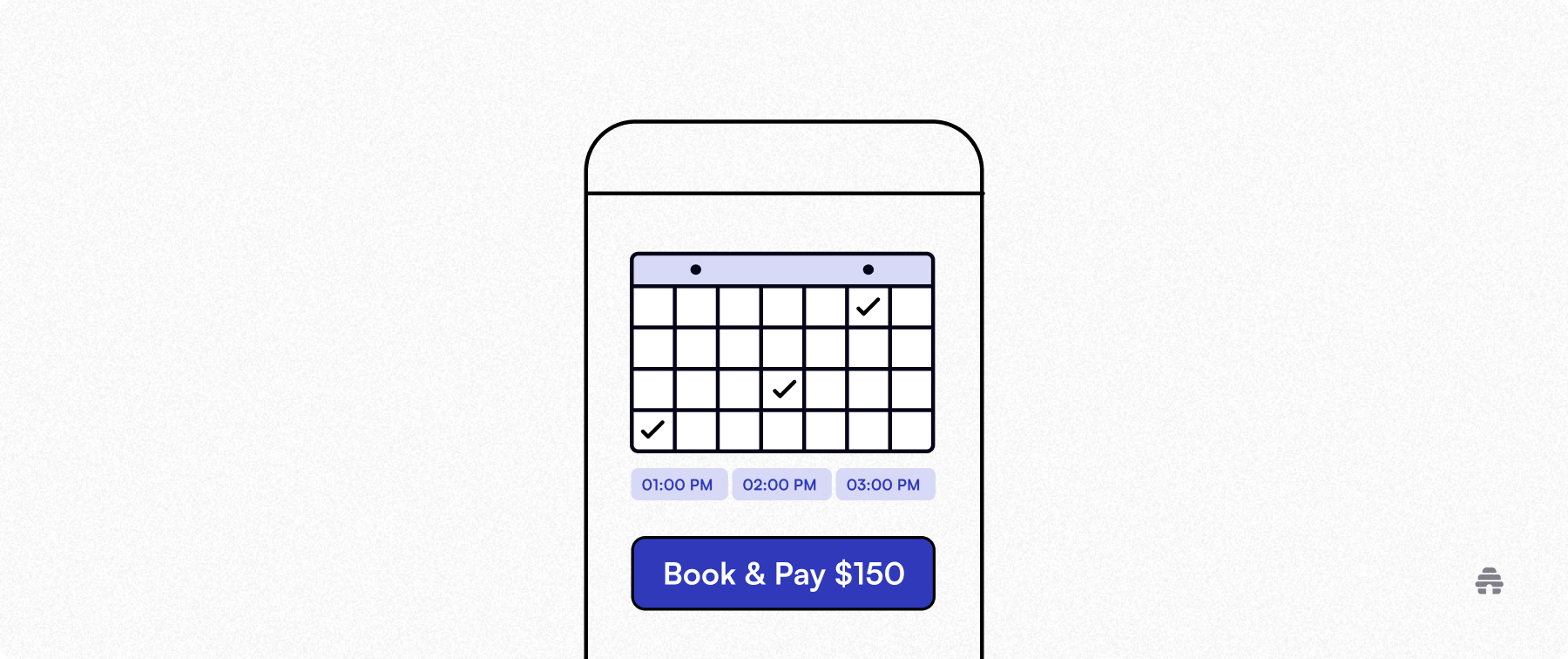
Stan Store has a clear edge for creators who sell coaching, audits, or consulting. It's built-in calendar booking and Zoom integration let buyers schedule and pay in one step without leaving the storefront.
Kajabi also supports coaching products natively, with course delivery and community tools that pair well with one-on-one offers.
beehiiv handles this less natively, though you can link to external scheduling tools from your newsletter or website.
Bundled Creator Offers

The real power move in 2026 is bundling multiple offers together from one platform.
Fourthwall does this well for creators who mix merch with digital products and memberships under one storefront.
beehiiv lets newsletter-focused creators cover more ground for their newsletter, website, digital products, ad revenue, Boosts income, and paid subscriptions, which all exist in the same ecosystem, giving you the chance to handle everything in one place instead of bolting on third-party tools to fill the gap.
The information above gives you the chance to zoom out and look across all five categories to make an informed decision on the tools that’ll work best for you. To reiterate, Stan Store wins for services, Gumroad works for quick tests, Fourthwall handles merch, Kajabi suits course-heavy businesses, but beehiiv? It shows up in every single category. If you’re a creator looking to stack multiple revenue streams without piecing together a Frankenstein setup, beehiiv is the strongest all-in-one option here.
The Worst Creator Commerce Platforms for Scaling
Knowing what works is only half of it, because the other half is recognizing when a platform that felt fine at $500/month starts bleeding you dry at $10,000.
Gumroad is the classic example, at first no monthly fee sounds great, but they take 10% plus $0.50 on every sale, and at $10,000/month, that's roughly $1,200 going to a platform that doesn't help you grow in any meaningful way. There's no ad network, no referral tools, and nothing that actually supports scaling. And if someone discovers your product through Gumroad's own marketplace, your fee jumps to 30%, which is brutal to say the least.
Substack has a similar problem, just dressed up differently. Their 10% cut on subscription revenue sits on top of Stripe's fees, and I've seen writers losing thousands per year to this. Unlike beehiiv, there's no ad network or digital product sales or Boosts income to make up the difference.
Then you have Linktree and the other link-in-bio tools that somehow keep getting mentioned alongside actual commerce platforms, even though they're not. They send traffic places, but they don't process payments, manage subscriptions, or give you any real analytics.
Signs You've Outgrown Your Current Creator Commerce Platform
You're spending more time juggling tools than actually making things. If you've got four dashboards open just to reconcile revenue, update a product listing, and figure out how many subscribers you have, that's your setup working against you.
Your customer support emails outnumber your sales. When buyers can't find download links or subscriptions don't activate because your tools aren't synced, you're fixing problems your platform should be preventing.
You don't know which content drives purchases. You can see open rates and click rates, but you can't connect a specific newsletter issue to the revenue it generated because your publishing and commerce tools don't share data.
Common Mistakes When Choosing Creator Commerce Software
The wrong choice rarely feels wrong on day one. These are the mistakes that surface months later.
Picking a platform based on what your favorite creator uses. Their revenue model, audience size, and content format might be completely different from yours. A tool built for a YouTuber selling merch won't necessarily serve a newsletter writer selling subscriptions.
Waiting until you have a "big enough" audience to set up commerce infrastructure. By the time you have 10,000 subscribers, migrating becomes painful. Setting up the right foundation early means your earning features are ready the moment your audience is.
Evaluating the checkout but ignoring what happens after the sale. Post-purchase delivery, automated follow-ups, review collection, and upsell paths are where repeat revenue comes from. A clean buy button means nothing if the backend drops the ball.
FAQs on Creator Commerce Platforms
What is creator commerce? Creator commerce is basically when content creators skip the middleman and sell products, services, or access directly to their audience rather than depending entirely on brand deals or ad revenue to pay the bills.
What's the best platform for creators? If you're just getting started, beehiiv's free Launch plan is hard to beat because it gives you up to 2,500 subscribers with unlimited sends, so you can start building and earning without paying anything upfront.
How to make $10,000 per month with affiliate marketing? The most reliable path I've seen is building a highly engaged email list in a specific niche and then recommending products your audience is already looking for. Newsletter-based affiliate strategies tend to outperform social media posts because the people on your email list chose to be there, which means they're paying closer attention and are more likely to act on what you recommend.
What are the top e-commerce platforms for creators? beehiiv, Stan Store, Fourthwall, Gumroad, and Kajabi are the main ones worth looking at right now. They each cater to a different revenue model though, so the right pick really comes down to how you're planning to earn and what kind of products or content you're selling.
Can You Really Scale Creator Revenue Without Unified Commerce?
The short answer is no. Not efficiently. Every creator I've worked with who broke past $5,000/month in diversified income did it by simplifying their stack, not adding to it.
That's what beehiiv was built for. Newsletter, website, digital products, Ad Network, Boosts, paid subscriptions, and referral tools, all in one place. Creators like Matt Navarra have earned $25,000 through Boosts alone, while others earn consistent income through subscriptions, ads, and digital products.
If you're ready to stop patching tools together, sign up for beehiiv's free plan and start building your commerce infrastructure today.
Related Articles



The one place to build.
Get beehiiv updates delivered directly to your inbox.
By subscribing you agree to our Privacy Policy and provide consent to receive updates from our company.