- Home
- Posts
- 13 Gumroad Alternatives Compared (Features, Fees, and Use Cases)
13 Gumroad Alternatives Compared (Features, Fees, and Use Cases)
Gumroad Got You Started. Now It’s Time To Level Up

Kawusara Salley
March 30, 2026

This post was updated on May 29th for relevancy and accuracy.
What if switching to one of the best Gumroad alternatives gave you more control over your user experience and revenue, without extra setup or complexity?
No doubt, Gumroad is one of the best e-Commerce platforms for promoting and selling your digital products. It’s easy to use. Plus, you can launch your store and start selling with zero upfront costs.
When you’re just starting, this deal is a no-brainer.
But when you look at Gumroad’s limited customization and marketing tools, and sky-high transaction fees, one thing becomes obvious: the same tool that helped you kickstart your online side hustle is the same one holding you back from growing it into a profitable online empire.
That’s why I’ve rounded up the best Gumroad alternatives that fill these gaps.
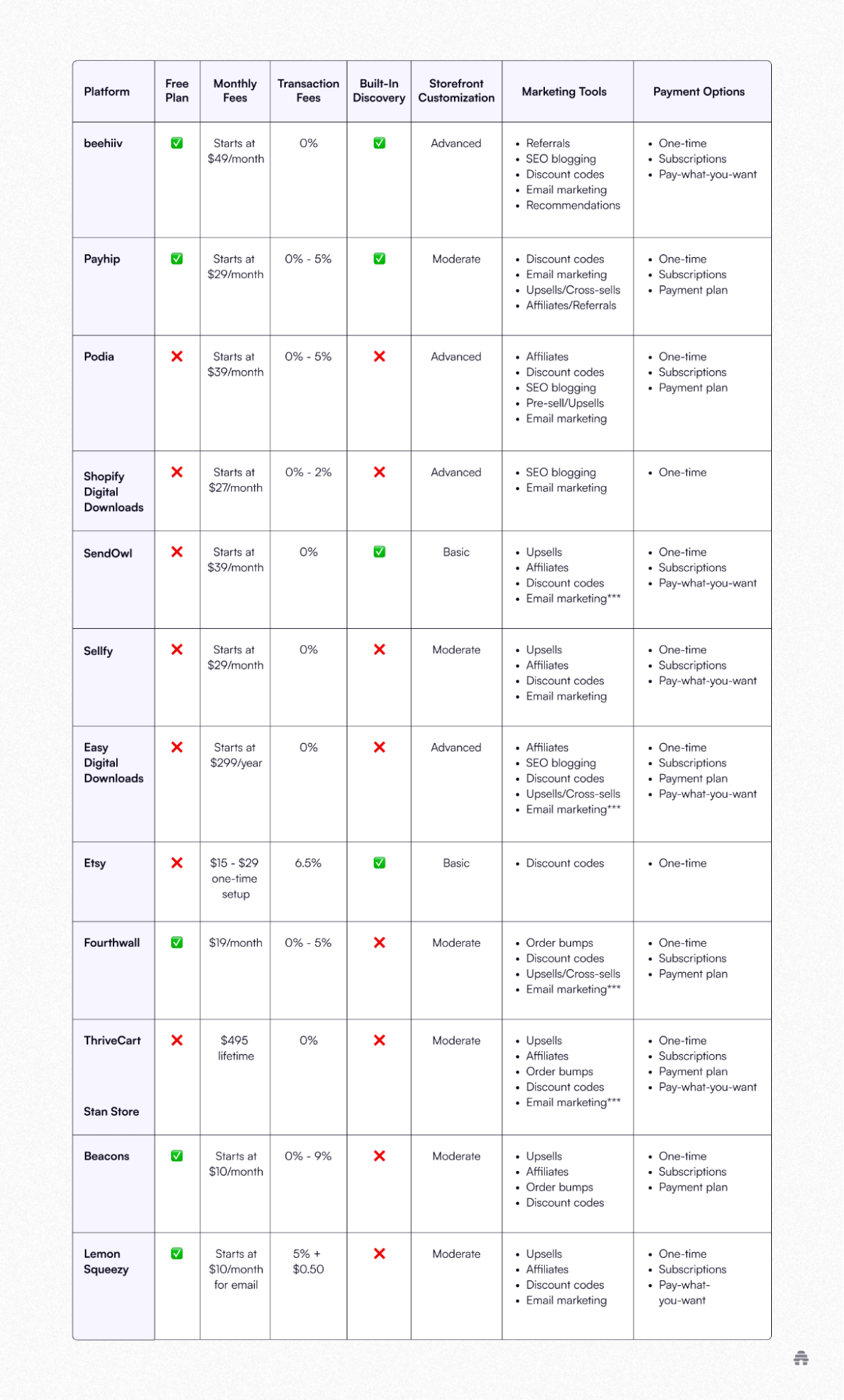
To help you make a decision quickly, I’ll walk you through these Gumroad competitors by metrics that matter the most. We’ll look at how each one compares in terms of their storefront customization features, marketing tools, monthly fees, and transaction fees, so you can decide the right fit for you.
Why Trust Me?
I am passionate about researching and writing about tools that help creators and businesses grow. This list is the result of my personal experience with these platforms and hours spent comparing their features and user feedback.
Table of Contents
TL;DR: Best Gumroad Alternatives for Creators
1. beehiiv: Best Gumroad Alternative for Building a Long-Term Profitable Online Business
2. Payhip: Best Gumroad Alternative for Side Hustlers Looking for Lower Transaction Fees
3. Podia: Best Gumroad Alternative for Selling High-Ticket Courses and Communities
4. Shopify Digital Downloads: Best Gumroad Alternative for Shopify Users
5. SendOwl: Best Gumroad Alternative for Turning Your Website Into an Online Store
6. Sellfy: Best Gumroad Alternative for Selling Branded Merch Items
7. Easy Digital Downloads: Best Gumroad Alternative for WordPress Users
8. Etsy: Best Gumroad Alternative for Selling Digital Products and Handmade Items in One Place
9. Fourthwall: Best Gumroad Alternative for Multi-Channel Selling
10. Thrivecart: Best Gumroad Alternative for High-Converting Checkout Pages
11. Stan Store: Best Gumroad Alternative for Selling Multiple Products From Your Link-In-Bio Page
12. Beacons: Best Gumroad Alternative for Getting Started With Link-In-Bio Selling for Free
13. Lemon Squeezy: Best Gumroad Alternative for Selling SaaS Subscriptions
Why Do Creators Look for Gumroad Alternatives?
I’ve seen many creators start with Gumroad, but switch to other platforms once they begin making a few hundred to a few thousand dollars.
Why does that happen?
Well, after digging through users’ Gumroad experiences across Reddit threads and review sites, here’s what I found:
Limited Storefront Customization
On one hand, this is what makes Gumroad so quick and easy to set up. But if you want more control over things like your store layout, brand colors, or custom fonts, it’s impossible to achieve that with Gumroad.
As a result, all Gumroad stores look the same, which makes it harder for your brand’s personality to stand out.
Basic Marketing Tools
Gumroad lets you collect customer emails for future email campaigns, which is helpful. But it feels pretty bare-bones.
There are no email automation templates to help you get started, and you can’t build complex, multi-step email flows like you can with other email tools like beehiiv. I also noticed Gumroad has no blogging and SEO tools for content marketing purposes.
High Transaction Fees
Gumroad takes 10% plus $0.50 from every sale, on top of standard Stripe or PayPal processing fees.
If the sale comes through Gumroad Discover, its built-in marketplace, you’ll pay an additional 30% on top of that. That’s almost 50% of your money gone before it hits your wallet.
Long Payout Schedule
You can’t cash out immediately after making a sale. First, there’s a minimum waiting period of seven days. After that, payouts happen on Fridays, which is Gumroad’s payout day. Even then, you can only withdraw if your balance is at least $10.
TL;DR: Best Gumroad Alternatives for Creators
Now let’s get into the nitty-gritty of the Gumroad alternatives I’ve handpicked for you.
1. beehiiv: Best Gumroad Alternative for Building a Long-Term Profitable Online Business
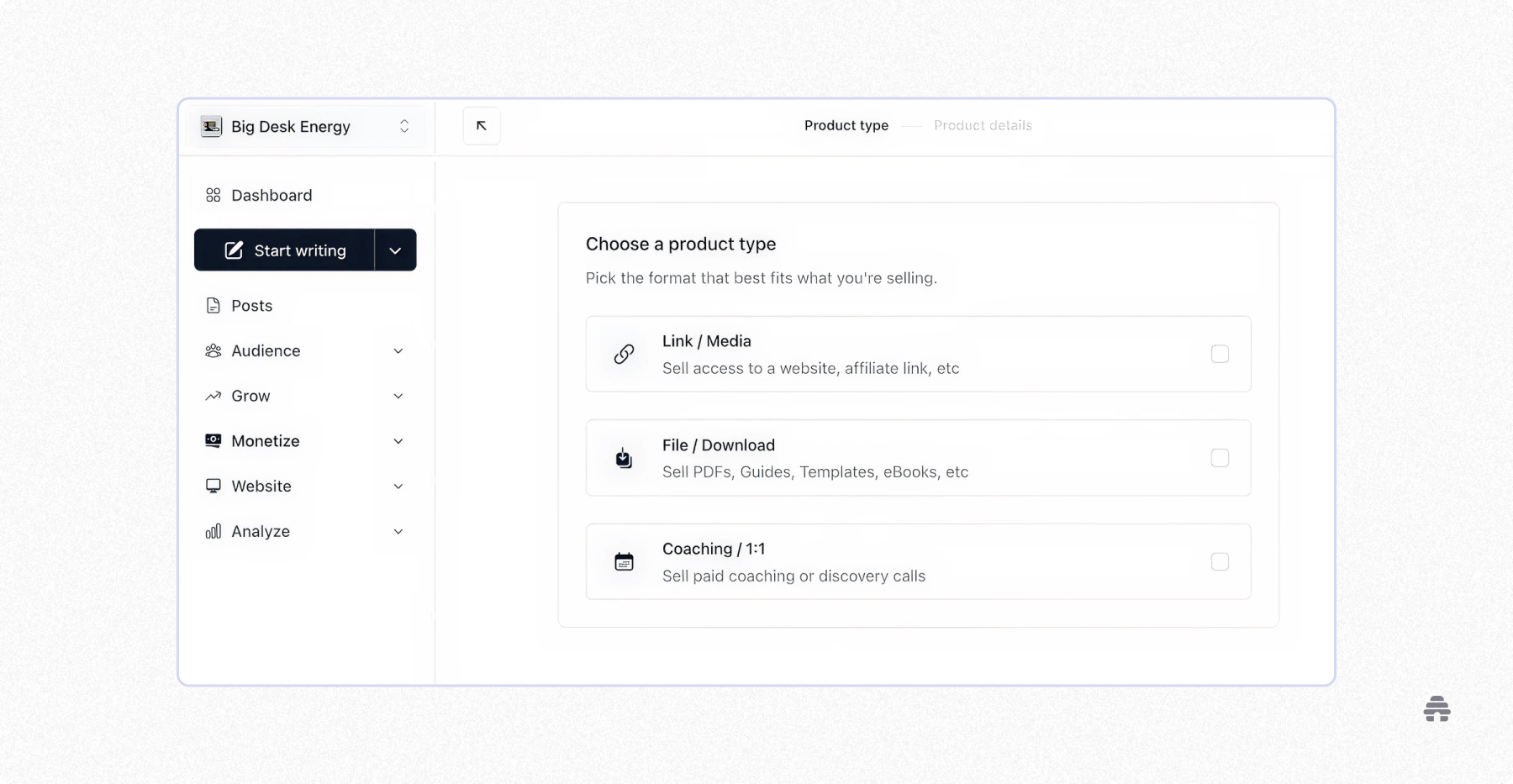
While Gumroad is great for a fast launch, beehiiv is ideal for creators who want to own their entire ecosystem. It’s an all-in-one toolkit to publish content, grow an audience, and earn a sustainable income online. You can build a custom website, publish newsletters and blog posts, and sell digital products or services. All from one dashboard. No plugins. No tech gymnastics.
beehiiv vs. Gumroad
beehiiv lets you build a 24/7 marketing machine. beehiiv has built-in SEO blogging and newsletter tools, so you can attract new readers while nurturing relationships with existing ones. People discover you, stick around, and eventually buy from you.
If you love simplicity, you’ll love beehiiv’s content editor. It lets you focus on writing while easily adding a variety of multimedia content—like images, videos, social posts, and polls—to keep your writing engaging.
When you’re done writing, you can publish your content as a newsletter, a blog post, or both. One piece of content, multiple channels…with a click of a button.

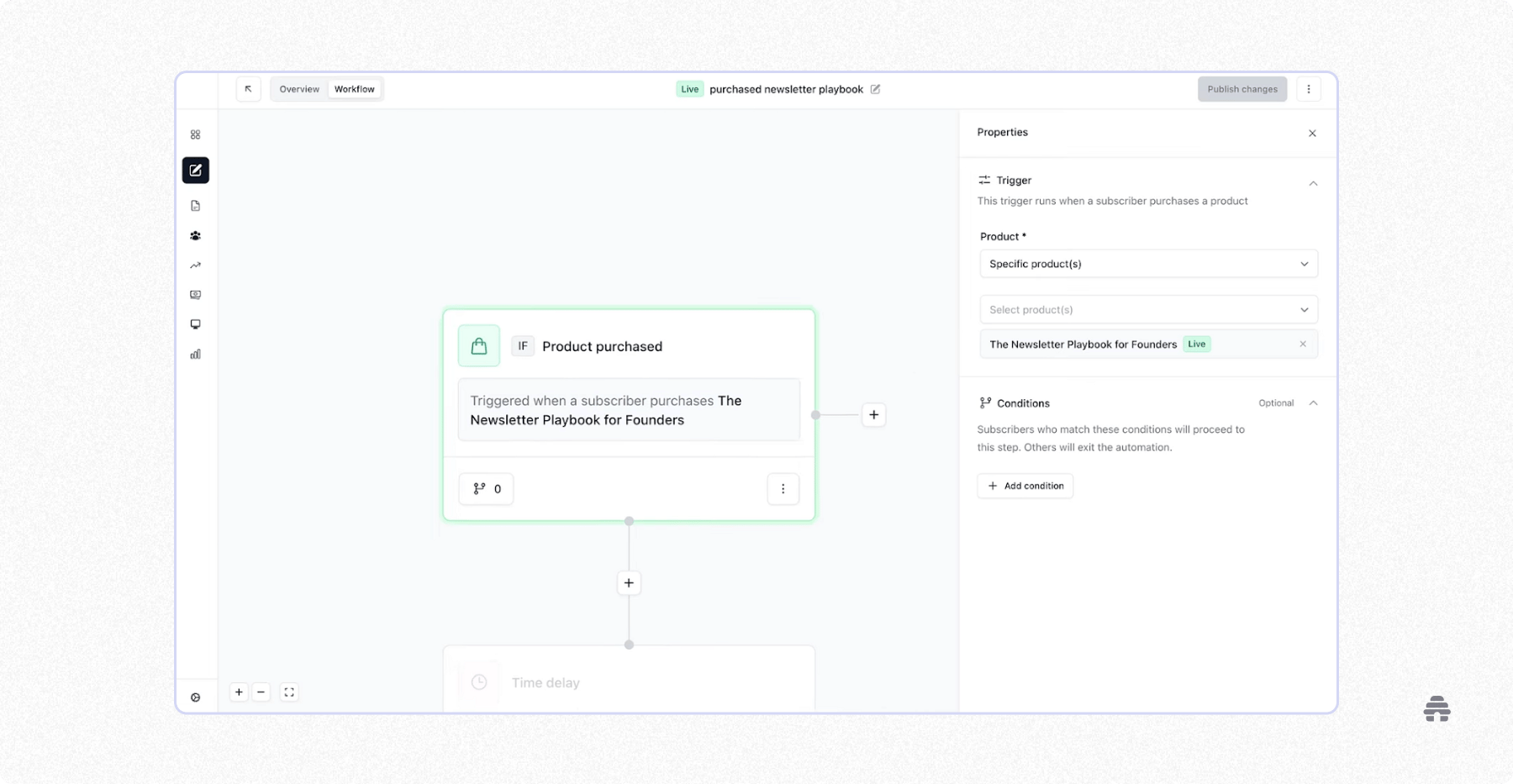
beehiiv takes email marketing up a notch. With beehiiv, you can create different audience segments and set up automations, so people get personalized emails that match their interests and past behavior—instead of having the same message blasted to everyone, every time.
If you want to grow your revenue, segmentation and automation are key.
The numbers back it up: 80% of consumers are more likely to buy from brands that offer personalized experiences, and marketers have seen up to a 760% increase in revenue from this.
beehiiv gives you the freedom to build a unique brand identity. beehiiv has an AI-powered website builder for building custom websites. Just tell the AI what you need, and it’ll build it for you.
If you prefer more control, you can start with one of the 10+ templates and customize it using the drag-and-drop editor, or let AI help with that too.
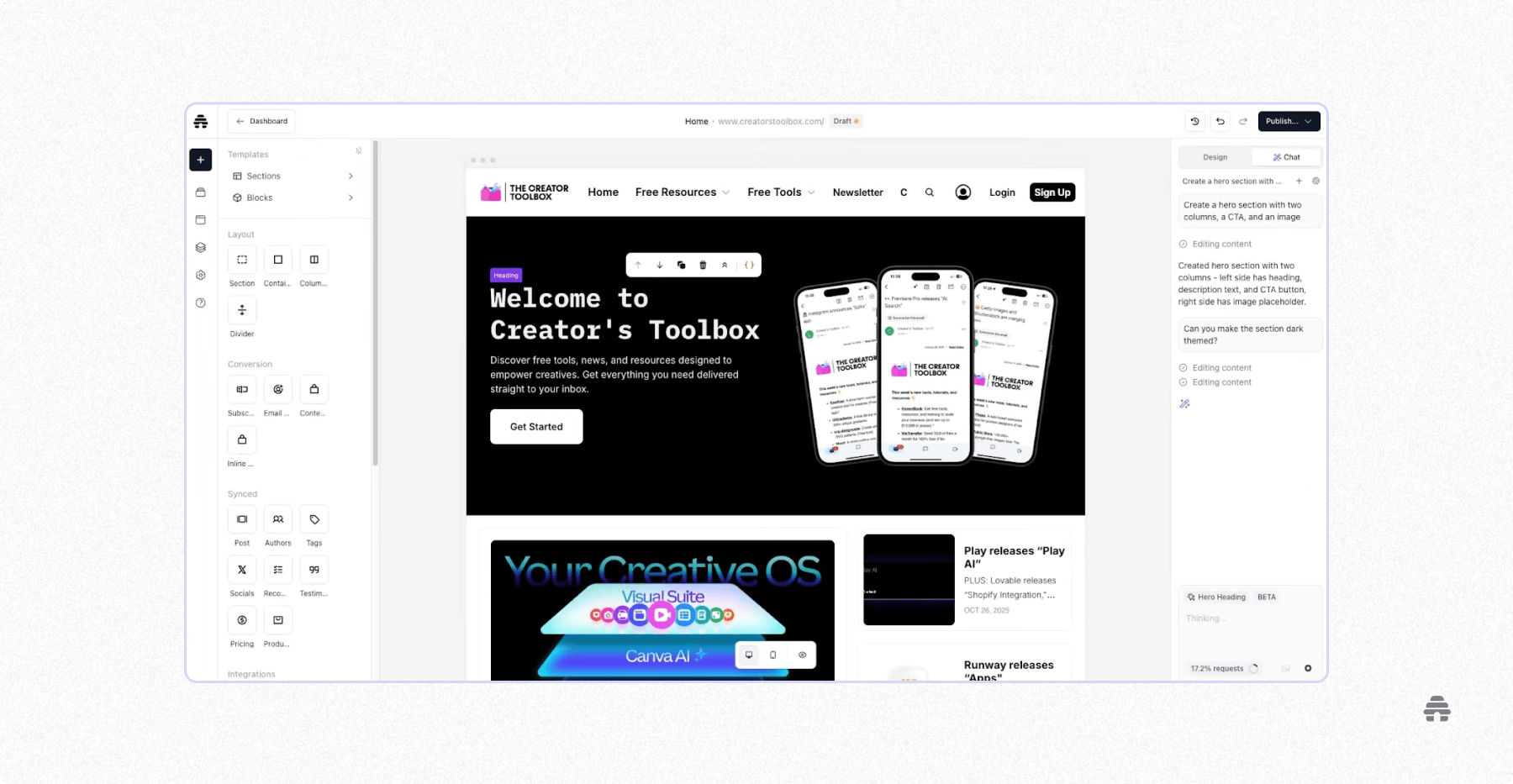
Not ready for a full website?
No worries! You can create a simple link-in-bio page to collect subscribers and sell products directly from your social profiles. Just pick a template and tweak it to fit your style.

beehiiv provides diverse ways to grow your audience. Unlike Gumroad, beehiiv doesn’t have a marketplace where people will browse your digital products directly.
Instead, it focuses on something arguably more valuable: audience growth.
You get a built-in recommendation engine, referral system, and Boosts feature that helps more people discover and subscribe to your newsletter.
That’s how brands like The Underdog, Tech Safari, and The Brink gained thousands of subscribers directly through beehiiv.
And you know how it goes, more subscribers today = more sales tomorrow.

beehiiv lets you diversify your income streams. If you’ve been selling digital products for a while, you know that sales can be unpredictable. Some months are great. Others, not so much.
beehiiv helps smooth that out.
Besides selling products, you can earn from ads, Boosts, memberships, and sponsorships right inside your newsletter. This means that an engaged audience brings you recurring income without you constantly pushing your paid offerings.
Brands like Geekout, Cyber Corsairs, and Last Money In have collectively generated over $45 million using these earning channels on the beehiiv platform.
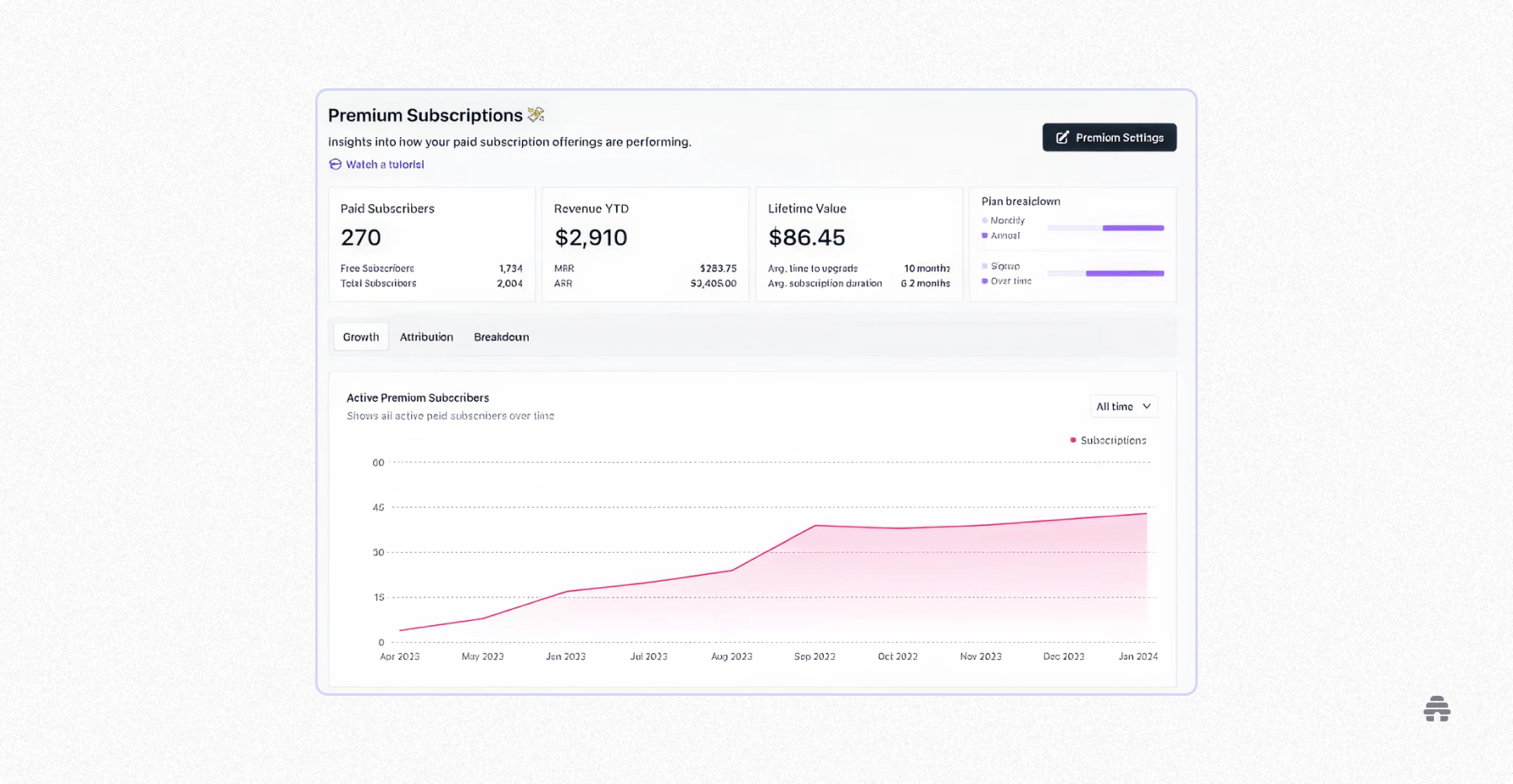
beehiiv takes 0% commission on your earnings. You pay a flat monthly fee to use beehiiv’s earning tools. After that, the revenue is yours. The only extra cost is standard Stripe processing fees.
beehiiv Pricing
beehiiv has a free plan that lets you build websites, link-in-bio pages, publish content, and grow your email list to 2,500 subscribers.
When you exceed that and want to access its growth and earning tools, paid plans start at $49/month for 1,000 subscribers.
2. Payhip: Best Gumroad Alternative for Side Hustlers Looking for Lower Transaction Fees
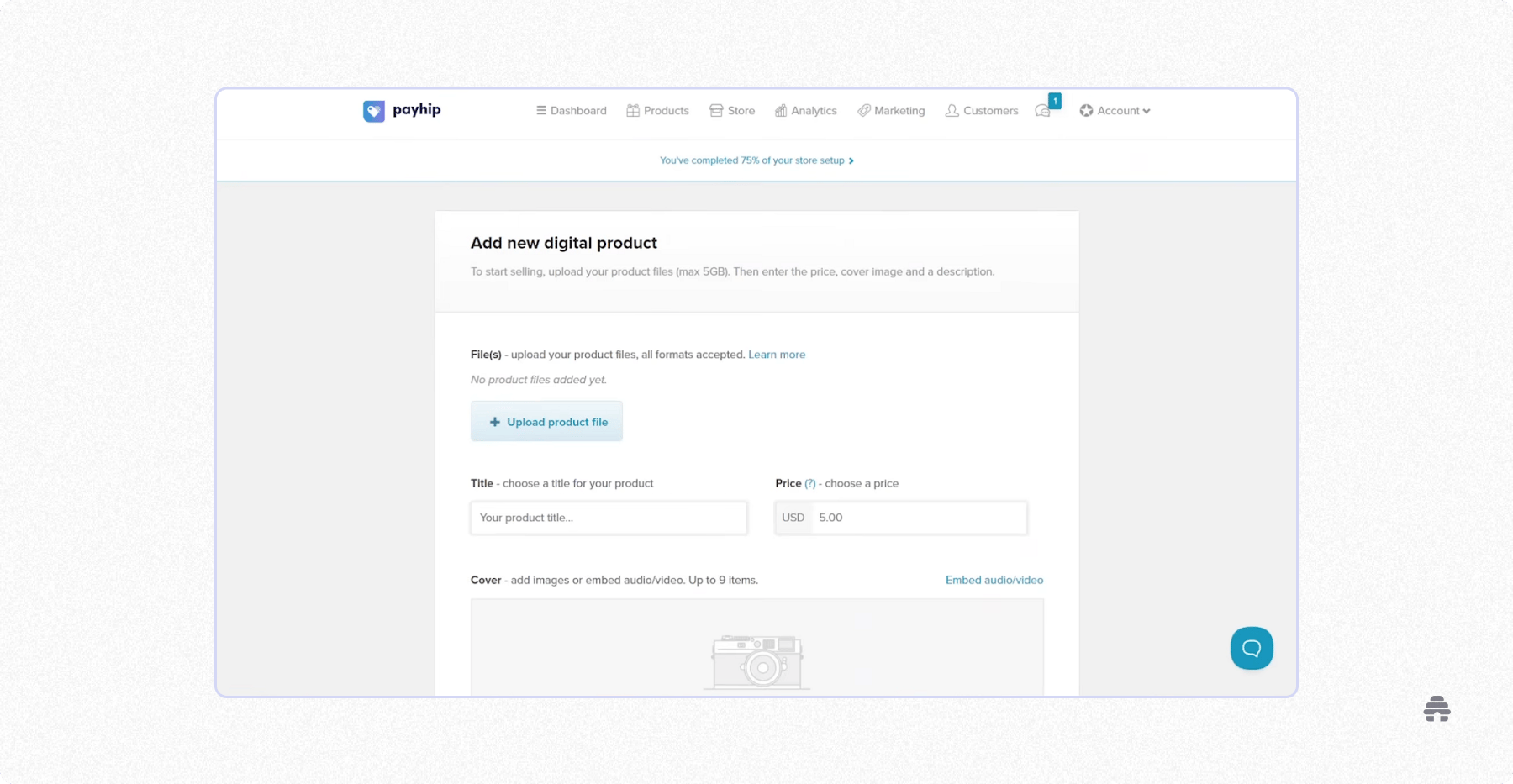
Payhip is a hosted e-Commerce platform for selling digital products, memberships, and coaching services. Like Gumroad, it’s easy to use and you can start with a $0 budget. The key differences? Payhip has lower transaction fees and pays out instantly.
Payhip vs. Gumroad
Payhip has more marketing tools. Payhip and Gumroad let you set up coupon codes, upsells, affiliates, and email marketing. But Payhip goes further with its cross sell and referral tools to boost conversions.
Payhip has LMS features for courses. Instead of giving customers a bundle of downloadable videos, you can organize them into modules, add quizzes, and award certificates on completion.
Payhip gives you better customization. You can use its store builder to create a custom storefront with multiple sections and adjust things like colors, buttons, and fonts. But you still won’t get granular customization like you would on platforms like beehiiv or WordPress.
Payhip Pricing
Payhip has three pricing tiers:
Free forever: $0/month + 5% transaction fees
Plus: $29/month + 2% transaction fees
Pro: $99/month + 0% transaction fees
3. Podia: Best Gumroad Alternative for Selling High-Ticket Courses and Communities
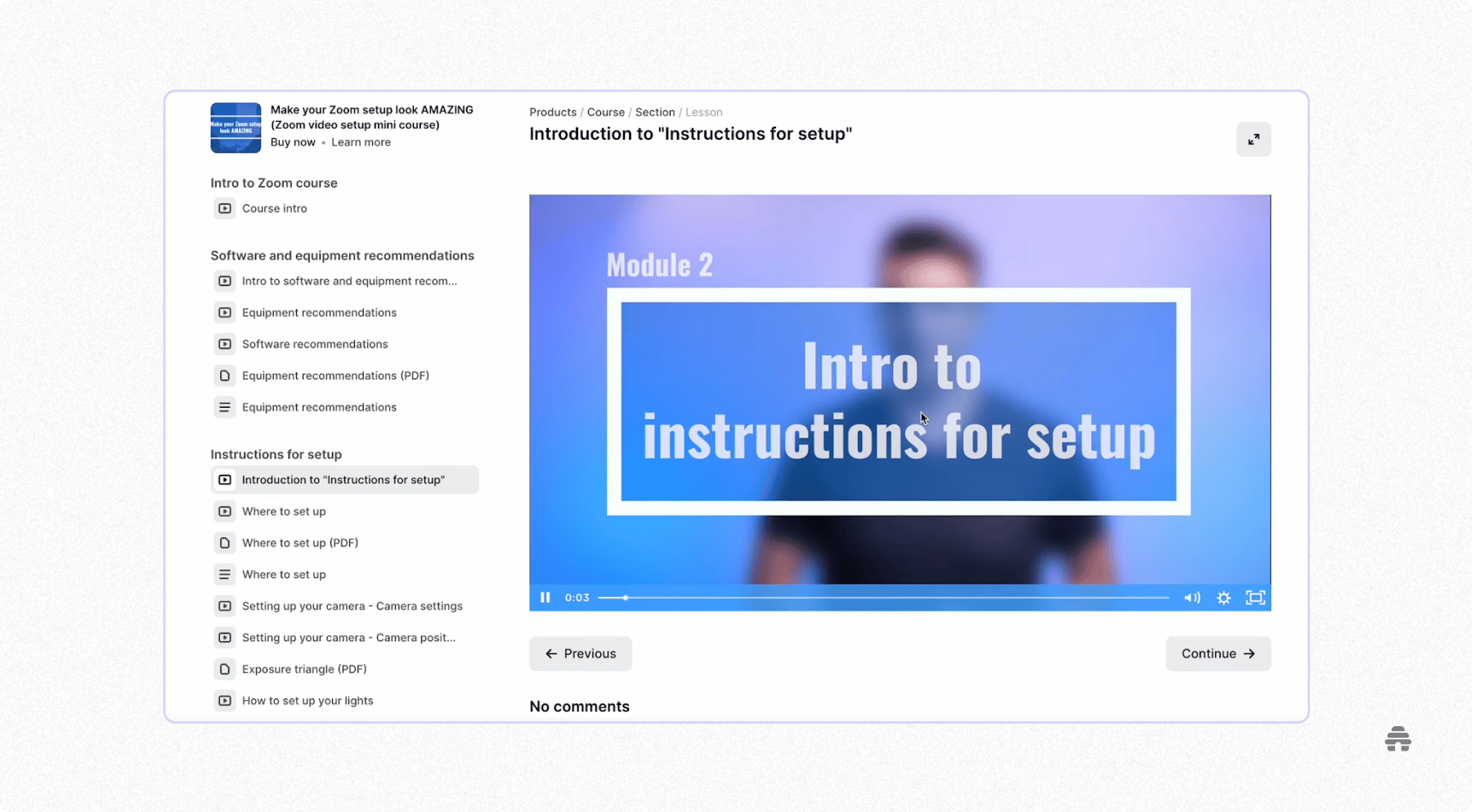
Podia is a publishing platform for creators who want to sell digital products, courses, coaching, community access, and webinars. Unlike Gumroad, Podia doesn’t have a free plan, and paid plans can be expensive for newbies. But it makes up for it with the extra features you get.
Podia vs. Gumroad
Podia is better for selling courses, memberships, and webinars. You can host your videos on Podia and organize them into standalone courses, drip courses, or cohort-based programs. You can also run a community where members interact through topic-based discussions. And if you host live webinars, Podia lets you sell access to both live sessions and replays.
Podia has more marketing tools. Podia has all the marketing tools in Gumroad and more. You can pre-sell courses before they launch, offer upsells, and build custom websites, landing pages, and blog content. There’s even a live chat feature so you can talk to visitors while they’re browsing your site.
Podia doesn’t have built-in discovery tools. Podia doesn’t have a marketplace like Gumroad. It won’t send extra customers your way. But again, you can use its blogging tools to attract new customers.
Podia Pricing
Podia doesn’t have a free plan. Paid plans start at $39/month (plus 5% transaction fees) or $99/month (with 0% transaction fees).
Email marketing is included up to 100 subscribers. After that, you’ll need the email add-on, which starts at $9/month for 500 subscribers.
4. Shopify Digital Downloads: Best Gumroad Alternative for Shopify Users
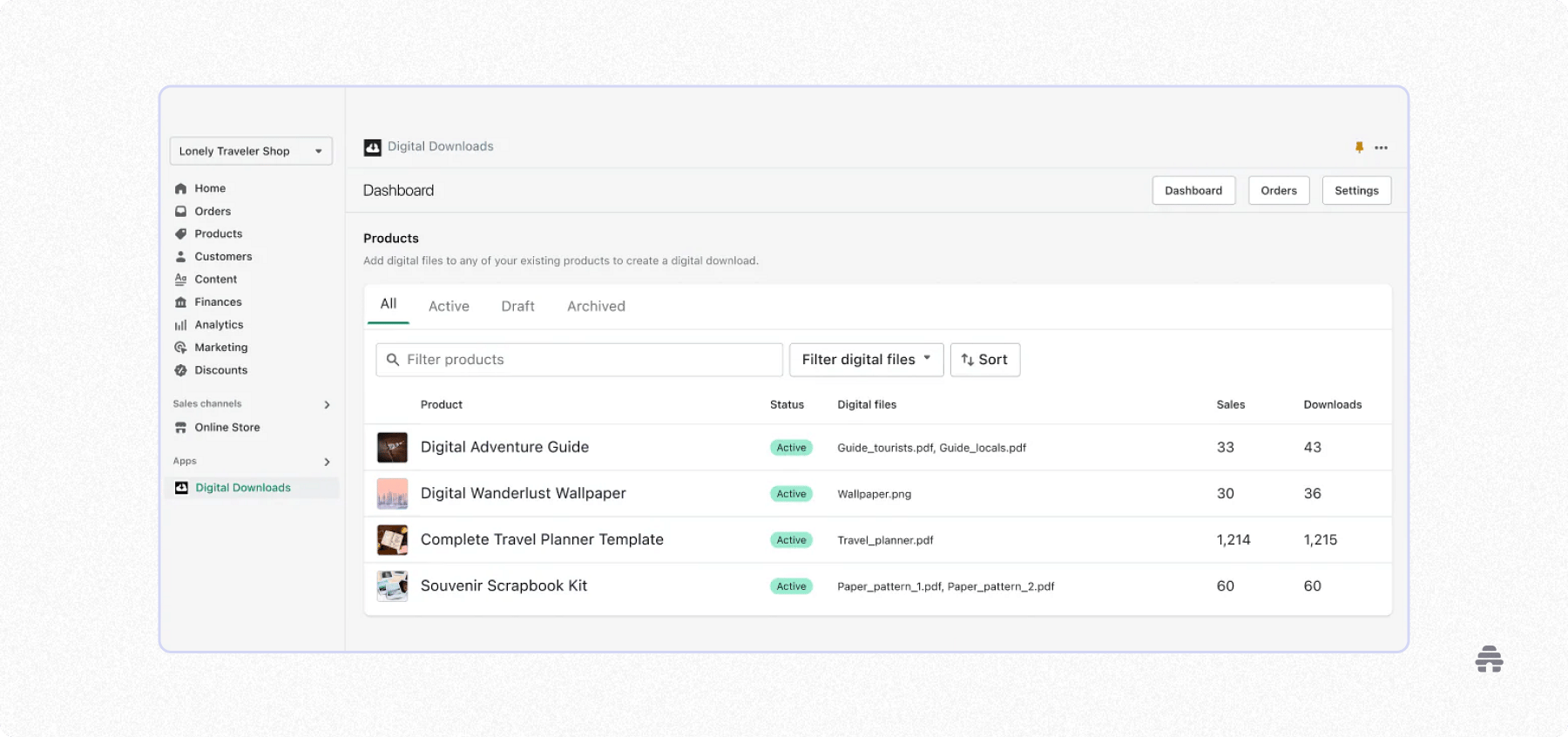
Shopify is an e-Commerce platform that’s popular with clothing, footwear, and beauty retailers. A key Shopify strength is its massive app library with over 10,000 apps that let you customize your store’s functionality. One of those apps is Digital Downloads, a free Shopify app that lets you sell digital products in your Shopify store.
Shopify Digital Downloads vs. Gumroad
Shopify gives you more control over your store’s design. You can create a custom website with product pages that match your brand style. Its app library also lets you expand your store’s functionality. For instance, you can sell both digital and physical products from the same space.
Shopify has a steeper learning curve. Shopify looks clean and simple on the surface. However, if you’re brand new and only want to sell digital downloads, it can feel overwhelming. But if you’re already familiar with Shopify, the process will be much easier for you.
Shopify Digital Downloads lacks extensive marketing features. You won’t get upsells, affiliate tools, or email marketing out of the box. At most, you can send thank-you emails after a purchase. To unlock more advanced marketing features, you’ll need additional apps.
Shopify Digital Downloads Pricing
The Digital Downloads app is free. However, you’ll need to pay for Shopify to use it.
Shopify’s plans start at $27/month. If you use third-party payment processors, you’ll pay between 0.5% and 2% in transaction fees. If you use Shopify Payments, there are no additional transaction fees.
5. SendOwl: Best Gumroad Alternative for Turning Your Website Into an Online Store
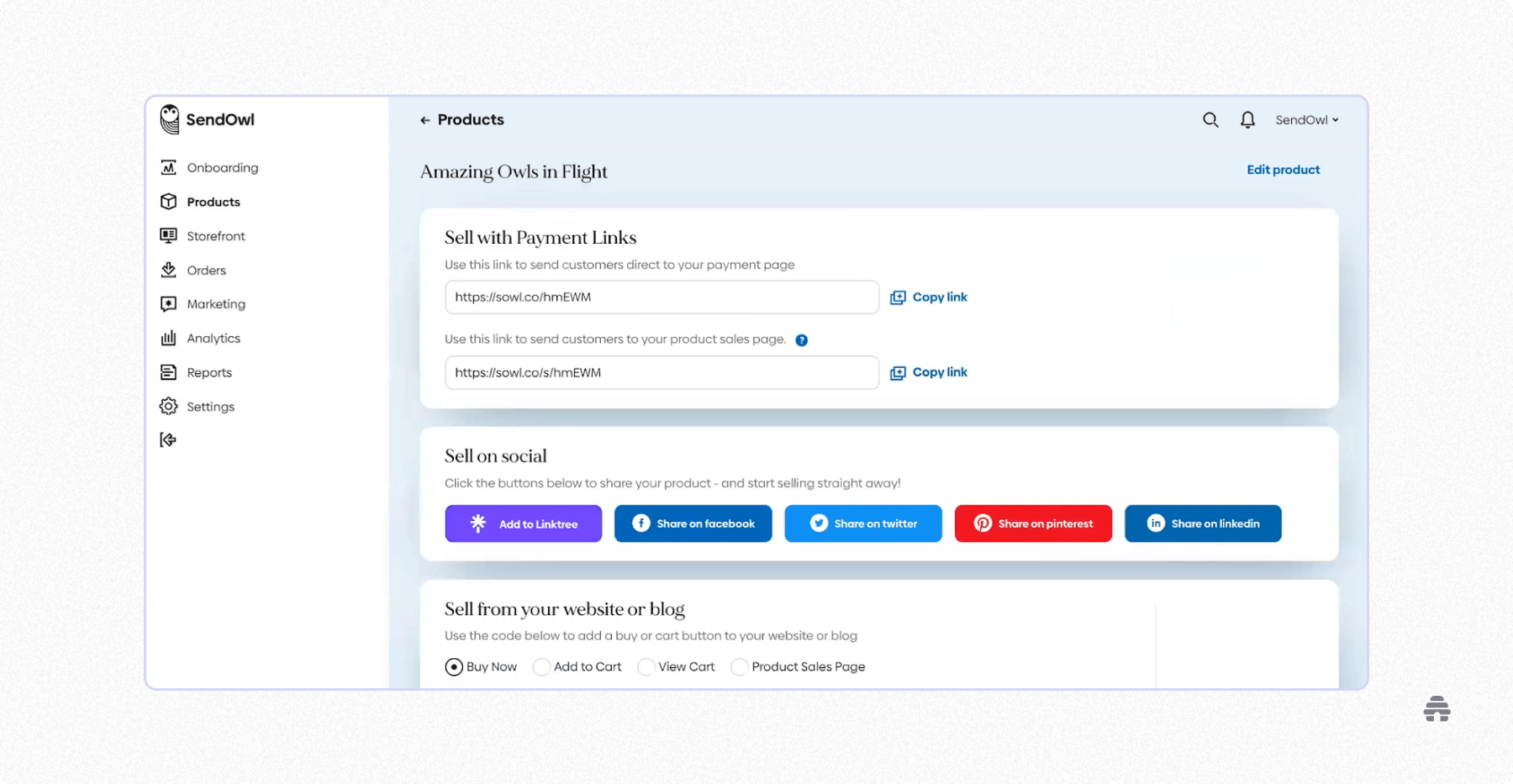
SendOwl is a hosted e-commerce platform for selling digital products, services, and subscriptions. It has very similar features to Gumroad, including a marketplace; however, a key difference is that SendOwl charges a flat monthly fee and takes no transaction fees.
SendOwl vs. Gumroad
SendOwl has more content protection tools. Both SendOwl and Gumroad let you protect your content with PDF stamping, streaming-only videos, and license key generation. But SendOwl goes further with expiring download links, download attempt limits, and unique buyer restrictions.
SendOwl doesn’t have built-in email marketing and blogging tools. However, it integrates with email platforms like Mailchimp, ActiveCampaign, and Drip. It also offers marketing features similar to Gumroad, like discounts, upsells, and affiliate tools.
SendOwl works better if you already have a website. Its built-in storefront builder is super basic, but it makes selling from your existing site easy with embed codes.
SendOwl Pricing
SendOwl doesn’t have a free plan. It has three pricing tiers, starting at $39/month, which unlock all features and take a 0% transaction fee.
6. Sellfy: Best Gumroad Alternative for Selling Branded Merch Items
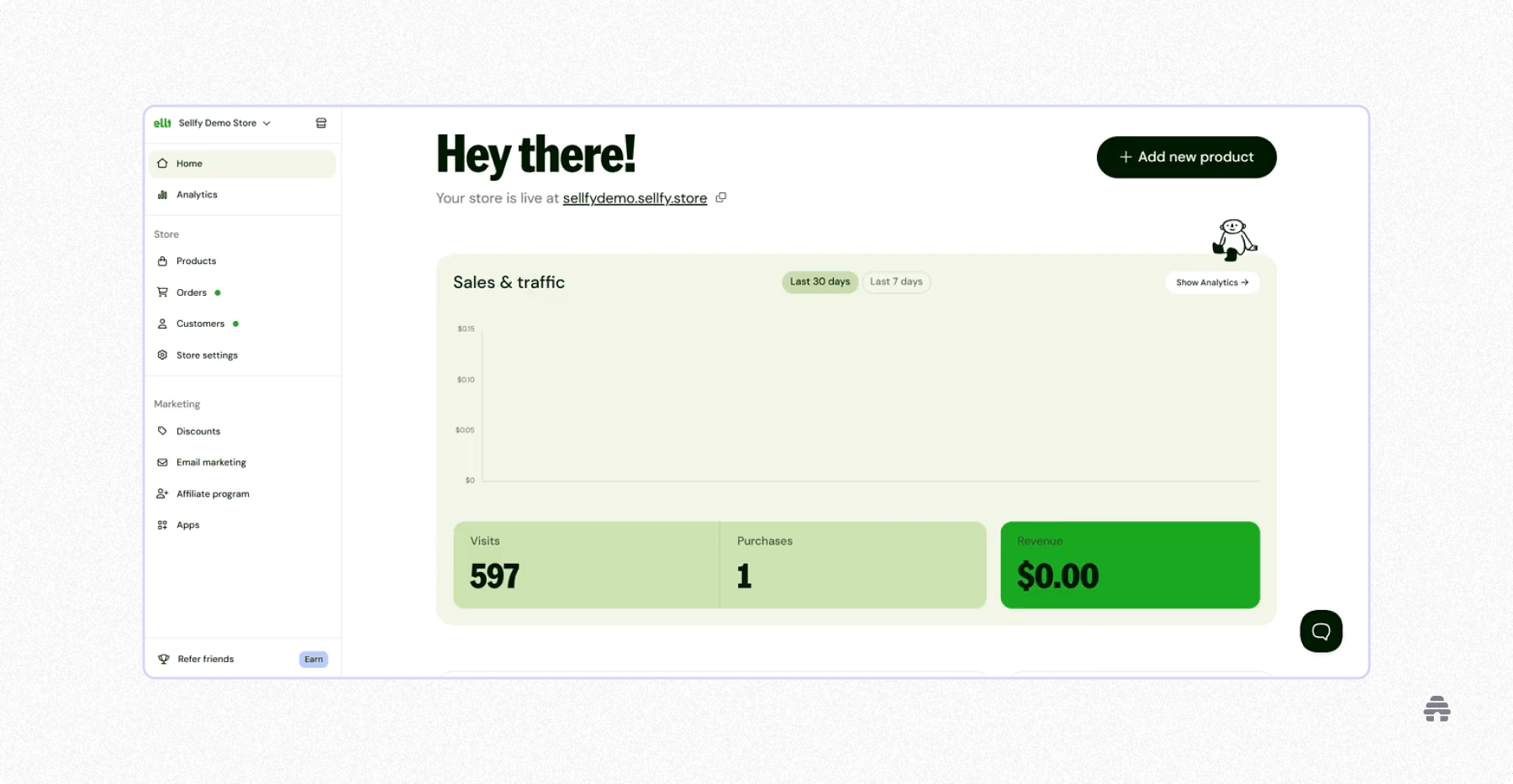
Sellfy is another hosted e-Commerce platform that lets you sell physical and digital products, subscriptions, and print-on-demand (POD) items. You’ll need to pay a monthly fee to get started, but in return you get zero transaction fees and instant payouts to your Stripe or PayPal account.
Sellfy vs. Gumroad
Sellfy makes it easy to sell branded merch. All you have to do is choose from a library of over 100 products, add your designs, and Sellfy handles the production and shipping for you.
Sellfy lets you build a custom website. You can create your own store using Sellfy’s free themes, add custom pages, and adjust colors to match your brand.
Sellfy doesn’t have a marketplace. So you’ll need to bring your own traffic. But besides that, it has other marketing tools like email campaigns, discount codes, upsells, and affiliate management.
Sellfy Pricing
Sellfy doesn’t have a free plan. Paid plans start at $29/month.
To unlock advanced marketing tools like upsells and affiliate programs, plus priority support, you’ll need to upgrade to higher plans.
7. Easy Digital Downloads: Best Gumroad Alternative for WordPress Users
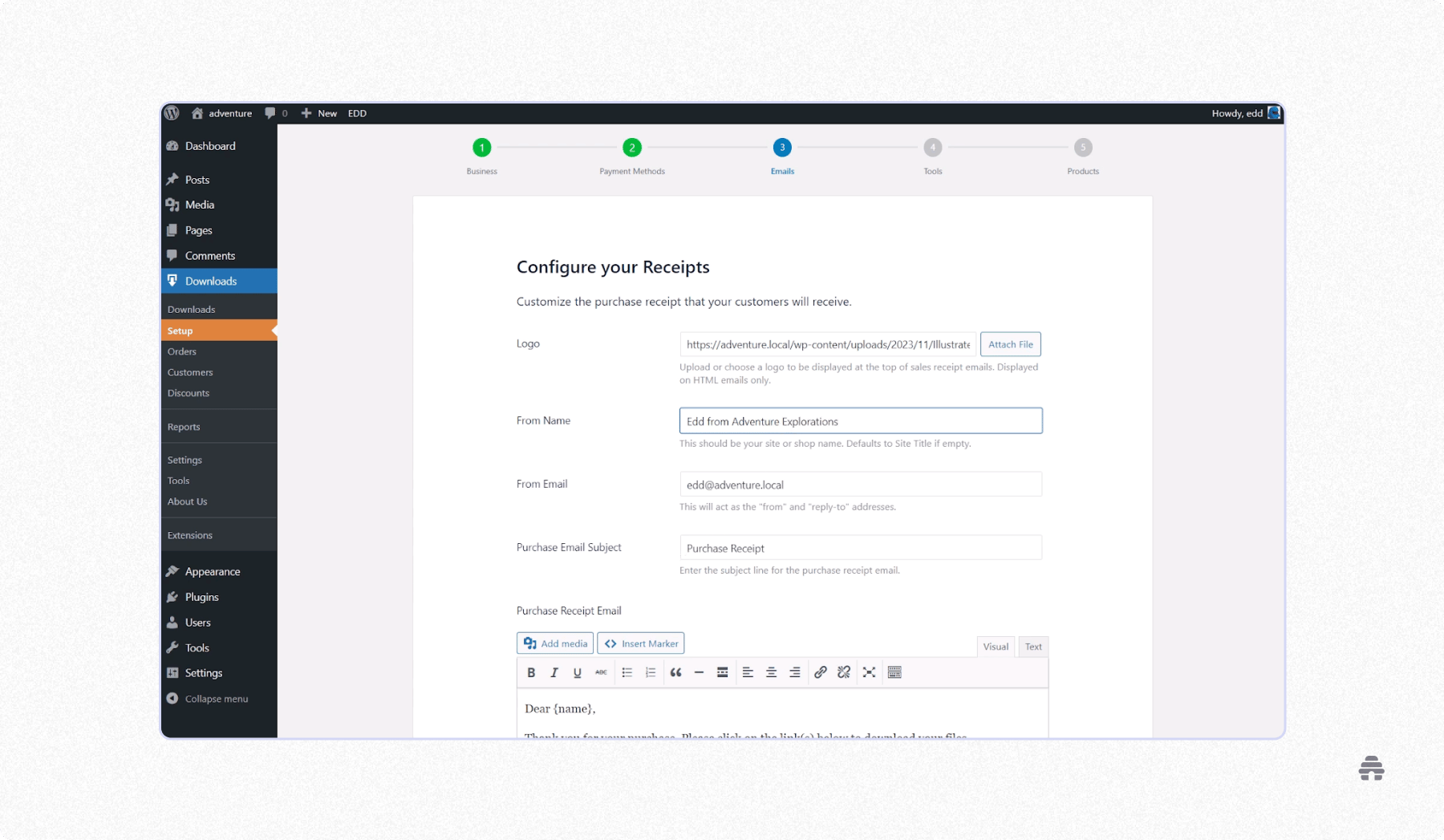
Easy Digital Downloads is a WordPress plugin that lets you sell digital products on your WordPress website. The plugin itself is free, but it’s very basic—you can only sell digital downloads at a one-time fee and send thank you emails. If you want more tools, you’ll need a paid plan, which can be pricey for beginners.
Easy Digital Downloads vs. Gumroad
Easy Digital Downloads has a large app library. Easy Digital Downloads has a library of over 100 apps that let you customize its functionality. With the right add-ons, you can match most of Gumroad’s features—like recurring payments, discount codes, upsells, and affiliate programs—and even go further, including running a multi-vendor digital marketplace.
Easy Digital Downloads gives you full control over your website and content. Because it runs on WordPress, you get full control over your website design and functionality. You can build custom pages, publish SEO-optimized blog content to drive traffic to your products, and later expand to selling physical products.
Easy Digital Downloads has a steep learning curve. If you’re only setting up WordPress to sell a few digital products with Easy Digital Downloads, the setup and maintenance stress isn’t worth it. But if you’re already using WordPress, the process will be much easier for you.
Easy Digital Downloads Pricing
You’ll need to self-host WordPress to use the Easy Digital Downloads plugin, with costs starting from $100/year.
The plugin itself has a very basic free version. Paid plans are billed annually and start at $199/year with 0% transaction fees.
8. Etsy: Best Gumroad Alternative for Selling Digital Products and Handmade Items in One Place
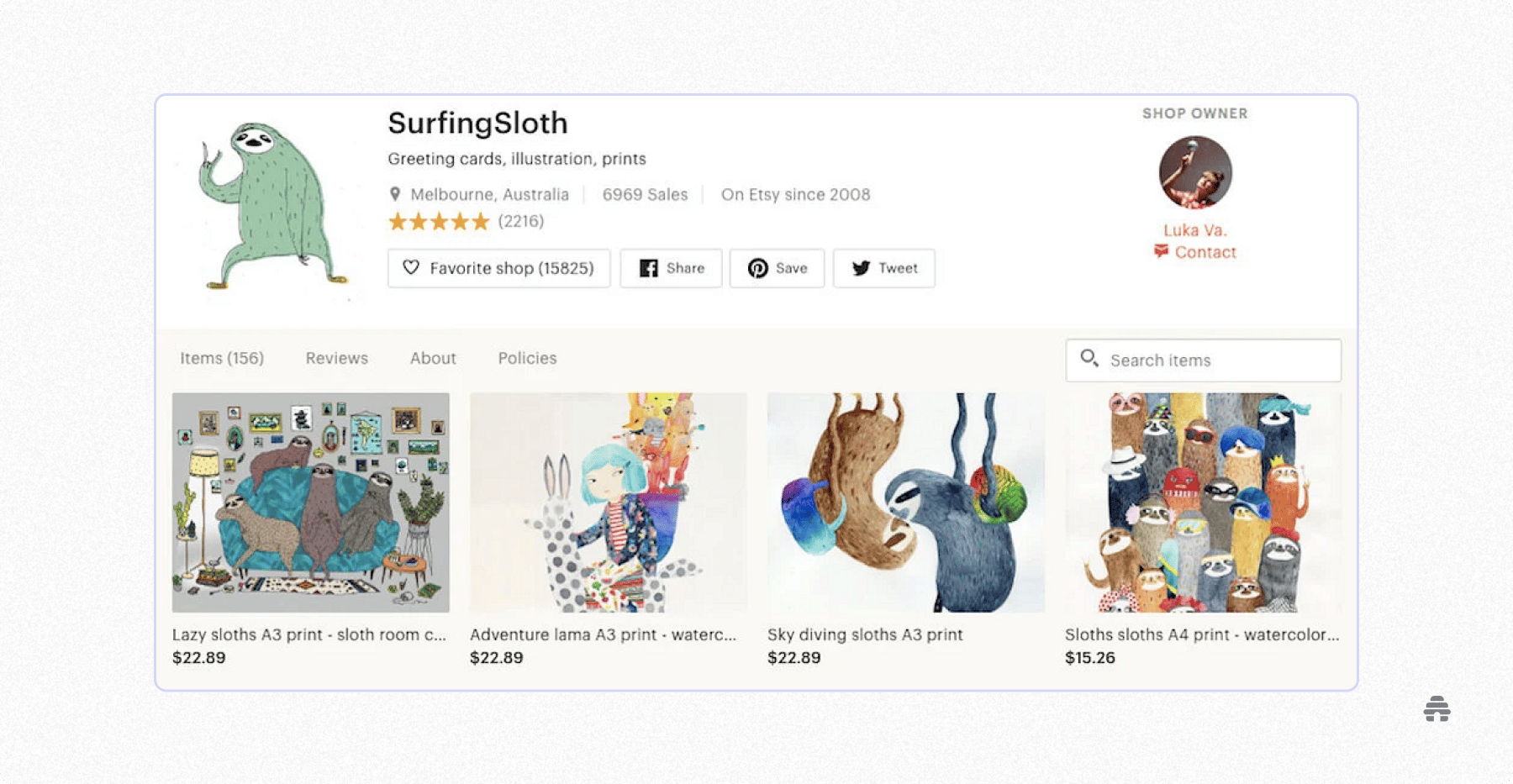
Etsy is a marketplace for selling handmade physical items and digital downloads. Getting started is simple. Sign up, create your shop, upload your listings, and you’re ready to sell.
Etsy vs. Gumroad
Etsy has a much larger marketplace. Etsy gets over 400 million monthly shoppers who want to support creative businesses. If your listings are optimized with the right keywords, you’ll attract a steady flow of buyers.
Etsy has lower fees. Like Gumroad, you’ll pay standard payment processing fees. On top of that, Etsy charges $0.20 per listing and a 6.5% transaction fee per sale. You may also pay extra if a sale comes through Etsy’s external advertising. Even with all that, Etsy’s fees are generally lower than Gumroad’s.
Etsy makes it harder to scale your business. Like Gumroad, Etsy doesn’t give you the room to design custom stores and product pages. You also don’t get direct access to your customers’ emails for future communication and promotions.
Etsy Pricing
To open an Etsy shop, you may need to pay a one-time setup fee, usually between $15 and $29.
9. Fourthwall: Best Gumroad Alternative for Multi-Channel Selling
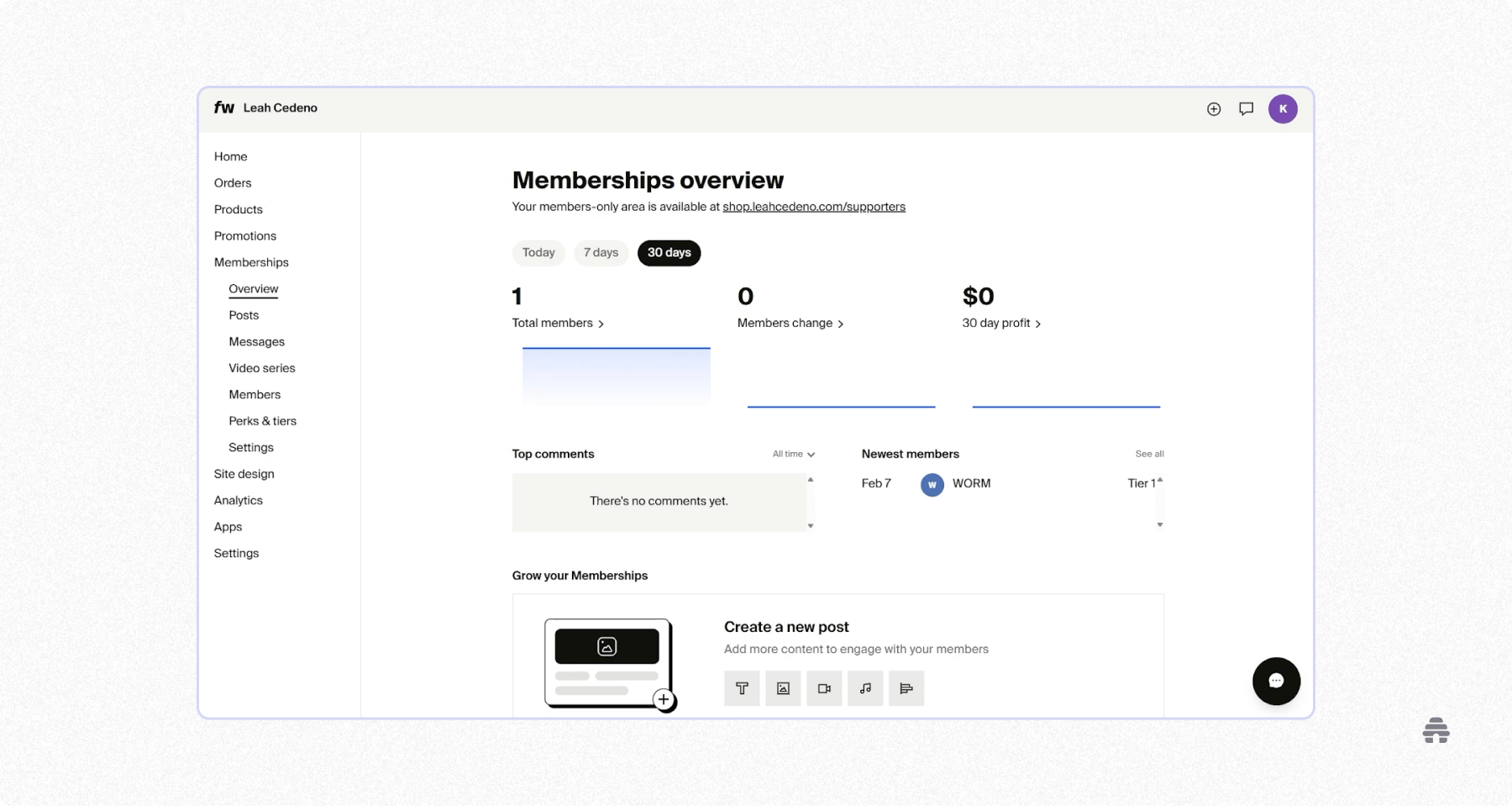
Fourthwall is a hosted e-commerce platform for selling digital downloads, physical products, print-on-demand items, and memberships. It’s easy to set up, free to start, and its transaction fees are lower than Gumroad’s.
Fourthwall vs. Gumroad
Fourthwall lets you sell across multiple channels. Fourthwall lets you build a custom storefront, add your products, and connect to platforms like your YouTube merch shelf, TikTok, Instagram, and Facebook shops. List your products in one place, and it shows up everywhere your audience hangs out.
Fourthwall gives you diverse membership management tools. Fourthwall lets you create multiple membership tiers and offer perks like a discussion feed, polls, badges, private livestreams, and even a custom mobile app for users to access your membership community on the go.
Fourthwall lacks advanced marketing features. Fourthwall covers the basics like promo codes, order bumps, and abandoned cart recovery. But that’s about it. There’s no marketplace, affiliate system, blogging feature, or built-in email marketing.
Fourthwall Pricing
Fourthwall is free to use and takes 0% commission on physical and print-on-demand products.
For digital products and memberships, there’s a 5% transaction fee. If you pay $19/month, your digital product transaction fees drop to 0% (but membership fees still apply).
10. Thrivecart: Best Gumroad Alternative for High-Converting Checkout Pages
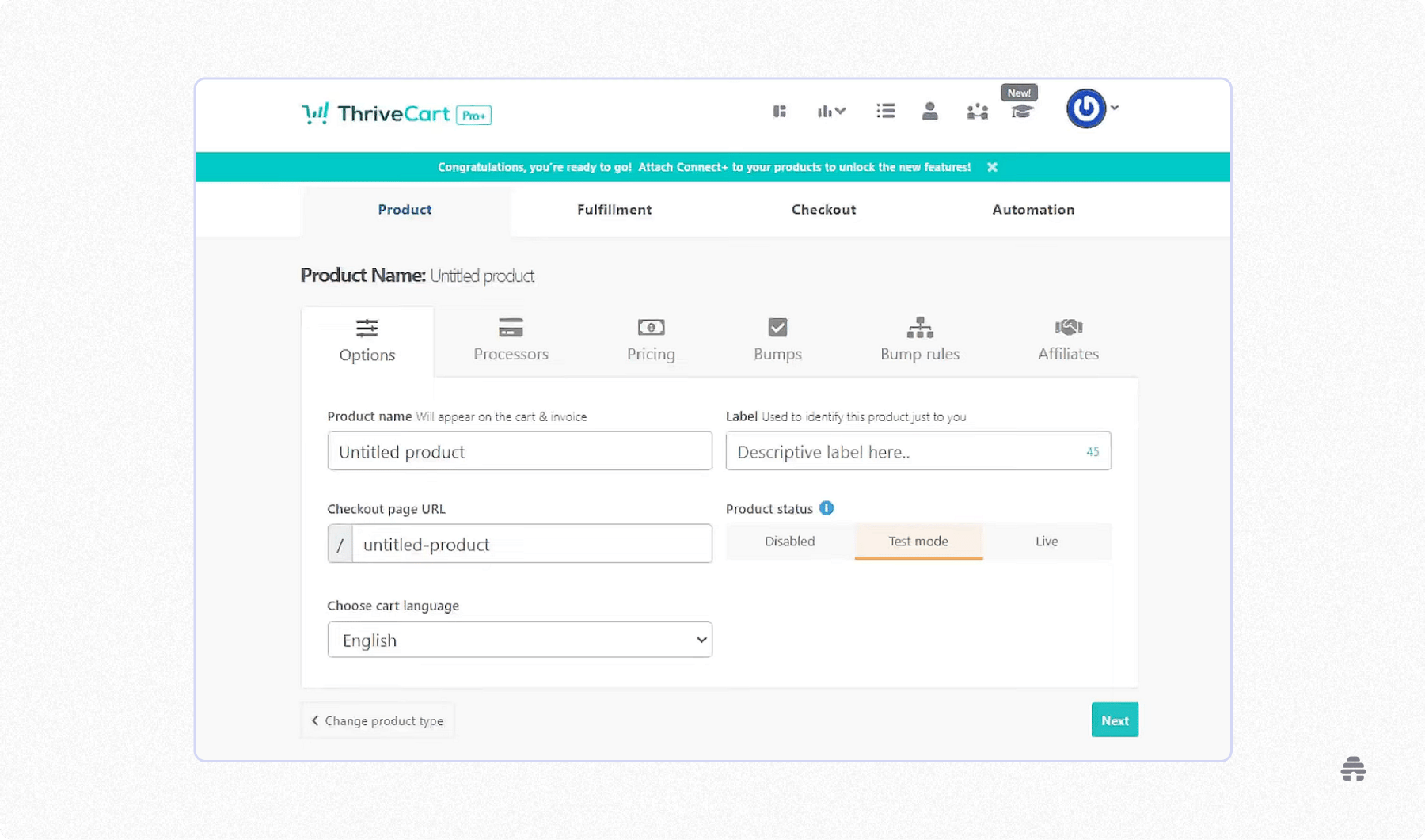
ThriveCart is a checkout platform for selling digital downloads, courses, and memberships. It lets you design custom landing pages and checkout pages and share them via links, QR codes, or embed directly on your website.
ThriveCart vs. Gumroad
ThriveCart has a built-in LMS. You can embed audio and video from third-party platforms like YouTube and Vimeo and organize them into structured courses.
ThriveCart lets you accept monthly installments. You can accept one-time payments, subscriptions, pay-what-you-want pricing, and monthly installment plans. Accepting monthly installments is helpful if you sell high-ticket products and want to make them easier to buy.
ThriveCart doesn’t include a website, blog, and email marketing. Instead, it focuses on conversion. You get customizable landing pages and checkout templates that you can edit with a drag-and-drop builder. You can A/B test different versions and keep the one that brings in more revenue, higher conversions, or fewer abandoned carts.
ThriveCart Pricing
ThriveCart is available for a one-time fee of $495 with 0% transaction fees, which covers most of your needs.
Some advanced features require an additional one-time fee plus a recurring monthly fee.
11. Stan Store: Best Gumroad Alternative for Selling Multiple Products From Your Link-In-Bio Page

Stan Store is a link-in-bio tool that lets you turn your social media followers into customers. You can add digital products, memberships, and booking services to your link-in-bio page so customers have a seamless buying experience.
Stan Store vs. Gumroad
StanStore lets you grow your email list faster. You can easily offer a freebie in exchange for email signups on your link-in-bio page. However, its email marketing features are very basic compared to platforms like beehiiv and Kit.
Stan Store makes it easier to deliver courses, bookings, and memberships. Stan Store has a basic LMS tool for organizing your course. It also lets you sync to your Google Calendar to manage bookings directly on the platform. Plus, you can run a community where members join discussions and access exclusive content.
StanStore has limited marketing tools. Stan Store covers the basics like discount codes, upsells, affiliates, and email marketing. But it doesn’t support websites, blogging, and a built-in marketplace.
Stan Store Pricing
Stan Store costs $29/month for basic features and $99/month for access to marketing features. There are no transaction fees.
12. Beacons: Best Gumroad Alternative for Getting Started With Link-In-Bio Selling for Free
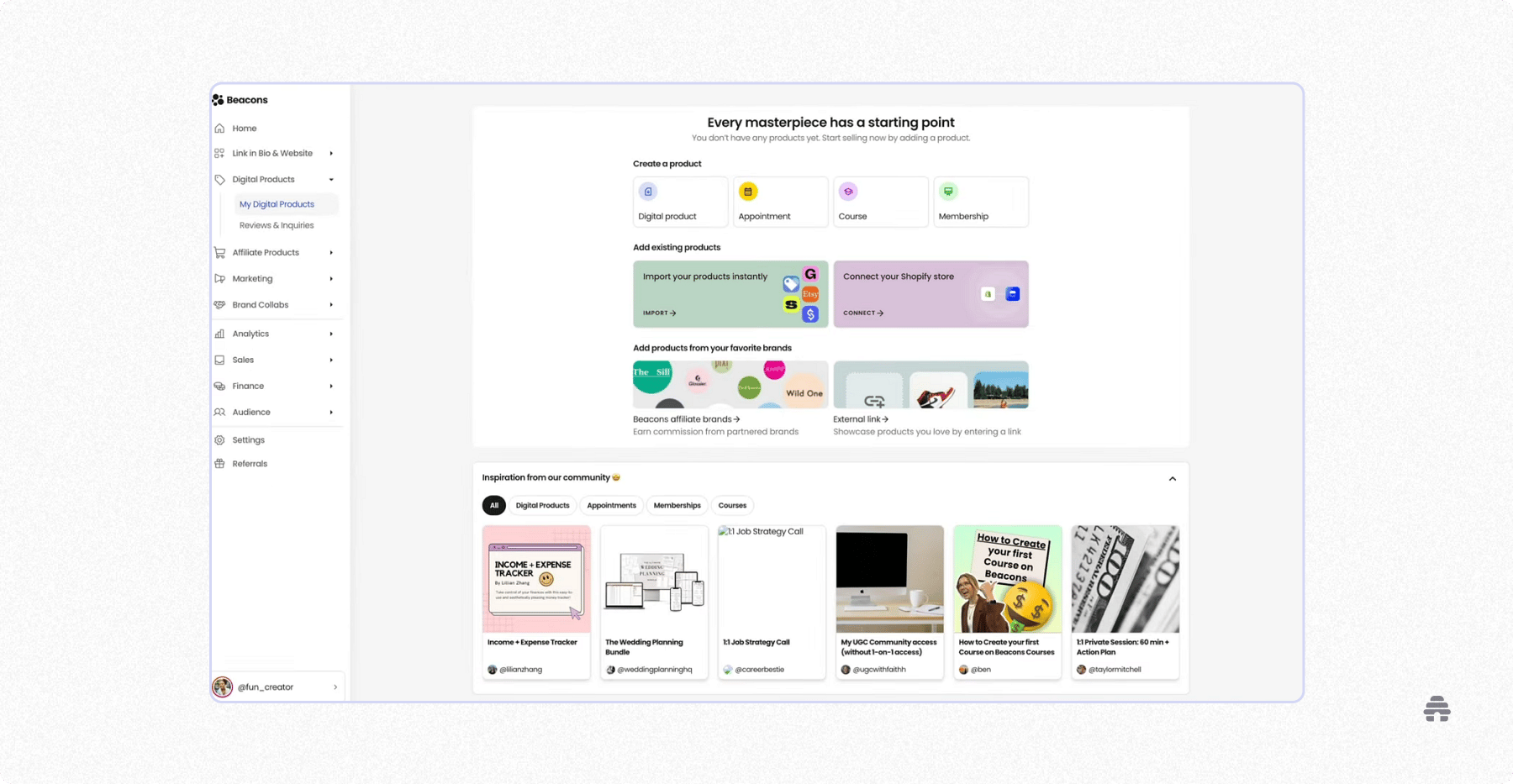
Beacons is a link-in-bio tool similar to Stan Store, offering digital downloads, basic LMS-style courses, paid bookings, and memberships. However, memberships only link to external platforms like Discord—you can’t manage a community within Beacons.
Beacons vs Gumroad
Beacons has AI tools. You can use its AI assistant to generate image thumbnails, email copy, and product descriptions. While the outputs are super basic, they’re a helpful starting point if you need some ideas.
Beacons doesn’t have a marketplace. Besides that, it has all the marketing features you’ll find in Gumroad, like discount codes, upsells, affiliate management, and email marketing.
Beacons doesn’t have blogging tools. Beacons comes with a few website and link-in-bio templates, but the designs are super basic with limited customization and no blogging tools. So if you’re looking for a Gumroad alternative that handles these features well, Beacons isn’t for you.
Beacons Pricing
Beacons has a free plan and a Starter plan at $10/month, but both charge a 9% transaction fee per sale.
To remove the transaction fees, you’ll need to upgrade to a higher plan, which costs $30/month.
13. Lemon Squeezy: Best Gumroad Alternative for Selling SaaS Subscriptions
Lemon Squeezy is built for selling digital products and SaaS subscriptions. You can customize your storefront, upload products, and connect your SaaS app using APIs and webhooks. That way, when someone subscribes to your app, cancels, or renews, their access is updated automatically in the app.
Lemon Squeezy vs. Gumroad
Lemon Squeezy makes it easier to handle SaaS subscriptions. It supports multiple pricing tiers, per-seat billing, and usage-based pricing. Since Lemon Squeezy acts as a merchant of record, it also handles global VAT and tax compliance on your behalf.
Lemon Squeezy has built-in marketing tools. Like Gumroad, you can set up discount codes, upsells, affiliates, and email campaigns for your products. However, you’ll pay additional fees for using its email feature.
Lemon Squeezy has a longer payout schedule. Your earnings will be held for 13 days before becoming available for withdrawals. Even then, you need a minimum of $50 to withdraw your money.
Lemon Squeezy Pricing
Lemon Squeezy is free to use, but it charges a 5% + $0.50 transaction fee per sale.
If you want email marketing, plans start at $10/month for 1,000 subscribers.
Which Is the Best Gumroad Alternative for You?
Every platform on this list has its own strengths. The right choice depends on your business needs.
Here are a few quick questions to help you decide:
Can this platform support everything I want to sell?
Do I want my website, blog, and email in one place?
Do I want built-in marketplace discovery for extra traffic?
Will I earn more with transaction fees or a flat monthly fee?
Do I want to maximize conversions with discounts, affiliates, and upsells?
Here’s my take on where to start:
If you want something similar to Gumroad that’s free to start and offers lower transaction fees, consider Payhip, Fourthwall, Beacons, Etsy, or Lemon Squeezy.
If you’re already making steady sales and want to reduce or eliminate transaction fees, look into beehiiv, Stan Store, ThriveCart, Sellfy, SendOwl, or Podia.
But here’s the thing: most of these tools work best if you’re running a side hustle and are okay earning a few hundred dollars here and there.
But if you want one platform that helps you run your entire online business from a single dashboard and build a full-time income, beehiiv is the best option for you. With beehiiv, you can:
Build custom websites and link-in-bio pages
Grow your audience through multiple channels
Sell digital products, links, and coaching services
Publish blog posts, newsletters, and email campaigns in one place
Diversify your income streams
And you still keep 100% of your earnings, so more of your revenue stays with you as you grow.
Sticking with Gumroad may be the easy choice right now, but beehiiv is the profitable choice for your future. You can try beehiiv’s free plan to see how it works for yourself.
FAQs on the Best Alternatives to Gumroad
What Is Similar to Gumroad?
Payhip, Fourthwall, Beacons, Etsy, and Lemon Squeezy are very similar to Gumroad and offer lower transaction fees. But they also come with many of the same limitations. If you want more customization, better inbound marketing tools, and 0% transaction fees, beehiiv is the better pick.
Why Are People Leaving Gumroad?
Many people leave Gumroad because of its high transaction fees. It takes 10% plus $0.50 from every sale, on top of standard payment processing fees. And if the sale comes through Gumroad Discover, there’s an extra 30% added to those costs. As a result, people look for Gumroad competitors who take lower fees or a flat monthly fee.
Is Gumroad Better Than Patreon?
Gumroad and Patreon both support digital products and memberships. However, Gumroad has more marketing tools and a marketplace to boost your visibility. Meanwhile, Patreon is better for building a deeper connection with your audience via two-way discussions and DMs.
Is Payhip Better Than Gumroad?
Payhip and Gumroad have very similar features. However, Payhip has lower transaction fees and gives you more control over your storefront design. Gumroad, on the other hand, has a more active marketplace, so you’re more likely to get buyers discovering your products there.
What Is the Best Selling Platform?
beehiiv is the best-selling platform because it lets you offer multiple products like digital downloads, coaching, and paid links, gives you access to a variety of growth and earning tools, and takes 0% of your earnings.
Related Articles