- Home
- Posts
- The Best and Worst Content Distribution Strategies in 2026
The Best and Worst Content Distribution Strategies in 2026
Everything Creators Need To Know About Distribution in 2026

Moses Agbonmabi
April 05, 2026
How much reach are you losing because your content distribution strategies were not built for how audiences behave in 2026?
I know how you feel: you want an audience that actually belongs to you, one that grows steadily without depending on algorithms that change overnight.
Every day, you see creators talking about shifting from chasing impressions to treating platforms as bridges rather than destinations. You see them building real leverage and seeing measurable growth within weeks of making the switch.
The best part is that it doesn't require publishing more or overhauling your workflow. It's mostly about redirecting effort you're already spending toward channels that convert.
This guide shows you which content distribution strategies build durable audiences and which ones just rent attention you'll never own.
Table of Contents
What Content Distribution Really Means in 2026
Content distribution is the process of getting your content into the hands, feeds, and inboxes of people who will actually care about it. It's different from promotion, which is simply announcing that something exists.
In 2026, effective distribution means understanding that your audience fragments across dozens of platforms but consolidates their attention on just a few. They scroll Instagram during lunch, listen to podcasts during commutes, and actually read newsletters when they sit down with a cup of coffee.
Each content distribution channel has a different relationship with attention, with some platforms letting you interrupt people briefly while others let you hold their attention long enough to earn trust.
The shift this year is that audiences have grown more skeptical of algorithm-fed content and actively seek out sources they've chosen to follow. That makes owned content distribution channels more valuable than ever.
With that context in mind, here's how I decided which strategies actually deserve your time.
How I Evaluated These Content Distribution Strategies
I looked at three factors when assessing each approach:
Durability looks at whether this channel will still deliver results in two years or if a single algorithm update could erase your progress.
Capture rate measures how effectively this channel lets you move people from viewers to owned subscribers.
Effort-to-leverage ratio considers how much ongoing work this channel demands relative to the compounding returns it provides.
Strategies that score high on all three make the "best" list. Those that score well on impressions but poorly on capture and durability land on the "worst" list.
Content Distribution Strategy Comparison Table

This table isn't exhaustive, but it exposes a clear pattern. The best content distribution strategies require upfront investment that compounds over time, while the worst demand constant effort while building nothing permanent.
Best Content Distribution Strategies in 2026

The strategies below share one thing in common. They prioritize building assets you own over chasing metrics you rent. Each one offers a different path to audience ownership, so you can choose based on your content type and strengths.
Owned Distribution Through Email and Websites

Add a content upgrade to your highest-traffic blog post this week. You can either create a checklist, template, or swipe file related to the topic and gate it behind an email signup. This single change can convert 2-5% of visitors into subscribers instead of the 0.5% you get from a generic sidebar form.
Then, set up a welcome sequence that delivers value immediately. Start by sending your best-performing content in the first three emails, so new subscribers see your strongest work before deciding whether to stay. Most creators lose subscribers in the first week because they wait too long to prove their value.
Now, republish your newsletter on your blog 48 hours after sending. This captures search traffic from the same content while keeping your newsletter exclusive for subscribers who want it first.
End every LinkedIn post with a specific call to action that offers something your newsletter provides. Instead of "subscribe to my newsletter," try "I break down one growth tactic like this every Tuesday, link in comments." The specificity converts better.
You can also repurpose one long-form piece into a X (Formerly Twitter) thread by pulling out the most counterintuitive point and building the thread around that tension. Threads that challenge conventional wisdom outperform summary threads consistently.
On Instagram and TikTok, use your bio link for a landing page with a clear value proposition rather than a generic link tree. One focused offer converts higher than seven scattered options.
Search-Based Distribution and Evergreen Content
Target keywords where the top results are Reddit threads, Quora answers, or outdated articles. These indicate weak competition and an audience actively searching for better answers.
Then, update your best-performing posts every six months with fresh examples, new data, and current screenshots. Google rewards freshness, and a 30-minute update can double traffic to an existing post.
Also, add a Frequently Asked Questions (FAQ) section to every cornerstone article using questions pulled directly from "People Also Ask" boxes. This captures featured snippet opportunities and long-tail traffic without creating new content.
Pitch newsletter swaps to creators with 50-150% of your list size. Email them a specific issue of theirs you enjoyed and then propose a swap where you each recommend the other to your list on the same day.
Once they agree, negotiate to include a content upgrade within the article rather than just a bio link. A relevant downloadable inside the post converts 5-10x better than a bio mention.
Syndicate to Medium and LinkedIn 14 days after publishing on your site. Use canonical tags to protect your SEO and add an "Originally published at [your site]" note with a link at the top.
Community-Led Distribution
Identify three communities where your target audience already gathers and spend 30 days answering questions without promoting anything. Build recognition before ever sharing your own content.
When you do share, frame it as a response to a specific question someone asked rather than a standalone promotion. "I wrote about this last week after seeing similar questions here" lands better than "check out my new post."
Create community-specific versions of your content that reference inside jokes, common frustrations, or ongoing discussions within that group. Generic drops get ignored while tailored shares get amplified.
Why Trust Me: With five years of marketing experience, I've honed my ability to develop profitable marketing funnels and campaigns. I share some of my strategies in this article. Feel free to reach out to me on LinkedIn anytime!
The Worst Content Distribution Strategies for Long-Term Growth

I've watched creators burn out chasing channels that never build anything lasting. Here are some approaches that look productive on the surface but leave you starting from zero every time the algorithm shifts:
Cross-posting identical content everywhere tends to waste time and underperform because each platform has different formats and norms.
Chasing viral short-form video trends exhausts creators while building nothing durable; and unless you have a clear path to capture those viewers, viral moments are just vanity metrics.
Relying entirely on platforms you don't control puts your business at the mercy of algorithm changes. Just ask the creators who built large Facebook followings and watched their reach collapse when the platform prioritized paid content.
Running paid ads without capture mechanisms burns your budget by producing traffic spikes with no lasting benefit, since those visitors never convert into subscribers.
The common thread is that none of these strategies move people toward something you own.
Owned vs. Rented Distribution Tradeoffs
Every distribution channel falls somewhere on the ownership spectrum, with owned channels like email and your website giving you complete control but requiring you to build the audience yourself.
Rented channels like social platforms provide built-in audiences but extract value through limited reach and platform dependency.
The practical approach uses rented channels to feed owned ones. Accept that social platforms will never give you full access to your own followers. Design your content distribution strategy to capture people before platform dynamics change.
Creators with email lists of 10,000+ subscribers can weather any platform change, and those entirely dependent on rented platforms restart from zero when algorithms shift.
Here's how to make that work in practice without doubling your content workload.
How To Redistribute One Piece Across Five Channels
Instead of spreading yourself thin across dozens of content distribution channels, start with one substantial blog post and extract five distribution assets from it.
Here's the exact breakdown:
Channel 1 - Newsletter: Open your post and find the section that solves a specific problem. Rewrite just that section as a standalone tip with a fresh example. Use a subject line formula like "The [specific tactic] that [specific result]" and add a P.S. linking to the full post. This distribution approach consistently outperforms sending the entire article as a newsletter.
Channel 2 - X (Formerly Twitter) Thread: Copy your post's subheadings into a document. Turn each one into a single tweet that delivers a complete thought. Your first tweet should be the most surprising or counterintuitive point, not a summary. End with "I wrote a deeper breakdown on [topic]" and link to the post. Avoid threads that say "here's what I learned" because they signal a tease rather than value.
Channel 3 - LinkedIn Post: Pull one statistic, result, or framework from your post. Write 3-4 short paragraphs: open with the insight, explain why it matters, share how you applied it, and close with a question. Add the link in the first comment, not the post itself, since LinkedIn's algorithm deprioritizes posts with external links in the body.
Channel 4 - Short-Form Video: Pick the most actionable tip from your post and script a 45-second video. Structure it as: hook stating the problem, the solution, and one example of it working. Film it in one take using your phone's front camera. Post natively to TikTok, Reels, and Shorts with the caption "Full breakdown in bio" and make sure your bio link goes to a newsletter signup, not just the post.
Channel 5 - Community Share: Search Slack groups, Discord servers, or subreddits for questions your post answers. Reply with a condensed version of your advice, written specifically for that person's situation. Only after providing the full answer, add "I actually wrote more about this recently if you want the detailed version." This builds reputation before asking for attention.
The key is that each channel gets content shaped for how people consume on that platform. One blog post becomes a full week of distribution without starting from scratch.
Matching Distribution Channels to Content Types
Not every piece of content belongs on every platform, and forcing bad fits wastes effort.
Here's what works where:
Long-form tutorials and analyses perform best on your blog and newsletter, where readers expect depth. Repurpose into X (Formerly Twitter) threads only if each tweet delivers standalone value.
Data-driven content with charts works well on LinkedIn, where professionals share insights that make them look informed. Pull one surprising stat, write 3-4 paragraphs of context, and watch it outperform generic updates.
Opinion pieces and hot takes thrive on X (Formerly Twitter) where controversy drives engagement. Save nuanced takes for your newsletter, where subscribers already trust your perspective.
Behind-the-scenes breakdowns convert best on short-form video. Show your screen or walk through your workflow in real time.
Turning Distribution Into Audience Ownership
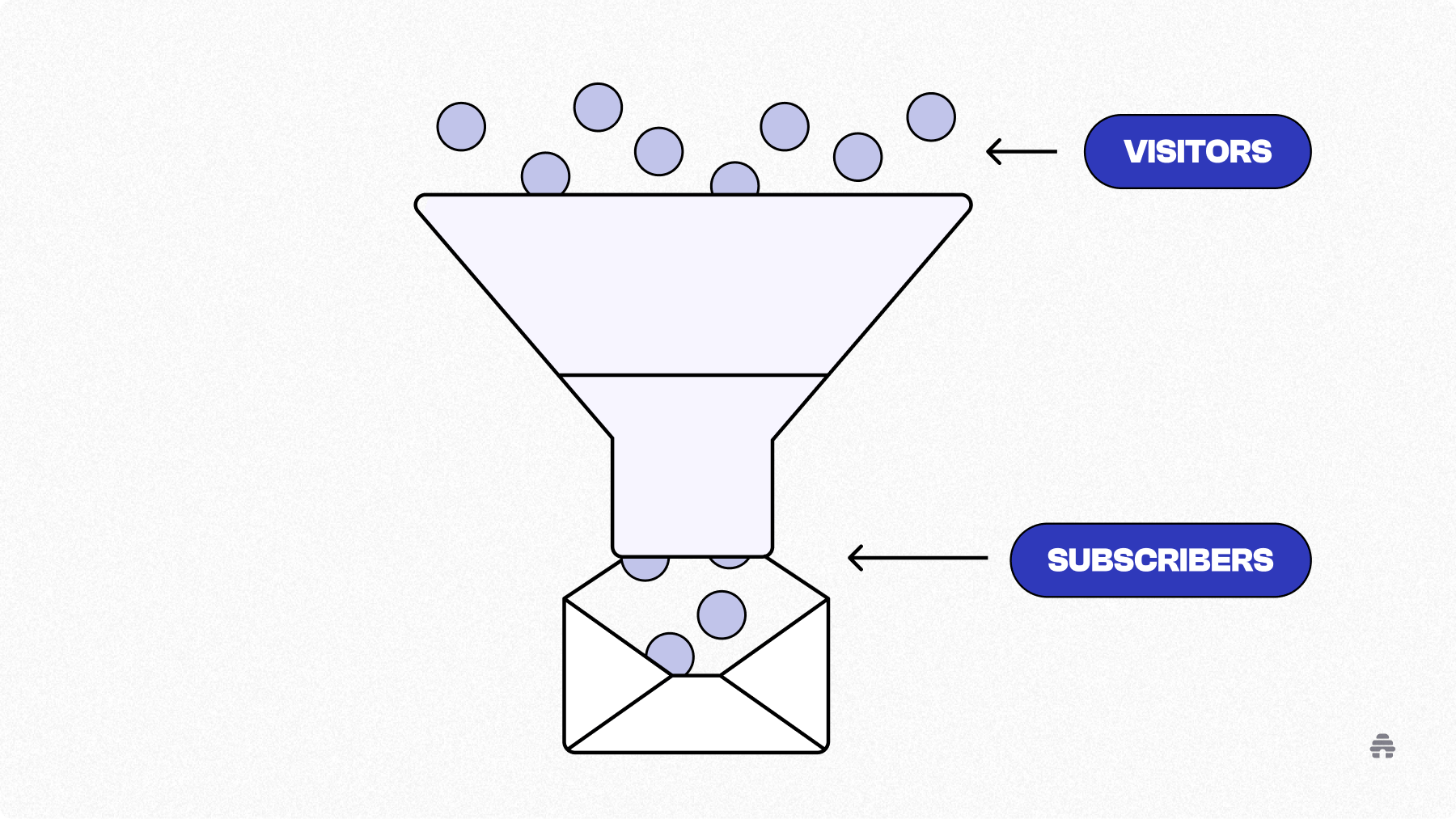
Every distribution effort should funnel toward a channel you control. Here's how to make that happen:
Replace generic calls to action (CTAs) with specific value promises. Instead of "subscribe to my newsletter," try "I send one growth tactic like this every Tuesday, tested on my own projects first." The specificity signals that subscribing delivers something concrete.
Place signup forms at decision points, not just at the end. Add an inline form after the first major section when readers have confirmed the content is relevant. Most readers never scroll to the end-of-post forms.
Track capture rate as your primary metric. Divide new subscribers by total visitors from each channel. A channel driving 100 visitors with 5% capture beats one driving 1,000 visitors with 0.2% capture.
Fixing Distribution Without Publishing More

Most creators need better distribution of existing content, not more content.
Start with these three steps:
Audit your top 10 posts from the past year. Check which still drive traffic, which rank for keywords, and which have decayed. Update decaying posts with fresh examples before creating anything new.
Identify the highest-converting content by checking which posts generate the most signups relative to traffic. Double down on distribution for these since they've proven they resonate.
Kill channels that consume time without delivering subscribers. Three months of consistent posting with zero email signups means that the audience isn't yours. Reallocate toward content distribution channels with proven capture rates.
Start Building Your Content Distribution Strategy Today
The best content distribution strategies in 2026 prioritize owned channels over rented ones, use social platforms as bridges rather than destinations, and redistribute existing content instead of constantly creating new pieces.
beehiiv makes this shift simple with built-in referral programs, SEO-optimized web hosting, and analytics that show which distribution efforts actually drive subscribers.
Start your free beehiiv account and build an audience of your own.
Related Articles

The one place to build.
Get beehiiv updates delivered directly to your inbox.
By subscribing you agree to our Privacy Policy and provide consent to receive updates from our company.
Social Platforms and Algorithm-Driven Reach