- Home
- Posts
- Gated Content Examples: What Works Best in Campaigns
Gated Content Examples: What Works Best in Campaigns
Learn the Different Types of Gated Content and How To Use Them

Nicola Vaughan
February 06, 2026
Gated content is one of the most effective ways to capture qualified leads–a HubSpot study confirms that 61% of marketers say gated content is their top source of high-quality leads (Hopp).
If the term is new to you, it essentially means exchanging valuable, exclusive content for a reader’s email address, for example.
In my 10 years working in digital marketing, I’ve experimented with a range of different examples of gated content, from whitepapers to email courses, and learned that some gated content examples tend to outperform others.
This is where beehiiv has been such a game-changer for me when creating gated content.
I love that I can use beehiiv to keep everything in one place, rather than using different tools for my forms, landing pages, and automations. Their tools allow me to capture leads simply and effectively, while also introducing automated lead nurturing.
This article will explain why gated content is important and the types of gated content that have been most successful in my experience. I’ll also show you how you can replicate these using beehiiv’s built-in tools.
Table of Contents
What Gated Content Really Means for Marketers

Gated content isn’t just about hiding information behind a wall.
It’s about creating a fair, mutually beneficial exchange whereby gated content offers something valuable enough that a reader is willing to part with their email address for it. A reader must never doubt your content or question why they signed up for it. They should trust that they’ll receive something really great in return for their attention and data.
Gated content must ideally solve a real problem, delivering insight that your audience can’t get elsewhere or offering a shortcut that saves time, money, or effort. When done right, gated content signals credibility and shows that your brand has expertise worth listening to.
This is also why gated content is super important in trust-building. As soon as someone hands over their email address, they’re expecting you to deliver on a promise of great content. This instills trust and sets the tone for future interactions - if the content doesn’t deliver value, the relationship is usually doomed before it’s even begun.
For marketers looking to grow a high-quality, engaged audience, gated content can help create super relevant content that attracts the right subscribers, who see value in what you’re offering and are prepared to engage for more of it.
The Types of Gated Content That Convert Best
For me, the gated content that consistently performed was content that people returned to, like the assets they bookmark, share with friends, or reference frequently.
These aren’t one-time visits driven by clickbait marketing. They are tools that genuinely solve a real problem, and keep readers coming back again and again.
Below are some examples of gated content that have delivered the strongest conversion rates in my campaigns, and why I believe they’ve continued to outperform other formats.
eBooks & Guides That Deliver Real Value

Long-form content tends to be a winner as gated content, particularly when it delivers real substance, not recycled tips or generic advice. My best-performing gated guides were ebooks that offered detailed frameworks and step-by-step processes, or personal insights from my own experience.
Readers can tell instantly whether a guide has been written to genuinely help them, or if it was written to tick a box. When the content includes data, lived experiences, and practical advice, it signals authority and makes the exchange of information feel worth it.
Ebooks and guides also tend to get downloaded, saved, and shared, which means their value is extended beyond the initial sign-up.
Templates That Solve a Specific Problem
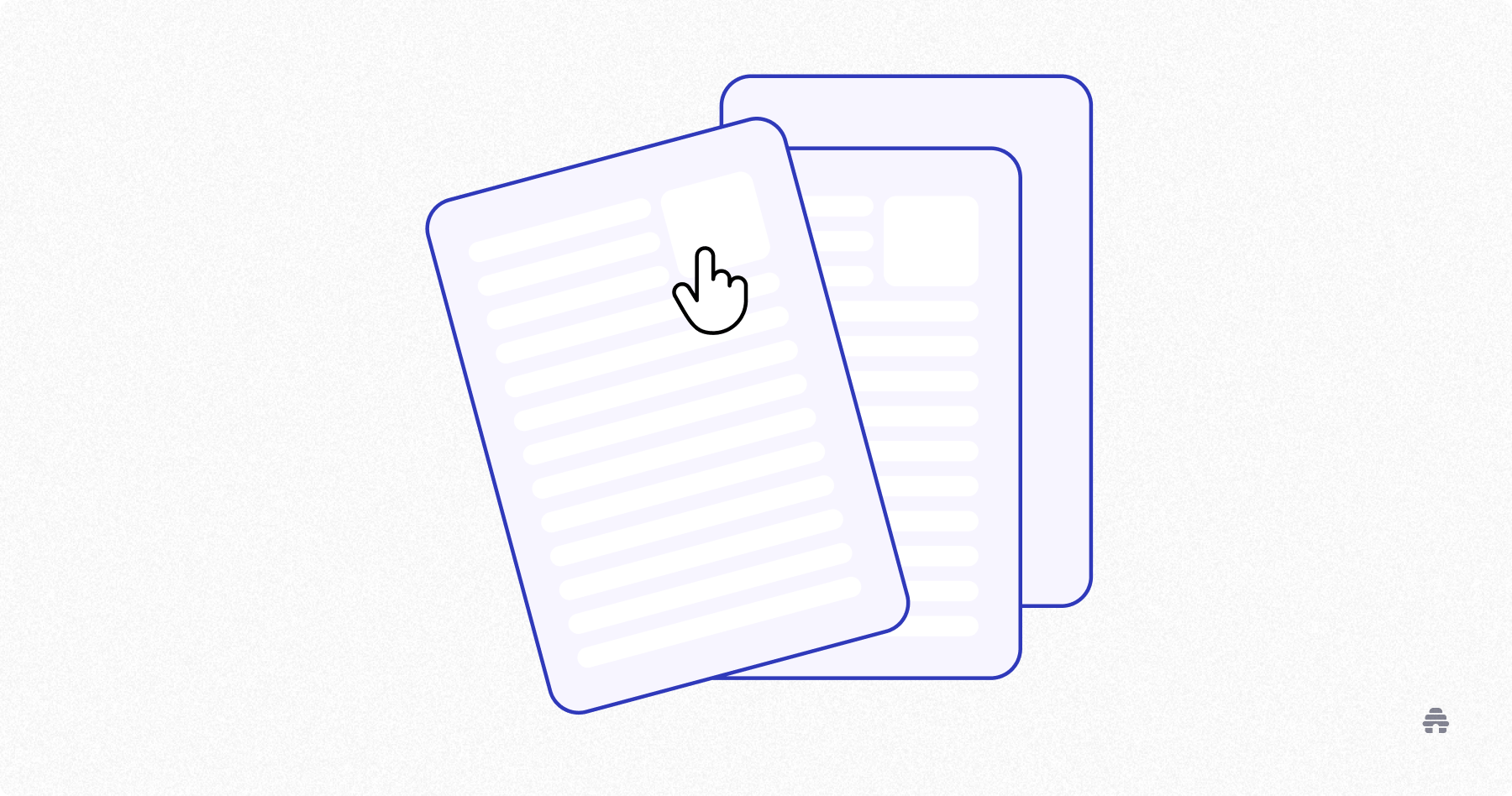
Template assets tend to convert because they save time and provide instant value. They’re one of the most reliable types of gated content in my experience, providing people with a practical tool that they can plug straight into their workflow without a long read or steep learning curve.
My personal favorites are templates for content calendars, KPI dashboards, and onboarding checklists. These types of content always resonated with my audience and were viewed and shared regularly.
They’re also highly shareable, helping to amplify their reach and bring me subscribers that may never have found my brand otherwise.
Webinars & Live Workshops That Build Trust

Webinars are an example of gated content that is a powerful format for attracting niche, high-intent leads. Engaging with your audience in real-time builds credibility and a connection that is difficult to achieve elsewhere.
In a webinar, my audience can ask questions, see examples of my work, and hear a human voice. I’ve found this really helps nurture my subscribers and encourages them to trust my brand.
The webinars that worked best were the ones that taught my audience something concrete. These could be a walkthrough of a system, a live audit, or a behind-the-scenes look at one of my best-performing strategies.
I tended to perform webinars live to create a sense of exclusivity and urgency with my audience, as I found this significantly boosted attendance and signups. And because they’re already engaged, these events are ideal for leads that are close to making a buying decision, but just need that extra nudge.

I love using email for gated content. It’s one of the most underrated ways to build a loyal audience, in my opinion.
I’ve found that multi-day email courses, like a five-day deep dive on a topic, perform especially well because they gradually build trust, with each email reinforcing the value of my campaign.
By the time the reader has finished the final lesson, they’ve spent several days learning from you and have built a more solid relationship with your brand.
Exclusive newsletters work similarly. When subscribers know they’re getting access to resources that aren’t readily available, they are so much more likely to become engaged.
With beehiiv, setting up gated sequences is super easy. It facilitates custom forms, triggers automated onboarding, and delivers multi-step courses without needing to juggle lots of different tools.
This is perfect for nurturing long-term relationships, turning new subscribers into engaged advocates.
A great example of this is beehiiv’s customer Mady Maio, founder of the travel app Camber App, who launched her newsletter, LA Happenings by Camber, to support her travel-app brand with a dedicated community.
In return for their email address, subscribers received local recommendations and event updates through a friendly on-brand voice, which resulted in strong subscriber loyalty, high engagement rates, and inbound interest from new sponsors. This shows how successful gated content doesn’t need to be heavy or academic to work. It simply needs to be meaningful and relevant to your community.
What I’ve Learned From Testing Gated Content
I’ve learned lots of different lessons from testing gated content, from what works to what really doesn’t.
In my experience, successful gated content is shaped by audience motivation, context, and how you communicate value. Understanding these variables changed the way I approached gated content, helping to drastically improve my conversion rates over time.
Here are some of the biggest lessons I’ve learned and some tips to prevent you from making the same mistakes I did.
How Audience Intent Impacts Conversion Rates
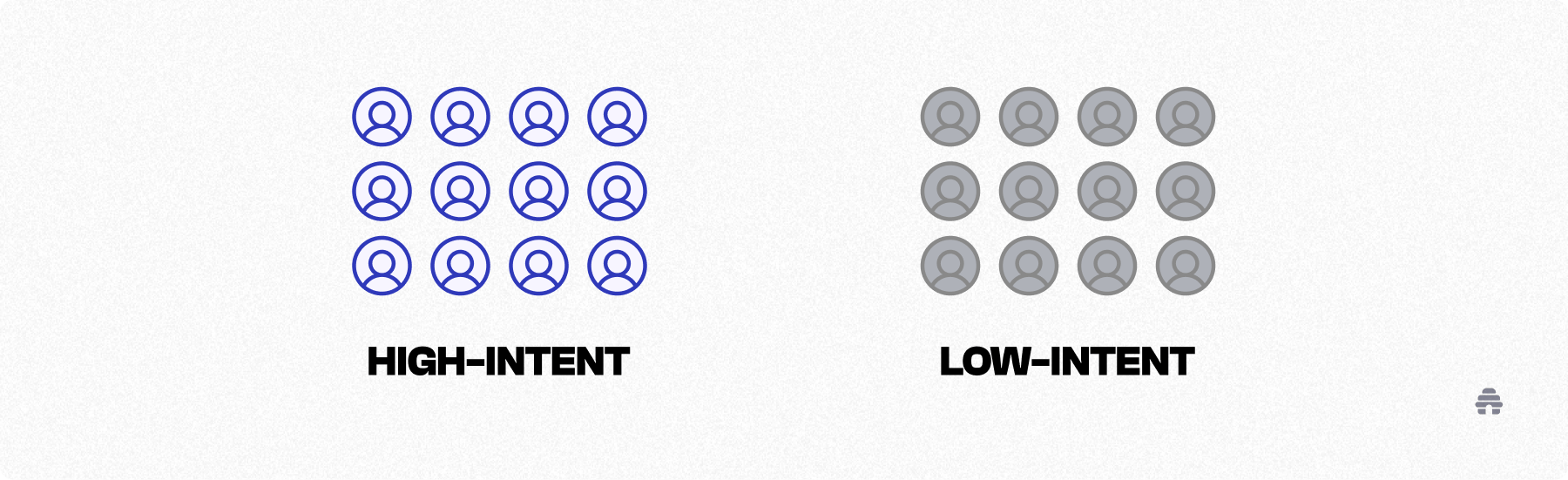
Audience intent changes everything. I’ve found that there are two types of readers: high-intent readers and low-intent readers.
High-intent readers actively look for a solution, do research, and compare different options. They tend to convert more easily, as they arrive with a purpose and are willing to exchange their information provided that your gated content aligns with that purpose.
Low-intent readers are trickier. They may be curious, but aren’t committed, and therefore need more convincing. They’ll convert quickly if they feel your content is instantly valuable; otherwise, they’re off to look at your competitor.
Recognizing the difference between audience intent helped me better understand how gated content works. High-intent content like templates or webinars became gated, while broader, more ‘top-of-the-funnel’ content stayed open to allow me to build trust with my subscribers.
Matching the gate to the user’s specific intent was the biggest driver of conversion improvement, and a lesson I had to learn to start seeing success from my gated content. Testing a variety of paid content examples and free gated content showed me what readers are willing to exchange when an asset provides real, actionable value.
Why Simplicity Beats Complexity
Another lesson that became very obvious early on was the importance of simplicity for conversions.
Too many form fields or unclear value propositions turned off my readers instantly, even if it looked great and super clever.
I found that people don’t want a chore when it comes to gated content. They wanted a clear route to the asset that was quick and easy to navigate.
For me, the best-performing gated assets had the following three elements in common:
Short, Simple Forms: Usually just an email field.
Clear, Concrete Value Propositions: E.g., Enter Your Email Address To Get This Top-Performing Template.
Quick Access: Gated content is delivered instantly after sign-up.
When the offer is clear and the process is straightforward, the gate becomes practically invisible. Simplicity always wins over complexity and gives you a competitive advantage over competing sites that may have overcomplicated processes.
When To Gate Content & When To Keep It Free
One of the most important lessons I learned with gated content was understanding what to gate and what not to.
I learned that the best rule of thumb is to gate content that offers transformation, not information. If you have any doubt about gating content, it’s probably best to leave it open.
Content that helps your audience accomplish something, complete a task, or solve a problem is worth gating. These could be templates, in-depth guides, systems, or tutorials that clearly help someone improve a process and feel like they couldn’t be without this asset.
On the other hand, content that informs users, such as news, commentary, or general tips, usually performs better ungated.
Free content can help your brand build trust, authority, and reach new audiences. Gated content converts that trust into a deeper relationship, and finding a balance between gated and ungated content helps keep your content healthy.
You can also use paid content examples, such as subscription models to gate content, when the asset provides extra value for your audience. While this can work, be careful to only pay-wall content that is highly valuable, so as not to turn off your subscribers from your brand.
Why Listen to Me? I have been working in the digital marketing space for nearly 10 years, predominantly helping brands with their email marketing and online presence. I now specialize in creating great content for beehiiv to help people nail their email strategies!
How I Use Beehiiv To Gate & Capture Leads
A huge challenge for me with gated content was finding a system that allows me to manage all of the moving parts in one place.
I used to use multiple tools to make just one gated asset work, which was stressful and tricky to navigate. Now, all of my content lives in one place, making my content easier to manage and overall more successful.
beehiiv streamlines the process from capturing leads to lead nurturing. Here are some of my favorite beehiiv features that allow me to use gated content in the best ways.
Creating Forms & Landing Pages Inside beehiiv
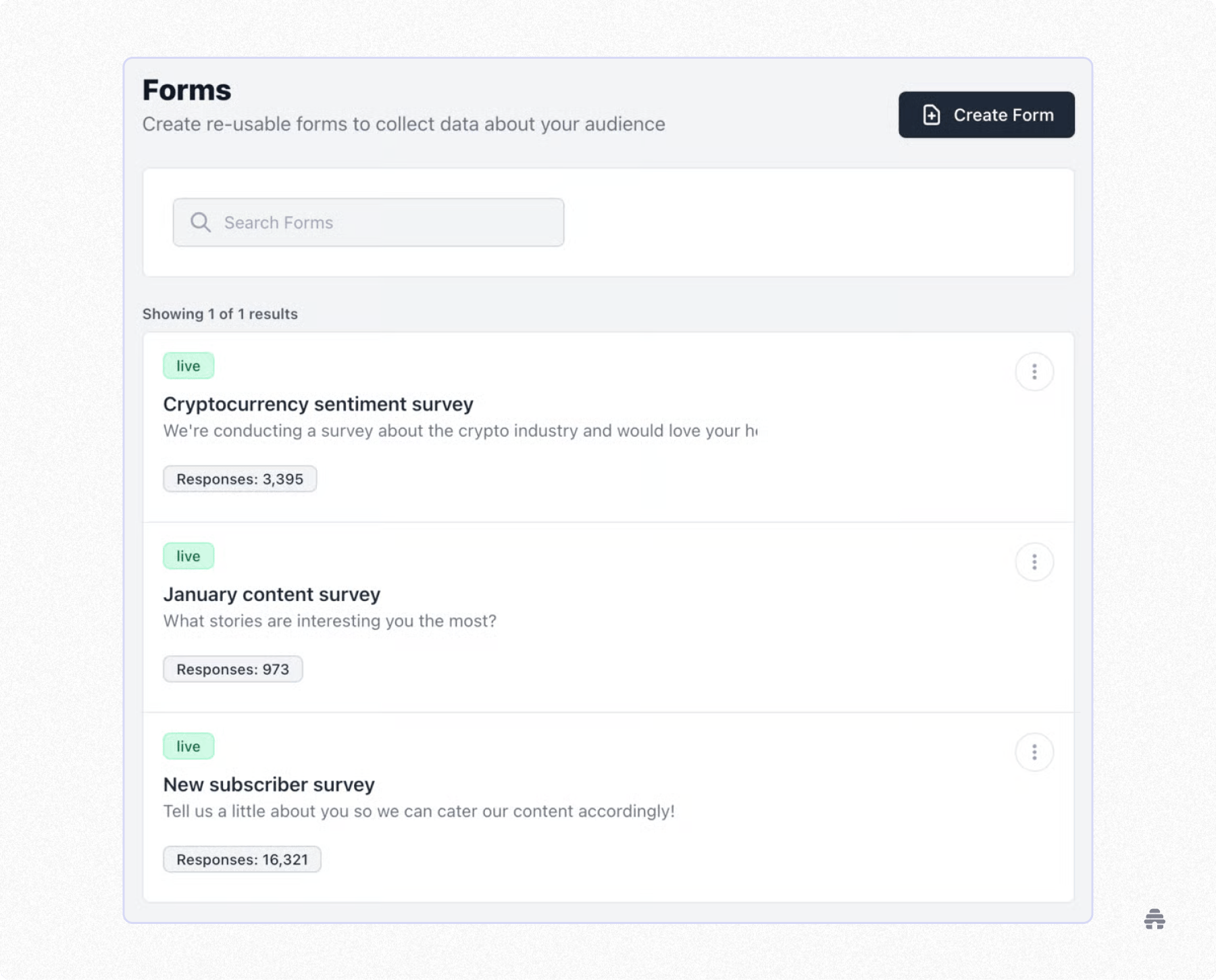
Setting up gated content within beehiiv is super easy with their custom forms and landing pages.
They can be built in a matter of minutes, giving you a great starting point for your gated content to live.
You can build dedicated gated content landing page examples within the beehiiv platform, add your headline and value proposition, upload visuals, and place a lead capture form that automatically routes subscribers into your publication.
No coding required, no external plugins to manage, and no third-party form builders either.
What’s more, the forms are fully integrated into the infrastructure of your newsletter. When someone signs up, their information is funneled straight into your subscriber list. It will also include any tags or metadata that you’ve decided to track.
It’s simple, easy to use, and negates the need to use multiple tools that don’t always play well together.
Automating Follow-Ups for New Subscribers
Once you’ve captured a lead, beehiiv’s automations make lead nurturing super easy to begin,
I love that with beehiiv, you can create automated email sequences that trigger the moment someone downloads a gated asset. I often use these email sequences to:
Deliver content to users instantly
Share related resources/tutorials
Introduce readers to my blog and other content
Guide high-intent leads towards the next step, such as a product trial or a different piece of gated content
Automated follow-ups can significantly improve engagement because they meet subscribers at the exact moment they’re most engaged, while reducing the need for you to focus on manual work that takes you away from other important areas of your business.
I used to think that automation was only possible with expensive automation software, but beehiiv allows me to use automation while keeping connected with my landing pages and newsletter, all in one place.
Tracking Lead Quality & Engagement Metrics

When you think you’ve perfected your gated content journey, it’s important to remember to always revisit it and see which types of gated content generate the best results.
With beehiiv, you can track open rates, click-through rates, subscriber growth, and engagement through their powerful 3D Analytics platform, to assess which gated assets provide you with the strongest, long-term subscribers.
I like using these beehiiv insights to find out which assets pull in highly engaged users, versus which attract quick sign-ups but low retention rates.
This data can also allow you to:
Refine or retire assets that aren’t producing results
Understand how different topics resonate with different audience segments
Double down on the assets that produce the best quality subscribers
When tracking lead quality and engagement metrics, the result is a feedback loop where each new gated asset becomes more effective, due to being informed by real subscriber behavior rather than guesswork.
When Gated Content Really Works
It’s my opinion that gated content succeeds when it provides immediate, clear value.
A reader should never have to wonder whether submitting their data was worth it. They should feel the payoff instantly and forget that they even had to enter their email in the first place.
The goal with gated content isn’t about collecting as many email addresses as possible. It’s about offering something meaningful enough that readers are glad they signed up, and it helps them implement a system, fix a problem, or learn a new skill.
If the asset exists just to ‘gate something’, it simply won’t convert. But if it is crafted to solve a real need, you’ll find the gate becomes a natural step, rather than a barrier.
My final advice to you is to focus on serving the reader first, and make the signup feel like the start of a valuable relationship rather than a transaction. I found that beehiiv was built for exactly that, and provided me with the forms and gated content landing page examples I needed to automate my gated content and nurture sequences.
It brings every aspect of gated content under one roof, allowing you more time to deliver value and less time wrestling with a new tool.
Start a free trial with beehiiv today to start turning your high-quality gated content into predictable subscriber growth, all from one intuitive, easy-to-use platform.
Google's "People Also Ask" Questions
What Is an Example of Gated Content?
An example of gated content is an in-depth eBook, template, checklist, whitepaper, webinar, or multi-day email course that is gated in return for an email address.
Gated content is essentially any valuable asset that requires readers to provide information to gain access. The key with gated content is that it provides actionable value or insights, giving visitors a valid reason to share their data.
The most successful examples of gated content are practical, problem-solving resources that are provided to readers instantly post data collection.
What Is the 70 20 10 Rule in Content Marketing?
The 70 20 10 rule in content marketing is a framework for content planning. It consists of:
70% of your content should educate or inform
20% of your content should engage or entertain
10% of your content should promote your products or services
The balance ensures that you provide your audience with consistent value while building trust and authority. It also ensures that you’re not just focusing on conversion, and that attracting and retaining your audience is more effective than constant self-promotion.
Does Gated Content Still Work?
Yes, gated content is still a highly successful strategy when executed correctly.
The success of gated content relies on delivering clear, immediate value to readers in exchange for an email address. While generic, low-value content rarely works, informative assets like templates, in-depth guides, and exclusive courses convert because they help readers solve a specific problem.
The key is for gated content to be relevant and instill trust and simplicity. It must feel worth the exchange to the reader; otherwise, it will never work.
What Are the 3 C’s of Content Strategy?
The 3 C’s of content strategy are Content, Context, and Channel.
Content refers to the quality and relevance of your material. Context is the audience’s intent and needs, and Channel is where the content is being delivered, such as a newsletter, social media channel, or a blog.
Balancing all three of these elements ensures your content resonates with your audience, reaches the right people at the right times, and achieves the best results for your business.
What Is the 3 3 3 Rule in Marketing?
The 3 3 3 rule in marketing is a guideline for improving the clarity of your messaging.
The rule encourages marketers to convey a key point in 3 sentences, repeat it 3 times, and make it memorable across 3 different channels.
This can improve messaging by ensuring that a message sticks, especially in a noisy, oversaturated environment. By simplifying communication in this way and reinforcing it regularly, you can drive engagement, increase recall, and improve the chances of your audience converting.
Related Articles