- Home
- Posts
- How Top Newsletters Multiply Revenue With Multi-Channel Earnings
How Top Newsletters Multiply Revenue With Multi-Channel Earnings
2025 Data: Multi-Channel Models Drive 3X More Revenue Than Subscription-Only

Kanishka
December 23, 2025

The creator economy is now worth hundreds of billions of dollars and is expected to more than double over the next decade. Yet despite that explosive growth, many creators are still relying on a single revenue stream—most often, paid subscriptions.
Subscriptions are still powerful, but the newsletters that are breaking out in 2025 all share one thing in common:
They treat subscriptions as the foundation — not the entire business model.
By layering multiple income streams—ads, Boosts (paid recommendations), sponsorships, affiliates, digital products, services, and events—top creators are earning significantly more than those who depend on subscriptions alone, often several times over.

Platforms like beehiiv are powering that shift. With a 0% platform fee on subscriptions, a built-in Ad Network, and a Boosts ecosystem for paid recommendations, beehiiv gives creators the infrastructure to earn across channels without sacrificing ownership or margin.
This is the 2025 playbook for building a sustainable, multi-channel monetization stack—and how the next generation of newsletter operators is using beehiiv to scale like media companies, not side projects.
Single-Stream vs. Multiple Revenue Streams
Traditional, single-stream models—like paid-only newsletters—have a ceiling:
Subscription growth in many markets is slowing.
Churn tends to rise as readers feel subscription fatigue.
Customer acquisition costs have climbed meaningfully over the last few years.
Platforms that take a 10%+ cut off the top further squeeze margins as you scale.
Multi-channel creators, on the other hand, tap into multiple markets at once: subscription revenue, digital advertising, affiliate spend, and the rapidly growing market for digital products and services.
Here’s the high-level contrast:
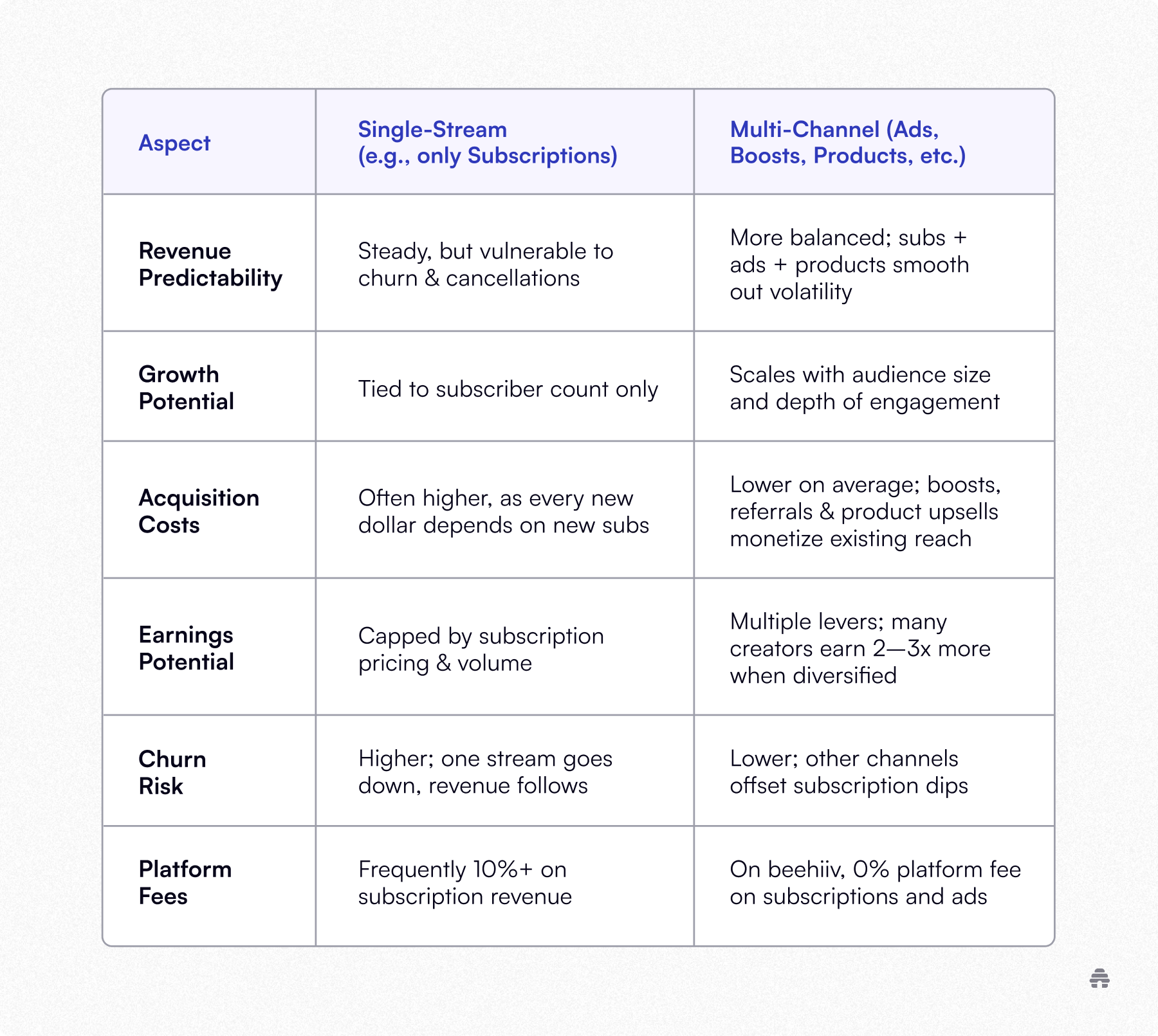
The important takeaway: it’s not that subscriptions are dead. It’s that subscriptions alone are no longer enough if you want durable, meaningful income.
The Key Earning Channels for Top Newsletters
The most successful newsletters in 2025 typically run two to four revenue streams simultaneously. A typical stack looks something like:
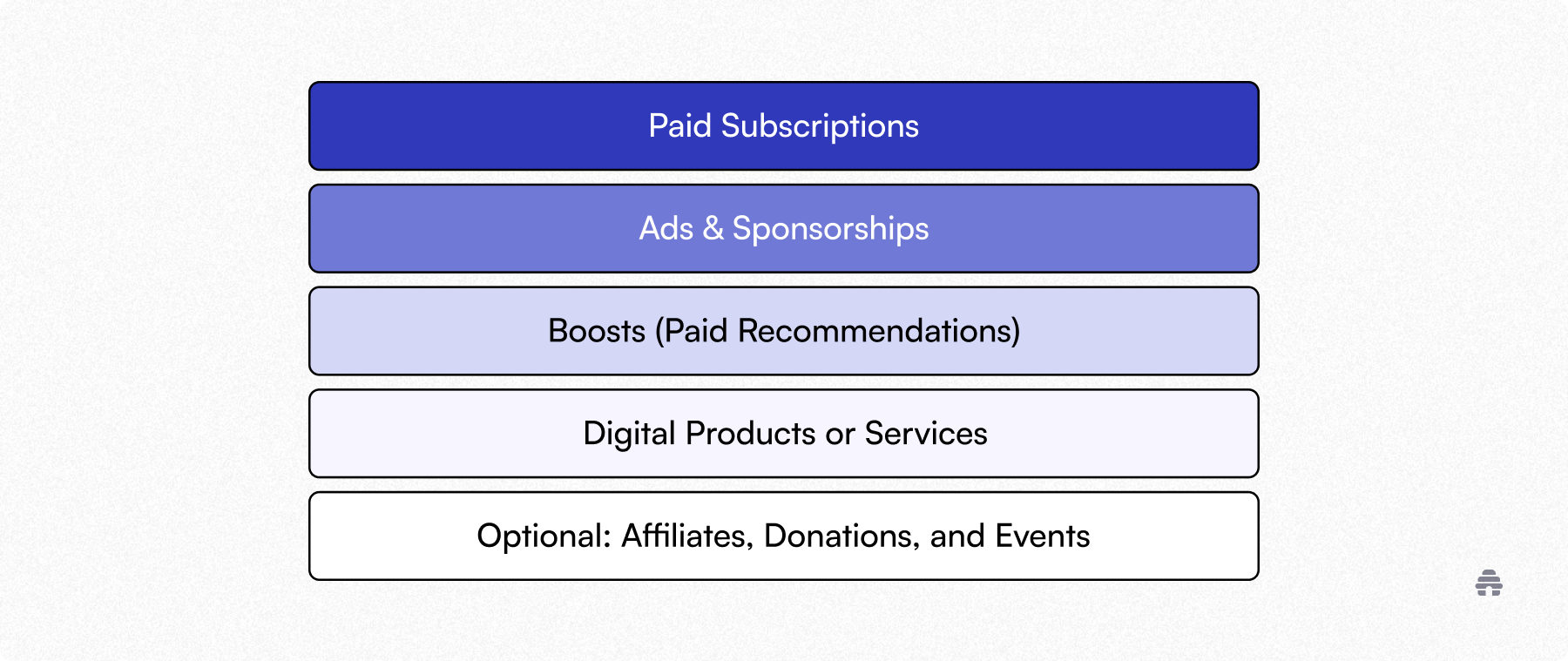
Let’s break those down with realistic, non-hyped ranges.
1. Paid Subscriptions: The Foundation
A classic freemium model still works:
You publish free content to grow reach.
You lock deeper analysis, extra issues, or special formats (like Q&As or reports) behind a paid tier.
Common patterns:
Conversion: Many healthy newsletters see 5–20% of their most engaged free readers eventually convert to paid.
Pricing: Typical ranges are $5–$15/month or $50–$150/year, depending on niche and value.
ARPU: B2B or high-value niches (finance, tech, operations, etc.) can capture much higher revenue per subscriber than general interest.
Smart operators also:
Use annual plans to reduce churn.
Add VIP tiers (community, calls, office hours) for their strongest fans.
Use beehiiv’s no-fee Stripe integration, so they keep 100% of subscription revenue (aside from payment processing).
2. Ads & Sponsorships: Scalable Upside
Sponsorships and newsletter ads are where many creators start to see real scale:
Brands love newsletters because readers opt in and actually read.
Typical CPMs can be far higher than display ads on the web, especially in B2B or niche verticals.
Rough ranges:
Smaller lists (1–5k) may start with flat fees or bundled deals.
Larger lists can see effective CPMs from the mid-single digits up to $20+, depending on niche, engagement, and format.
beehiiv’s Ad Network makes this vastly easier by:
Matching creators with vetted brands.
Handling campaign logistics and delivery.
Depositing payouts into your beehiiv wallet with no platform cut.
Instead of chasing sponsors manually, you can opt into a system that brings demand to you.
3. Boosts (Paid Recommendations): Earn With Your Network
Boosts are beehiiv’s built-in, paid recommendation system:
Other newsletters pay to be recommended after your signup flow.
You earn a fee for each new subscriber you help them acquire.
You can also pay into Boosts yourself to grow your audience through other publications.
In practical terms:
Many newsletters generate a steady, low-maintenance income layer just by opting into relevant Boost campaigns.
Others use Boosts primarily as a growth channel, reinvesting a portion of their revenue to acquire new subs.
It’s one of the cleanest ways to monetize the “network effect” of being part of an ecosystem with tens of thousands of other newsletters.
4. Digital Products & Services: High-Margin Upsells
Your newsletter audience is a warm, qualified group of people who already trust you. That’s perfect for selling:
Courses and workshops
Toolkits, templates, and playbooks
Niche reports or research
Consulting, coaching, or audits
Typical patterns:
Lower-ticket digital products in the $20–$100 range often convert a small but meaningful percentage of your readers.
Services (consulting, done-for-you work) can add thousands per month from just a handful of clients.
This is where you turn expertise into higher-ticket value, without needing millions of subscribers.
5. Affiliates, Donations, and Events
Rounding out the stack:
Affiliates: Controlled, high-fit recommendations can add incremental revenue without feeling spammy.
Donations/Tips: Particularly in creator or journalism spaces, some readers just want to support your work.
Events: Virtual or in-person events, conferences, or meetups can become major revenue lines once the audience is big and engaged enough.
You don’t need all of these on day one. But by layering even two or three, you radically improve your resilience and upside.
The Playbook: How Top Creators Build an Earning Stack

Most newsletters that grow into six- and seven-figure businesses follow a similar arc:
1. Understand Your Audience
First, you need insight:
Which segments are most engaged?
Who refers others?
What topics, formats, or offers get the strongest response?
beehiiv’s analytics and cohort tools make this clear: you can see performance at the audience, campaign, and content level, not just “opens and clicks.”
2. Nail the Core: A Strong Free + Paid Structure
Start with:
A consistent free cadence (weekly or more) that builds habit.
A clear value proposition for a paid tier:
Deeper insights
Access to archives
Extra sends
Community, AMAs, or private content
Utilize beehiiv’s no-fee subscriptions so your unit economics aren’t sabotaged by platform rent.
3. Layer in Ads & Sponsorships
Once you’ve got:
A stable send cadence
A clear audience profile
Solid open rates
…you’re ready to add one or two sponsor slots per send.
With beehiiv’s Ad Network, that can look like:
Opting in to receive weekly sponsorship offers
Accepting or rejecting campaigns with a couple of clicks
Dropping pre-formatted ad units directly into the editor
You stay in control of what shows up in your newsletter—the network just eliminates the manual outreach and negotiation.
4. Turn on Boosts and Referrals
Now you can:
Earn when your subscribers opt into other newsletters that you recommend.
Grow when you pay into Boosts to appear after other newsletters’ signup flows.
This creates:
An earning flywheel (getting paid for recommendations), and
A growth flywheel (acquiring new readers from aligned publications).
5. Launch a Product or Service
When you understand:
What your audience consistently asks you for
Where their pain points or aspirations really lie
…you can design a simple product:
A short course
A live cohort workshop
A downloadable toolkit
A 1:1 or small-group advisory offer
Use your newsletter to validate demand (polls, waitlists, interest check emails) before building anything heavy.
6. Optimize and Scale
Once the stack is in place, scale looks like:
Refining your pricing and tiers
Optimizing ad placement, formats, and partner fit
Testing different Boost campaigns and audience targets
Launching new product SKUs as you learn what sells
Automating as much as possible via beehiiv’s API and integrations
The goal is 2–3 strong revenue levers that can each grow over time—not a fragile system where a single drop in paid subs wrecks your business.
Case Studies: Multi-Channel Earning in Practice

Here’s how a few real-world operators have applied this philosophy (without overclaiming specifics):
TIME
A legacy brand that moved key newsletter operations to beehiiv, combining subscription revenue with high-value sponsorships while gaining deeper analytics insight across millions of readers.
GRIT Capital
A finance media brand that built an audience in the hundreds of thousands and uses beehiiv to blend paid tiers, sponsorships, and platform-native monetization—all without giving up a percentage of subscription revenue.
Young Money (Jack Raines)
A personal finance newsletter that scaled to seven-figure annual revenue by layering ads and sponsorships on top of strong subscription and product income, with a meaningful uplift after migrating to beehiiv’s infrastructure.
The LA Raver
A nightlife & culture publication that turned viral social content into a six-figure newsletter business, monetizing through events, sponsors, and partnerships—a great example of how offline and online revenue can reinforce each other.
Extra Points (Matt Brown)
A hyper-niche newsletter about the business of college sports that built an annual revenue in the low-six-figure range with just a few thousand true fans, combining paid subscriptions and institutional licensing deals. On a platform that takes a 10% fee, that’s a significant annual tax on his work. On beehiiv, those subscription dollars stay in-house.
Handmade Seller Magazine
A decade-old publication for artisan entrepreneurs that rebuilt its tech stack on beehiiv in less than a week, consolidated dozens of tools into a single platform, and saw a meaningful jump in paid subscribers after modernizing its earning setup.
Across thousands of publications, the pattern is similar: multi-channel earning increases retention, stabilizes revenue, and compounds growth.
How beehiiv Powers the Monetization Evolution
Most platforms were built around a single primary revenue stream—and then layered everything else on as an afterthought.
beehiiv was designed the other way around: as a business operating system for newsletter-first creators, where earning is core, not tacked on.
On beehiiv, you can:
Run paid subscriptions with 0% platform fees
Plug into a native Ad Network for automated brand deals
Join the Boosts ecosystem for paid recommendations and cross-promotion
Build custom websites and landing pages
Use advanced analytics, segmentation, and automations
Connect to your broader stack via APIs and integrations
All of this lives in one place, so you’re not duct-taping together half a dozen tools just to send an email, run a campaign, and cash a sponsorship check.
Compared to legacy platforms that take 10–30% of your revenue, beehiiv’s no-fee model means:
Every dollar you earn from subs and ads is yours to keep and reinvest.
You can afford to test new channels and products without watching a platform tax eat your margin.
Final Thoughts: Build the Stack, Not Just a Subscription
The opportunity for creators has never been bigger:
Email is still one of the highest-ROI channels on the internet.
Newsletters remain a trusted, high-intent medium.
The creator and ad markets are both growing at a massive scale.
But the playbook has changed.
Paid subscriptions are still powerful, and they’re often the first lever to pull. But the creators who win in 2025 and beyond are the ones who:
Treat subscriptions as the foundation,
Layer on ads, Boosts, products, and partnerships, and
Use platforms that don’t tax them for being successful.
beehiiv has already helped creators generate tens of millions of dollars in revenue by giving them the infrastructure to do exactly that.
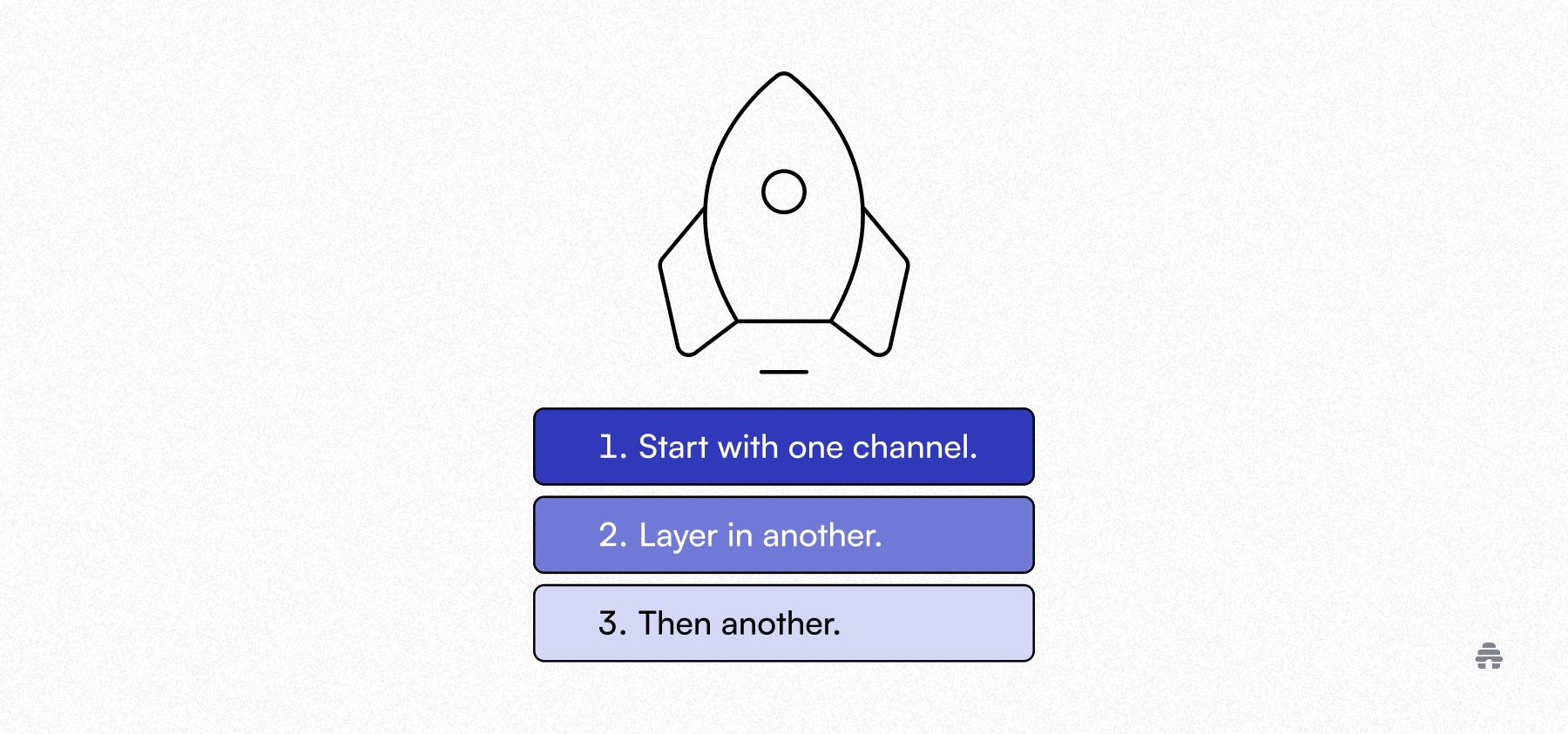
Diversify, automate, and scale.
The future of creator earning isn’t just about choosing a platform.
It’s about building a system—and beehiiv is the system built for newsletter-first businesses.


The one place to build.