- Home
- Posts
- 6 Best Kajabi Alternatives for Creators on a Budget in 2026
6 Best Kajabi Alternatives for Creators on a Budget in 2026
Ditch the Hefty Fees and Find Software That Actually Fits

Megan Smith
April 15, 2026
Are you tired of watching your tech bill skyrocket while paying for features you never touch?
Recent price hikes have sent a lot of people searching for the best Kajabi alternatives.
Kajabi built a massive reputation as a powerhouse platform for course creators. But their January 2026 pricing overhaul completely changed the landscape.
With strict product caps, tight contact limits, and an increasingly complex dashboard, the platform now feels like overkill..
Whether you sell digital downloads, physical goods, or run a paid newsletter, you need an affordable tool that actually fits your business model.
Migrating from Kajabi is much easier than many think. It’s especially simple when you switch to a platform built specifically for your exact needs.
In this guide, I break down the top competitors by features, pricing, and specific use cases.
You’ll find comparisons designed for creators who want less hassle and more value. Here’s what you can expect:
An honest look at each leading Kajabi alternative
Pricing and plan highlights so you know what you’re paying for (and what you’re not)
The best options for digital goods, newsletters, courses, and more
Clear pros and cons for each platform
Whether you need a simple digital storefront or a more all-encompassing Kajabi alternative like beehiiv, you’ll discover exactly which tool will help you scale without the hefty price tag.
Table of Contents
Key Takeaways
You don't have to pay a success tax. Creators are leaving because of the Kajabi price increase, strict contact limits, and overwhelming features they simply don't use.
Specialized tools beat all-in-one software. The best Kajabi alternative depends entirely on your specific business model, whether you sell physical goods, courses, or written content.
beehiiv rules the newsletter space. If you want to grow and monetize your audience, beehiiv offers built-in ad networks, referral programs, and zero revenue share on paid subscriptions. Paid subscriptions on beehiiv generated $19M in 2025.
Ko-fi is the ultimate cheaper Kajabi alternative. If you want a risk-free way to collect tips, run simple memberships, or sell basic services, Ko-fi gives you a fantastic free tier.
Sellfy makes digital downloads a breeze. For creators selling standalone files or print-on-demand merchandise, Sellfy provides a frictionless storefront without the heavy course-building baggage.
Switching platforms is painless. You don't need a developer to move your business. Modern platforms provide simple tools to export your contacts and content quickly.
The 6 Best Kajabi Alternatives in 2026: Pricing and Features Comparison
Here is a quick breakdown of how the top competitors stack up against Kajabi's premium price tag.
Platform | Starting Price (Lowest Paid Tier) | Free Plan | Best For | Key Strength vs. Kajabi |
beehiiv | $43/mo (Scale ) | Yes (Up to 2,500 subscribers) | Newsletter creators & audience monetization | Built-in ad network, paid subscriptions with zero revenue share, and an easy website builder focused on growth. |
Shopify | $5/mo (Starter - Very Limited) $29/mo (Basic) | No | Ecommerce & physical products | Superior for selling and shipping physical goods, plus robust inventory and payment tools. |
Thinkific | $36/mo (Basic) | No | Online course creators | Dedicated course creation and student engagement features at a lower entry price. |
Etsy | $0.20 per listing plus one-time set-up fee of $15-30) | No (Pay-per-listing & transaction fees) | Digital downloads via a marketplace | Access to a global community of buyers looking for creative goods - no need to build your own audience from scratch. |
Ko-fi | $12/mo (Gold) | Yes (with 5% transaction fee) | Creators on a budget | Zero monthly costs, flexible income streams (tips, memberships, shop), and instant payouts. |
Sellfy | $22/mo (Starter) | No | Selling digital products & print-on-demand | Quick launch, no technical setup, and a focus on digital and merch sales. Great for creators who want simple storefronts. |
Kajabi | $143/mo | No | All-in-one course and coaching businesses | Comprehensive ecosystem for courses, communities, and payments, all under one roof. |
Why Should You Look for a Kajabi Alternative?
As your business evolves, you might find yourself either outgrowing Kajabi or realizing that it's too big for you.
Here's what the platform offers and why creators are currently looking for a change.
What Is Kajabi?
Kajabi is an all-in-one platform designed specifically for course creators and coaches. It brings your products, marketing, payments, and content delivery into a single unified dashboard.
It allows you to build a community and market your digital offers without stitching together a dozen different apps.
However, the "all-in-one" approach isn't right for everyone, and Kajabi has some frustrating limitations.
Kajabi Pricing
Kajabi's January 2026 pricing overhaul significantly shifted the financial reality for scaling businesses.
If you want the standard features, the Basic plan jumped to $149 per month. And even at that price point, you are capped at only 2,500 contacts.
For creators focused on list growth, this pricing model essentially acts as a success tax. As your audience expands, you are forced into expensive upgrades to maintain your momentum.
Kajabi Pros and Cons
Kajabi’s biggest strength is its ease of use and ready-to-go templates for online learning and coaching.
The cons for the Kajabi platform include:
No free plan
Kajabi product limits and contact restrictions
Overwhelming feature list
Frequent complaints about limited or overly generic customer support
You want to make (substantially) more money than you spend on your tools.
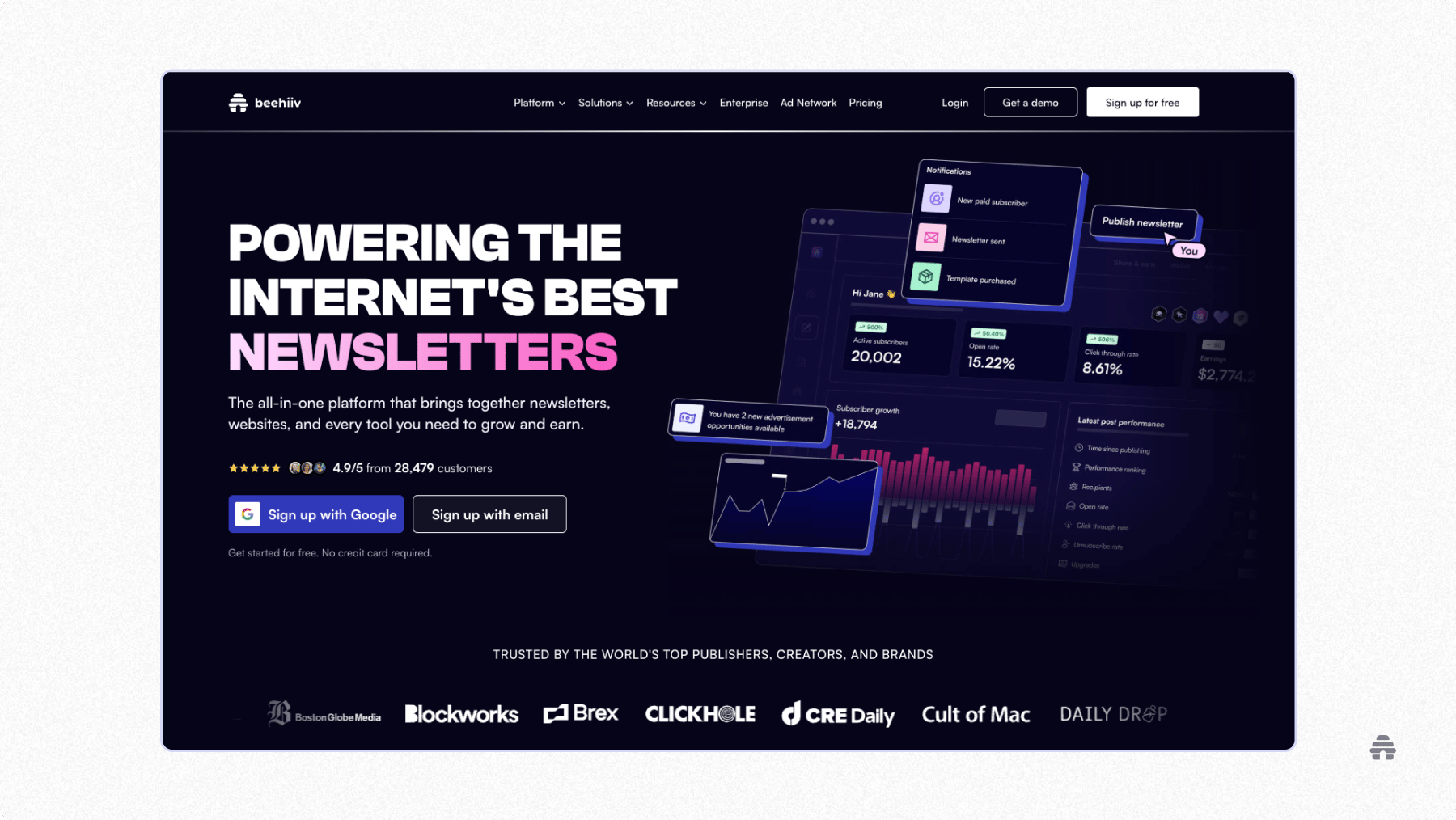
beehiiv was built specifically for audience growth and administration. It's made for creators, not course administrators.
What Is beehiiv?
Built by the same team behind Morning Brew, beehiiv is a modern newsletter platform made by newsletter operators, for newsletter operators.
It's a complete but clean interface that helps you focus on writing and connecting with your audience.
beehiiv: Best Features for Creators
As converts quickly learn, the platform packs a serious punch when it comes to growth and earning potential.
You get a sleek, modern UI equipped with a no-code website builder. SEO-friendly blog publishing is available right out of the box.
Native growth tools such as built-in referral programs and recommendation networks help you attract new readers, and you can pay to promote your publication in other newsletters or start earning with boosts and ads in your own issues. In fact, boosts drive 10–20% net-new subscriber growth for many beehiiv publications.
Other potential revenue streams include the ability to sell digital content, paid subscriptions/memberships, and direct sponsorships.
beehiiv Pricing
Build and monetize at your own pace.
The Launch plan is completely free for up to 2,500 subscribers.
This isn't a limited trial. You get unlimited email sends and a custom website for as long as you want.
Premium tiers include:
Scale: Starting at $43 per month (billed annually). Includes paid subscriptions, native ad and boost networks, automations, and more.
Max: Starting at $96 per month. Adds extra features, like sponsorship storefronts and podcast websites.
beehiiv Vs. Kajabi
Kajabi is a complex machine built primarily for course creators and coaches.
If you don't need advanced video hosting and student progress tracking, you are drastically overpaying for features you will never touch.
beehiiv strips away the heavy LMS clutter and focuses purely on audience monetization.
Kajabi also forces you into high monthly payments immediately.
In stark contrast, beehiiv offers a generous free plan for early-stage creators, giving you room to build momentum before spending a dime.
Beyond the flashy monetization tools, beehiiv handles the gritty technical details flawlessly.
Their domain warming feature gradually introduces your custom domain to inboxes. This helps secure top-tier deliverability so you avoid the spam folder.
3D analytics further help you hone in on the insights you really need. Instead of looking at basic open rates alone, you can see exactly where your most profitable subscribers are coming from.
2. Shopify – Best for Ecommerce & Physical Products
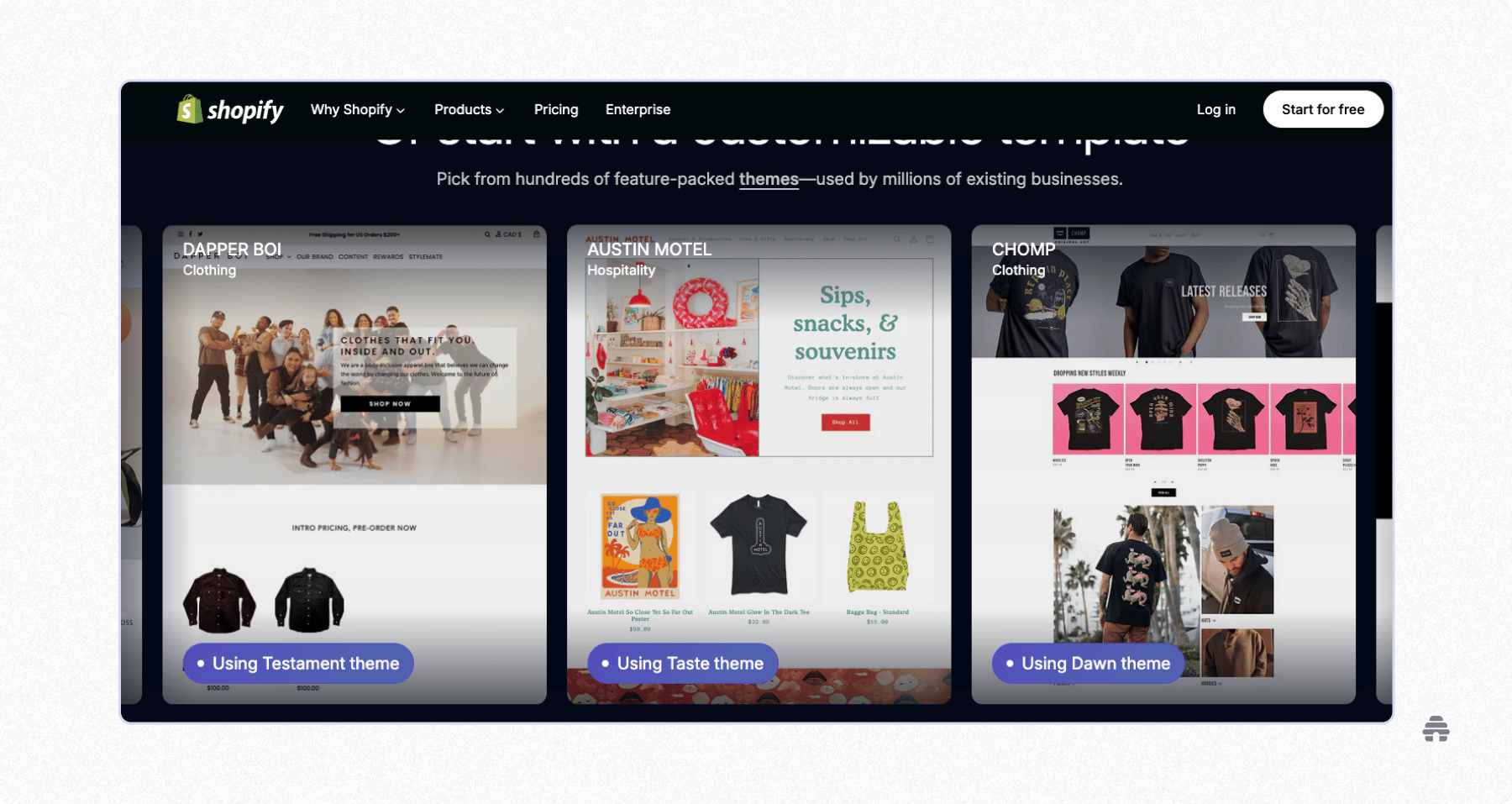
If you want to sell physical goods, Shopify is king when it comes to inventory management, global retail, and complex storefront design.
Whether you just need to ship boxes or integrate with a brick-and-mortar store, this platform handles it flawlessly.
Pros and Cons of Shopify
Users praise Shopify for its intuitive interface. Countless templates let you create a beautiful, high-functioning online store with comprehensive ecommerce features and integrations.
However, you need to watch your budget. While the base platform is affordable, monthly costs can easily escalate through premium paid apps and transaction fees.
Shopify Pricing
Shopify offers flexible pricing designed to scale alongside your business growth.
Starter: $5/month for casual selling on social media and messaging apps.
Basic: $29/month for solo entrepreneurs needing a full online store.
Grow: $79/month for small teams wanting better shipping discounts.
Advanced: $299/month for businesses with a global reach.
Plus: Starting at $2,300/month for complex, high-volume enterprises.
Shopify vs. Kajabi
While Kajabi acts as a closed, all-in-one ecosystem for digital knowledge, Shopify provides a core commerce engine that’s better for traditional retail.
Shopify has proven its value. It boasts 4.5 out of 5 stars on Capterra, backed by over 6,600 reviews. It's a tried and true platform with tons of fans.
3. Thinkific: Best for Online Course Creators
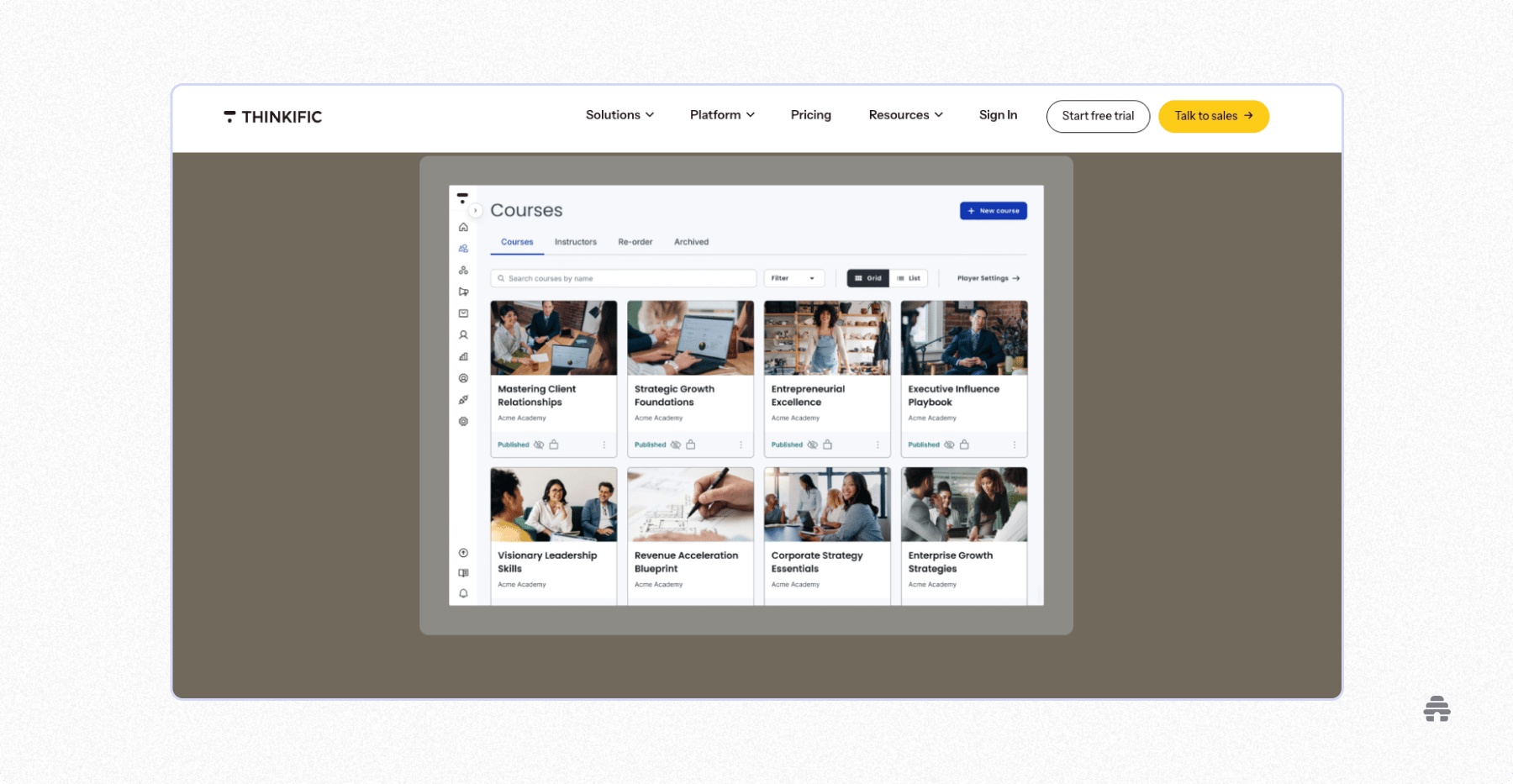
Thinkific is a Kajabi competitor for educators and coaches who want a leaner dedicated learning management system.
Pros and Cons of Thinkific
The platform's standout is the drag-and-drop course builder. You can map out your curriculum, upload videos, and launch. New course creators also love the generous free training.
On the other hand, the platform offers fewer templates and visual customization options.
Thinkific Pricing
Thinkific offers flexible pricing tailored to your growth and doesn't not take a commission on the courses you sell.
Free Plan: $0/month (build one course and test the platform).
Basic: $36/month (billed annually) for unlimited courses and foundational tools
Start: $74/month for advanced features like live Zoom lessons and memberships
Grow: $149/month to remove branding and unlock advanced API access
Thinkific vs. Kajabi
While Kajabi tries to be the ultimate all-in-one, Thinkific focuses heavily on delivering a superior classroom experience for less. Thinkific is much easier to navigate if all you want is to create and sell a course.
The platform boasts 4.4 out of 5 stars on Capterra, and users consistently highlight Thinkific's excellent value for money when compared to pricier alternatives like Kajabi.
4. Etsy: Best for Selling Digital Downloads via a Marketplace
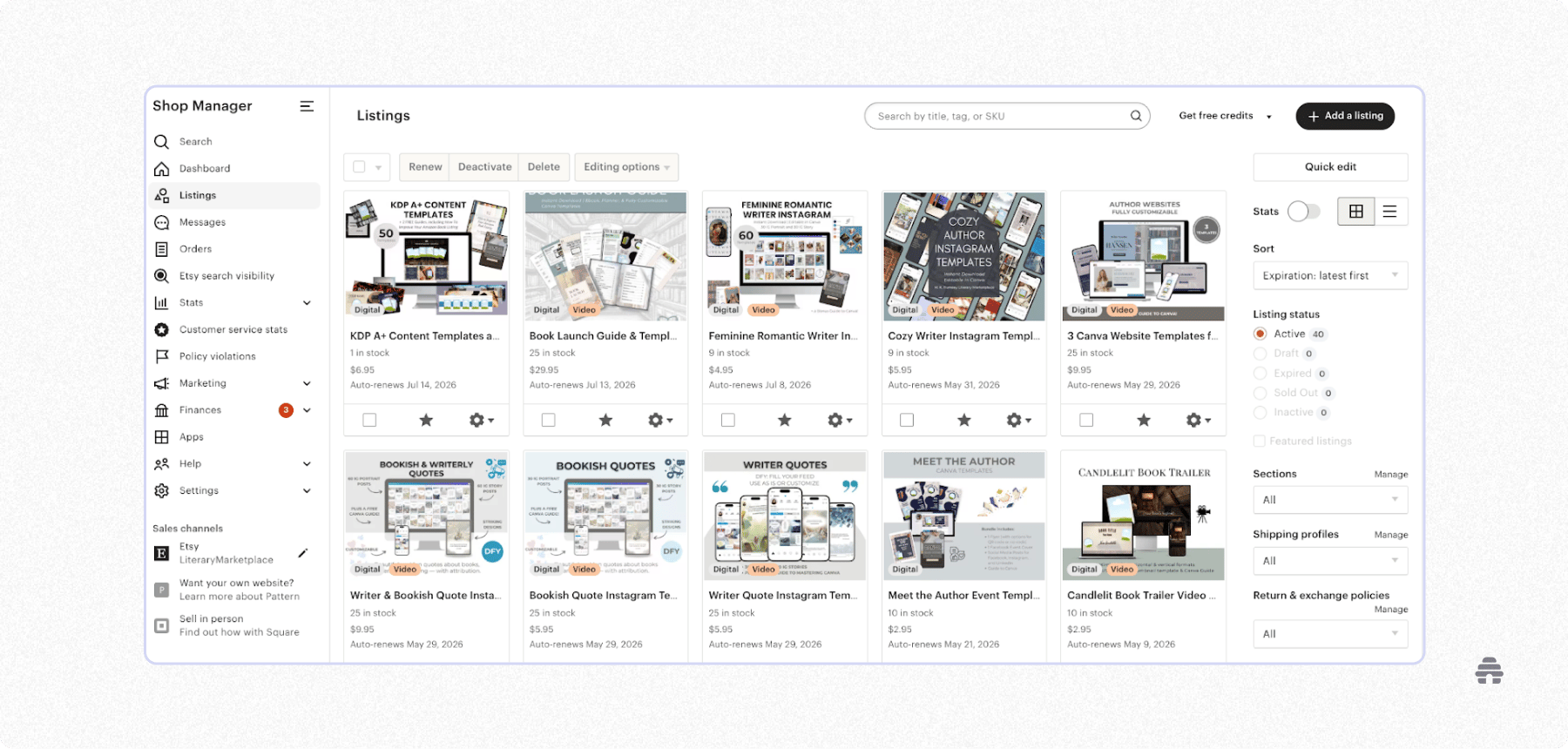
I use Etsy as well as beehiiv to sell templates for indie authors.
If you want to sell digital downloads, you need eyeballs on your products. Etsy comes with a massive, built-in audience of shopper, meaning you don't have to generate all your own traffic.
The platform is best for independent creators selling standalone digital files.
Pros and Cons of Etsy
You get access to a massive audience right out of the gate, making it easier to sell digital products without a large following or marketing budget.
However, renting space in a crowded marketplace comes with drawbacks. You face intense competition from other sellers offering similar products right next to yours. Additionally, the platform's fee structure is complicated and can threaten profits.
Etsy Pricing
You pay a one-time shop setup fee ranging from $15 to $29 to get started. Thereafter, it costs $0.20 to publish a listing. When you make a sale, Etsy takes a 6.5% transaction fee, plus a standard payment processing fee of 3% + $0.25.
If you want advanced customization tools, you can upgrade to Etsy Plus for $10 a month.
Etsy vs. Kajabi
Kajabi and Etsy operate in two completely different universes. Kajabi acts as a private, premium island for digital products and communities.
Etsy is more like a bustling digital mall. It wouldn't make sense to pay Kajabi's hefty $149 monthly fee to sell a simple $5 digital workbook. Better to simply pay your 20-cent listing fee and let Etsy's search engine connect you with buyers.
5. Ko-fi: Best Free Alternative for Creators on a Budget
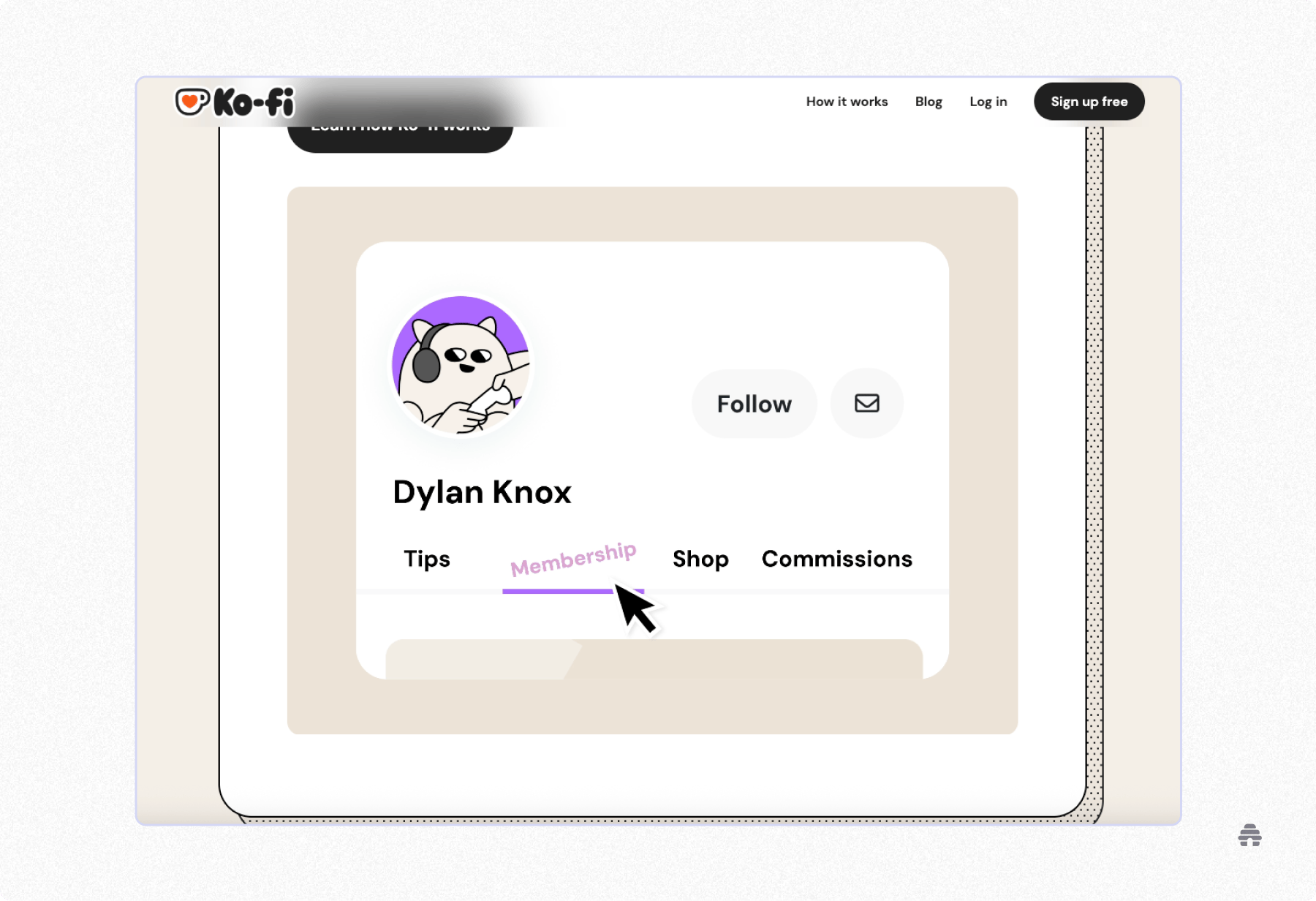
Ko-fi works for artists, writers, and budget-conscious creators who want a frictionless way to receive financial support. It's basically "Patreon on steroids" — a highly flexible space to monetize your passion without a steep learning curve.
You can collect one-time tips, crowdfund projects, sell digital products or set up monthly memberships.
Pros and Cons of Ko-fi
The biggest wins for Ko-fi are its simplicity and price. You can create your account, write a quick bio, add a few images, and start accepting donations in minutes.
On the flip side, Ko-fi lacks the robust marketing and dedicated course-building tools found in premium software.
Ko-fi Pricing
Creating your base account costs absolutely nothing.
On the free Contributor tier, you pay a 5% service fee when you sell products or run memberships. One-time tips remain completely free from platform fees.
When your revenue grows, you can upgrade to Ko-fi Gold for $12 a month to remove all service fees.
Ko-fi vs. Kajabi
Kajabi demands a $149 monthly minimum, while Ko-fi gives you a lean but versatile space to interact with your supporters for free. It represents the ultimate low-risk entry point for monetizing your audience.
6. Sellfy – Best for Selling Digital Products & Print-on-Demand
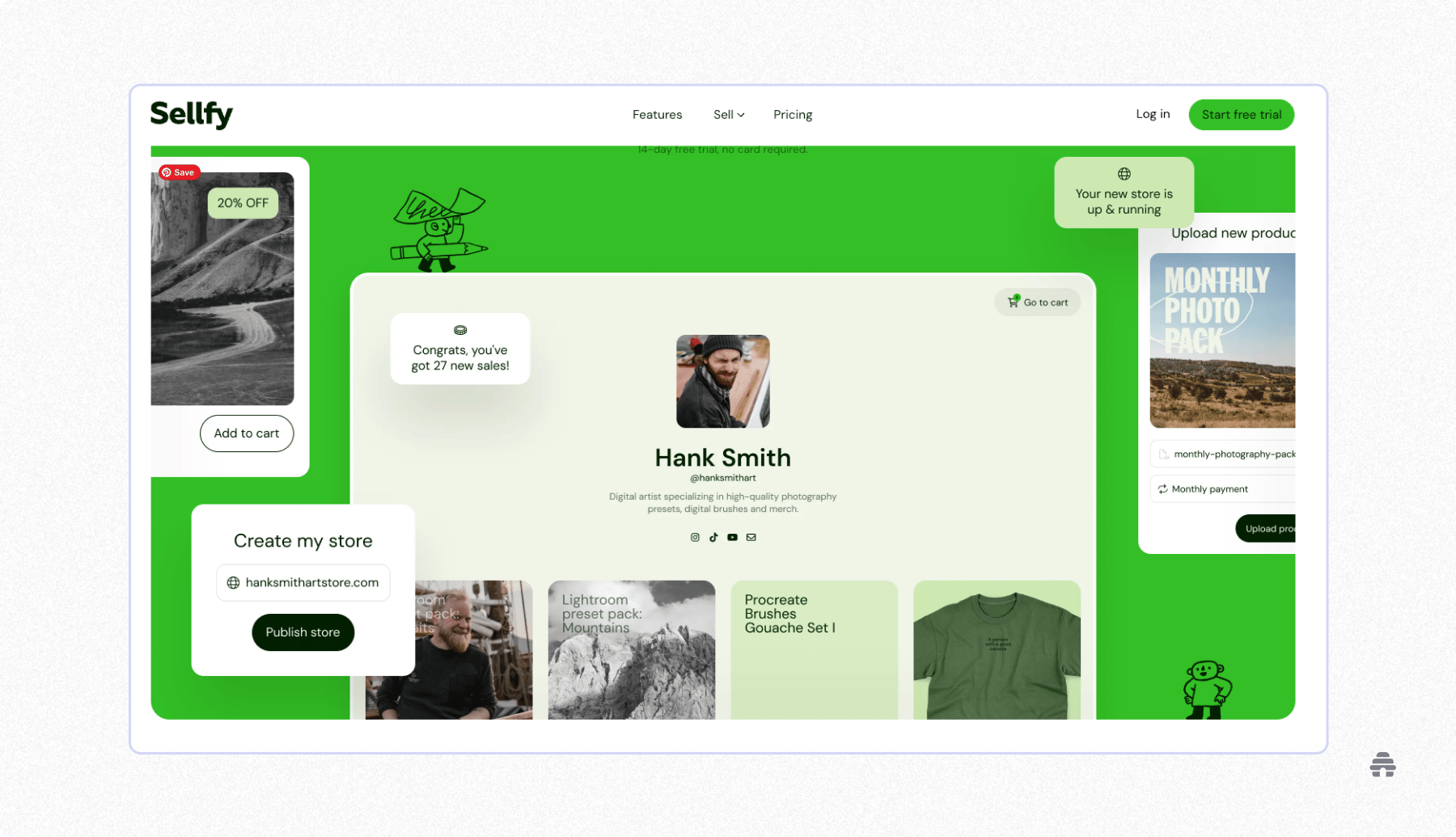
Sellfy is a great platform for creators focused on digital downloads, subscriptions, and print-on-demand merchandise.
You can easily build a professional standalone storefront or drop a simple "buy now" button right onto your existing website or social media profiles.
Pros and Cons of Sellfy
Your store will look great on all devices, and higher plans let you boost your revenue with marketing features such as discount codes and upselling tools.
On the downside, if you need complex product variations or heavy course-building tools, you might find the platform a bit restrictive as you scale.
Sellfy Pricing
Sellfy aims to be an affordable alternative.
Tiers include:
Starter plan: $22/month (paid annually). For creators earning up to $10k in sales per year.
Business plan: $59/month. For creators earning up to $50k in sales.
Premium plan: $119/month. For creators earning up to $200k in sales.
Sellfy vs. Kajabi
Sellfy offers tools for a fraction of the cost and none of the headache of navigating such a hefty platform.
Users clearly love this frictionless approach. Sellfy boasts 4.5 out of 5 stars on Capterra where customers point out that the platform delivers exactly what you need to get your products online fast.
Switching from Kajabi: It’s Easier Than You Think
Modern platforms compete for your business with built-in tools that make migration painless. You won’t need a developer or sleepless nights to make the switch.
Here’s how to make a clean break to another platform like Kajabi.
Steps To Switch From Kajabi
Successful migration comes down to organization.
1. Audit Your Assets
Don't bring extra baggage. Review your Kajabi setup and keep only the products and content that are actually generating sales or still relevant.
2. Export Your Customer Data
Export your contact list as a CSV, making sure to include important tags and purchase history. This helps you keep track of who your key buyers are and ensures a smooth transition.
3. Download Your Content
Kajabi doesn’t offer a one-click export for videos or course files, so manually save your essential assets in a secure, organized folder.
4. Set Up Your New Platform
Jump in and get your new software ready. Make sure everything works smoothly before inviting your audience to the new space.
5. Welcome Your Audience
Send a concise, friendly email to your list explaining the upgrade, how to access past purchases, and what to expect next.
Make sure to monitor your customer support inbox closely for a few days so you can resolve any issues.
How To Migrate From Kajabi to beehiiv
If you're moving to beehiiv, the platform offers a straightforward migration process.
First, import your content and contacts. Go to the Audience tab in beehiiv and upload your cleaned CSV file. During the import, you can map custom fields and tags so your audience’s history transfers with them.
After you connect your custom domain, beehiiv provides guidance on warming it up. This improves your deliverability, helping your emails land in the primary inbox.
Final Verdict: Which Kajabi Alternative Is Right for You?
Before you cancel your current subscription, take a hard look at your daily workflow. What exactly do you need your software to do?
Sticking with the wrong platform costs you much more than a monthly fee. Paying $149 to $399 a month for a massive, complex system you barely touch eats directly into your profit margin. Arbitrary product and contact caps actively stifle your audience growth
Here is exactly where you should take your business next:
For newsletter creators & audience monetization: beehiiv comes with premium publishing tools, growth features, and ways to earn.
For ecommerce & physical products: Shopify remains the undisputed champion for building a true retail brand.
For online courses: Thinkific delivers a dedicated, intuitive classroom experience.
For digital downloads via marketplace: Etsy gives you immediate access to millions of active shoppers.
For budget creators: Ko-Fi is the simplest, cheapest way to accept tips, crowdfund projects, and launch a basic shop.
For digital products & print-on-demand: Sellfy lets you produce a sleek, standalone digital storefront in minutes with more native community-focused features than Shopify.
Is beehiiv right for you? Sign up for a free account or a free trial to take advantage of premium features.
Why Trust Me
I regularly research and write about the top creator platforms. I also work with multiple platforms and types of content on a daily basis.
FAQs on Kajabi Alternatives
What are the best Kajabi alternatives?
The right alternative depends entirely on your specific business model. If you want to grow a newsletter, beehiiv is a fantastic choice. Shopify is the clear winner for physical products, while Thinkific excels at course creation.
What is the cheapest alternative to Kajabi?
Ko-fi is the most budget-friendly option available. It offers a completely free tier where you can accept one-time tips without any platform fees.Thinkific and beehiiv also offer robust free starter plans.
Is there a free version of Kajabi?
No, Kajabi does not offer a free tier, only a 14-day free trial.
Why is Kajabi so expensive?
Kajabi prices its software as a comprehensive, all-in-one business ecosystem. When you pay that monthly fee, you fund a website builder, email marketing suite, sales funnels, and video hosting. You pay a premium for convenience, even if you only use a few of those tools.
Is Kajabi still worth it in 2026?
Kajabi remains a solid choice if you run a massive online education company and need complex marketing funnels. However, it often misses the mark for smaller creators.
What is better than Kajabi for selling digital products?
Sellfy and Etsy easily beat Kajabi when it comes to simple digital downloads. Sellfy lets you build a sleek, standalone digital storefront, while Etsy puts your products directly in front of millions of active shoppers. Both options let you skip the heavy course-building software entirely.
How hard is it to switch from Kajabi?
Migrating your business takes a little organization, but it is easier than you might expect. Most modern platforms offer smooth import tools that map your existing data over in a few clicks.
Related Articles