- Home
- Posts
- Maximize Your Ad Revenue: A Guide to Newsletter CPM
Maximize Your Ad Revenue: A Guide to Newsletter CPM
How To Boost Your Impression Value for Higher Ad Revenue

Iwona Abraham
April 27, 2026

While Instagram’s been all up in your face, newsletter advertising has been operating in the background, quietly becoming one of the most profitable digital channels today. So quietly, in fact, that most of us underestimate the power of newsletter ads.
While social media and display ads are cheaper, you’re paying for a cheaper quality of attention from people who are passively scrolling. High-quality newsletter ads go for a premium newsletter CPM because they reflect the solid trust and high engagement of active subscribers who choose to engage.
Don’t be fooled by subscriber counts alone. Understanding your CPM is the missing piece to setting your pricing and unlocking your newsletter’s full growth potential.
Table of Contents
CPM doesn’t stand for “cost per mile” but “cost per thousand impressions.” It’s basically a way to measure how much an advertiser pays for their message to be seen 1000 times.
In marketing terms, an “impression” is a delivered email. Depending on the campaign goals, it’s counted when the email is opened.
Here’s an example: let’s say your newsletter sends 50,000 emails, that all 50,000 are delivered, and an advertiser pays $5000. This is how we would calculate the CPM:
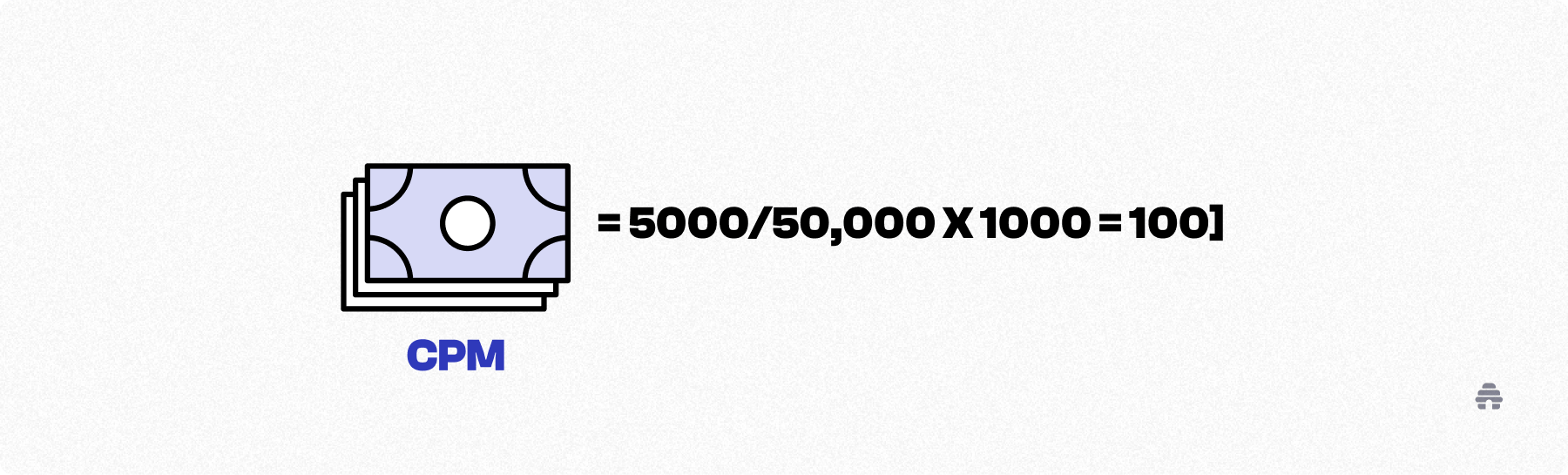
The advertiser is paying $100 per thousand delivered emails.
Email CPMs are typically higher than other platforms, and that’s not a coincidence. It’s because newsletter audiences are more engaged and have opted in. You’re not fighting for random eyes, but for quality attention.
What’s Considered a Good CPM?
You may be looking at your CPM numbers and wondering if what you have is good. Well, a “good” CPM in email marketing is dependent on the newsletter type and the audience. If your newsletter falls under a more general-interest category, you can expect your CPM to be within the range of $10-$30 per thousand delivered emails. For niche audiences, CPMs can be $40 or higher.
Factors That Influence Your CPM
There are a few variables that affect your CPM and how much advertisers are willing to pay.
List Size
A larger email list means higher potential for impressions, which results in a higher CPM. The more people who receive your newsletter, the more exposure.
However, there are some things to be aware of. A bigger list size is not always better. Quality still beats quantity. And quality, in this case, means more engagement.
That doesn’t mean you shouldn’t get excited when your email list size grows! But do yourself a favor – as your list grows, utilize beehiiv’s segmentation feature for targeted email delivery.
Deliverability
Your inbox placement matters. Emails that consistently land in the inbox, as opposed to promotions or spam, are more likely to be opened by your audience. So be sure to clean up your email list regularly.
Niche Specificity
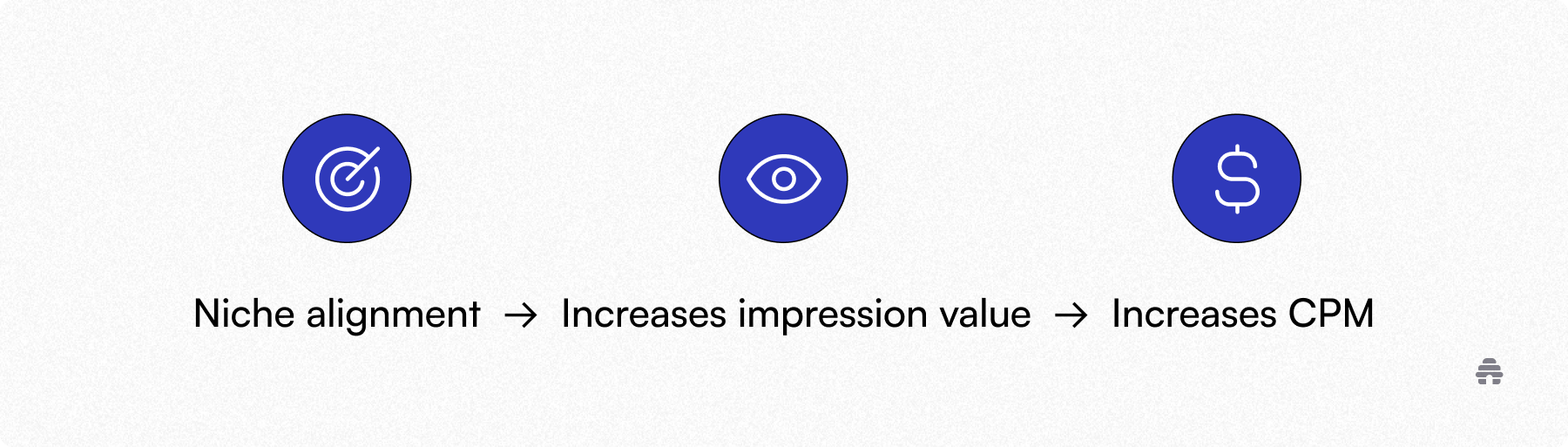
Some creators may believe that by writing their newsletter to a bigger audience, they can increase their reach. But in actuality, the more specific you are, the more specific your audience will be, and the higher your potential will be for a better CPM.
By tailoring your content to a targeted audience, every impression is more valuable to an advertiser. Niche newsletters also have an increased ability for deeper connection, also increasing impression value.
Engagement Rate
The other factors I’ve mentioned – list size, deliverability, and niche specificity – all boil down to engagement. Whatever strategy you use to increase your CPM, keep this in mind: quality over quantity.
Engagement Tips:
Quick Win #1 - Specific subject lines: For example, change the more generic “Weekly Tips” to something like, “3 Time-Saving Hacks.”
Quick Win #2 - Early placement of clickable content: Put links and your main CTA early on in your email.
Quick Win #3 - Trim inactive subscribers: Don’t keep them around just to have a large but bloated list. Fewer disengaged readers makes your list more valuable.
Ad Format
There are different ad formats you can place in your email, and your choice can impact your CPM.
Banner ads: A visual block with a logo and link that can be placed at the top, middle or bottom of your newsletter email. These are highly recognizable but can feel disconnected from your content.
Multi-sponsor options: Multiple sponsors in a newsletter by offering tiered placements, allowing you to cater to different advertiser budgets. This maximizes your total revenue per send but make sure you balance your email so it doesn’t feel cluttered.
Native sponsor blocks: These ads blend more seamlessly into your organic content. It typically results in higher engagement rates but require more energy to write and must be clearly labeled for the sake of audience trust.

Not gonna lie, this ad was so integrated into The Rundown AI’s newsletter that it took me a second to find it.
There are a few stuckpoints creators can hit in terms of growing their newsletter CPM. If you haven’t seen growth in a while, for instance, your first instinct may be to boost your list. And while list size can help, it’s not the only way to lift your CPM.
Actually, the fastest way to increase your newsletter CPM is to increase your audience’s value per impression. This means improving visibility, engagement, and audience relevance as opposed to raw growth numbers.
Here are some of the most effective ways to make each impression more valuable.
Improve Open and Click Rates
Advertisers value visibility. You may be delivering 10,000 impressions, but only 15% of your subscribers are actually opening and reading your emails. This is why we need to target open and click rates.
Simply put, higher open rates increase the likelihood of your subscribers seeing the sponsor placement. And higher click rates mean that your audience is engaged. Both of these can result in a higher CPM.
So, how do we improve open and click rates?
Tighten your email strategy with A/B testing. If you boil it down, this is a method where you send two variations of the same email to two small, separate groups of your subscribers to see which performs better.
For example, you can A/B test your subject lines to see which delivers more opens.
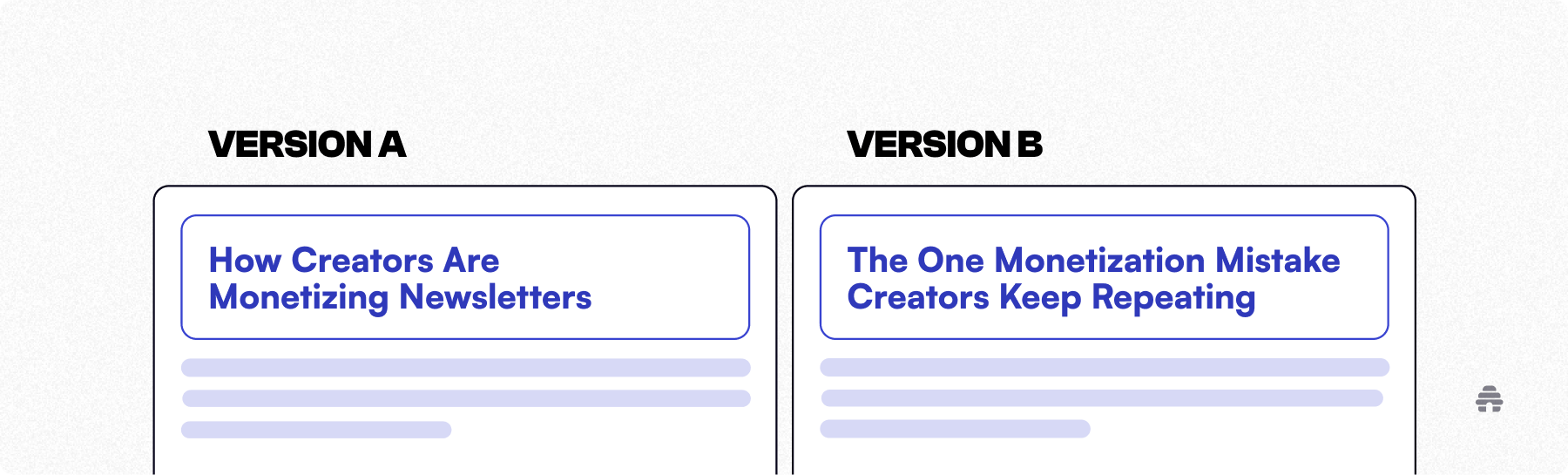
Think about it for yourself, which version entices you to read more? It’s clear that version B provides more intrigue. But sometimes, it’s not so clear which subject line will draw readers in more. A/B testing takes out the guesswork.
Another way to boost your open and click rates is to send emails on a predictable schedule. Not only is this a great habit for you; it also creates the habit for readers to read your email.
Platforms like beehiiv automate the entire A/B testing process, meaning they automatically send the version that wins out to the rest of your subscriber list after the test period concludes.
Grow a More Targeted Audience
Don’t make the mistake of thinking that audience size is synonymous with audience quality. Advertisers don’t just want reach; they want relevance. If you have a smaller, more curated list, it can outperform a larger, broader list. A more targeted audience is more likely to engage, click, and convert.
A 10,000-subscriber newsletter focused on fintech would result in a higher CPM than a 100,000-subscriber general business newsletter. 100,000 is a much bigger number than 10,000, but fintech advertisers would prefer the latter because the smaller list is already full of people who are interested in their product.
Let’s take a look at a concrete example with Extra Points.
Extra Points is a newsletter focused on the business side of college athletics, which is a smaller niche than just sports. They deliver content on the business, finance, licensing, and policy behind college sports programs. This is such specific content that if you’re not into it, you wouldn’t have subscribed.
Because of their niche, Extra Points has built a loyal audience. Their list size is smaller than that of other, more mainstream newsletters, but they generate $200, 000 revenue annually because of their niche focus.
One of the easiest ways to boost CPM is to offer premium placement, such as the ad appearing closer to the top of the newsletter. This translates into readers seeing it before scrolling, which can be priced at a premium.
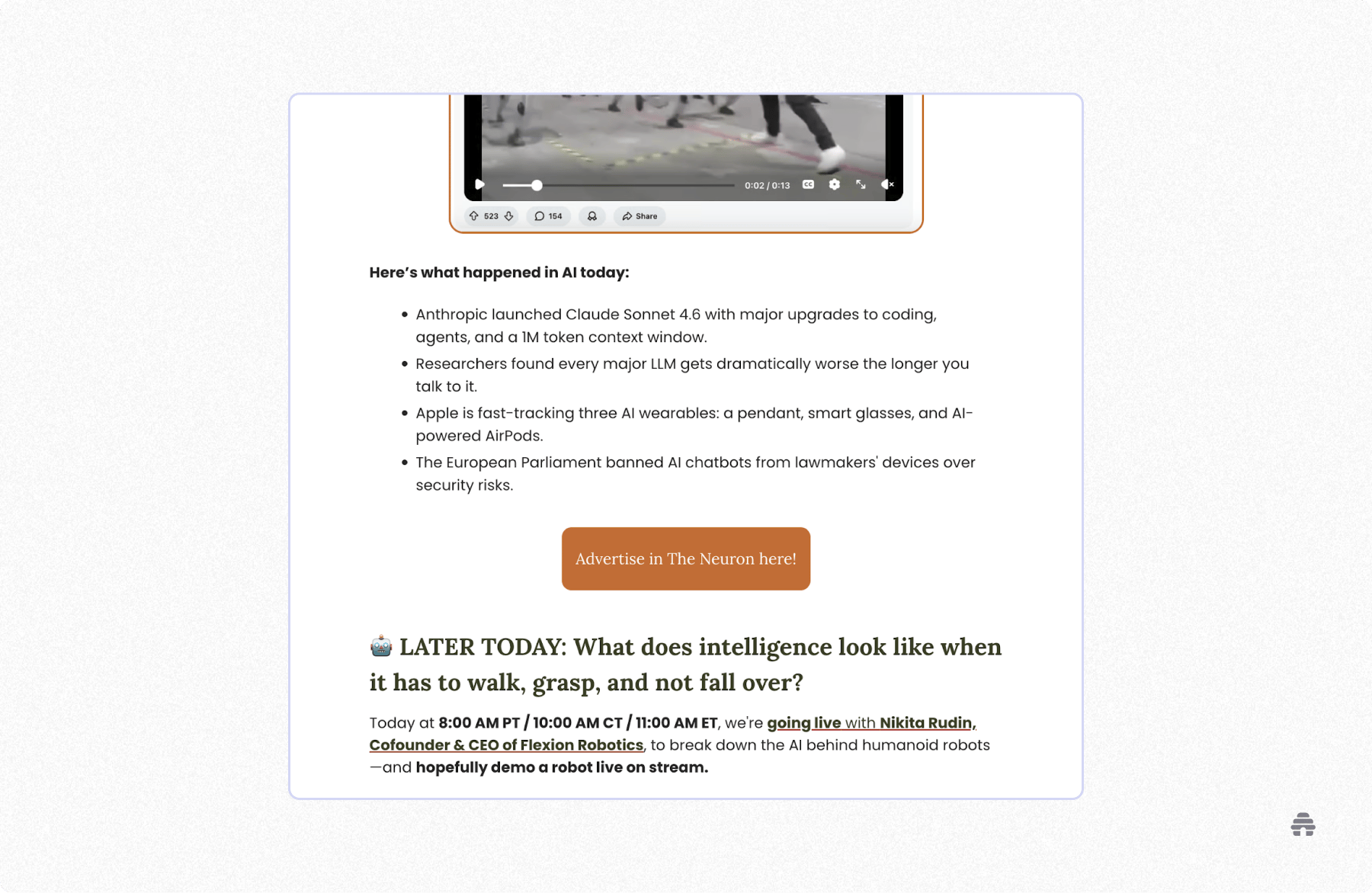
The Neuron provides ad placement close to the top of their newsletter. This “above the fold” strategy is an effective way to boost CPM because the reader doesn’t need to scroll much to see the ad.
You can also increase CPM by providing multi-sponsor options, with a primary sponsor closer to the top of the newsletter and a secondary sponsor lower down in the email. This provides advertisers with flexibility for their ad placement depending on their budget. (It also could motivate secondary sponsors to aim for a primary placement because they see the other advertiser’s ad before they see theirs 😉)
Why Trust Me
I’m an editor with beehiiv and started writing for them because I love their content. I’m a technical writer who pivoted to business-to-business (B2B) and direct-to-consumer (D2C) articles because of my knowledge of SEO strategies and optimization.
Use beehiiv’s Ad Network
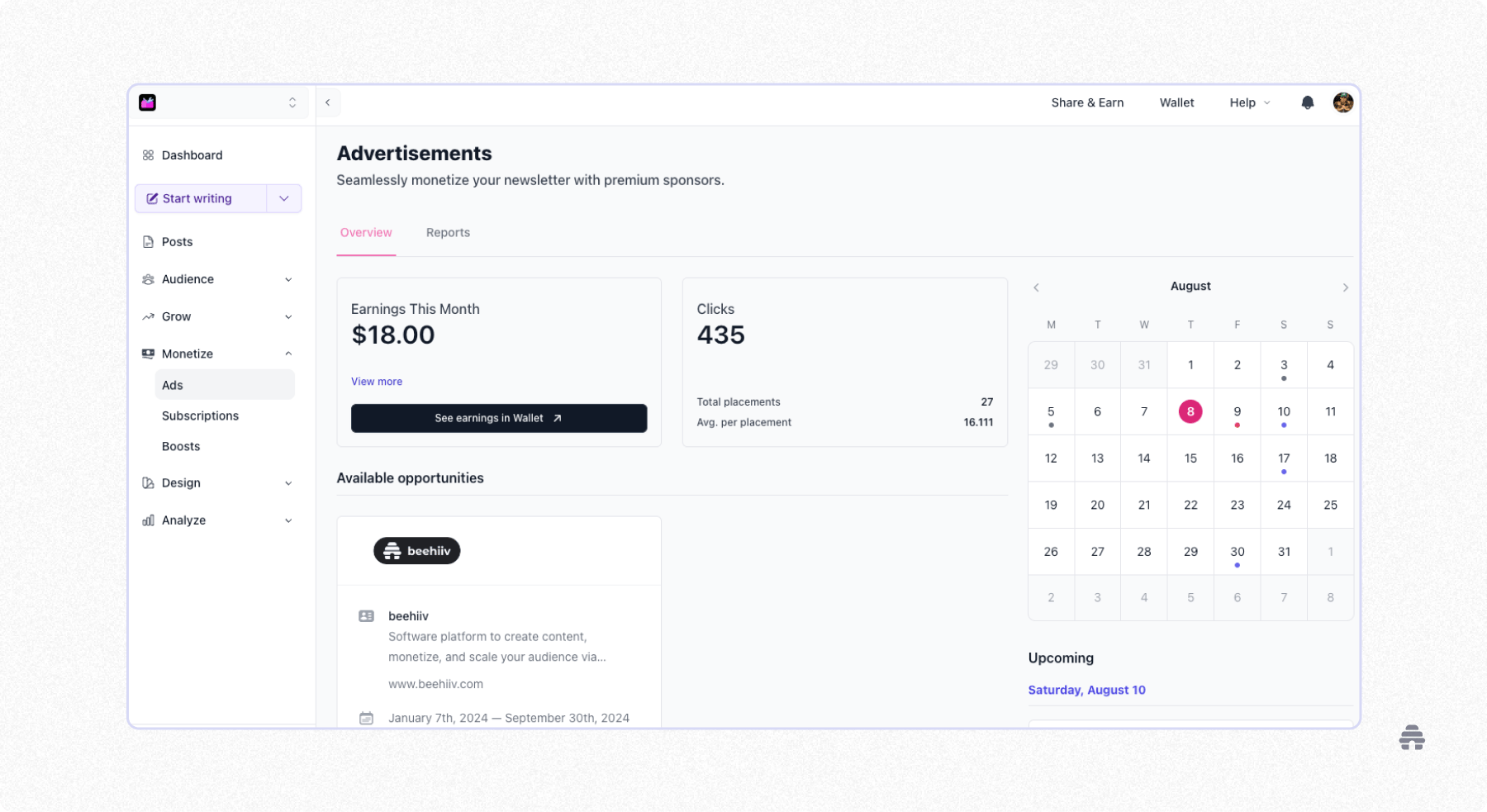
One of the most awkward parts of having a newsletter, for me, is pitching myself to brands. Maybe you love sliding into brands’ DMs, but want to make the process more efficient – beehiiv’s Ad Network does premium ad placement for you.
They match niches by pairing your newsletter with advertisers who are looking for reach with that type of audience. The Ad Network puts the ads where they’re most likely to be noticed, whether that be above the fold or with native integrations that feel natural to your content.
You may think that if your subscriber list is smaller, you won’t get as lucrative sponsorships. But the Ad Network will find sponsors willing to pay CPMs that match your audience value.
The network is not fooled by numbers. Value recognizes value.
How I Think About CPM in My Own Newsletter

When I first started out writing newsletters, I overly trusted that if I wrote engaging content, it would automatically increase my impressions–and that would increase revenue.
But what I hadn’t realized is that engagement doesn’t happen just because your content is good. You have to be intentional about the placement and deliverability of your ads.
There are a few things I was forced to learn. Let’s go over them, and you can use these points as a cheat sheet.
What I’ve Tested
Flat Fee vs. CPM-Based Pricing
I used to charge flat fees because they were straightforward. But, while flat pricing doesn’t require explaining metrics, it also hides performance. I started calculating my flat packages internally with CPM to ensure my pricing reflected anticipated impressions, increased engagement, and placement value.
Top-of-Email vs. Mid-Email Placement
I moved sponsors from near the bottom of my newsletter to near the top, and this significantly boosted visibility. Better visibility resulted in stronger click-through rates, which reinforced my premium pricing for that placement.
Native vs. Obvious Sponsor Blocks
I love native ads! I have fun integrating them into my content flow. That translated with my readers, who engaged more because the ad placement wasn’t disruptive.
I was attached to my email list, including those inactive subscribers, because I held out hope that one day they would engage. But I realized that removing inactive subscribers actually increases engagement rate.
The biggest game-changer for me was beehiiv’s Ad Network.
I was already overwhelmed trying to understand CPM, pricing, and outreach, so having a built-in network that brought advertisers to me was akin to hiring someone to handle business things I didn’t want to deal with.
Build your audience first and let the right platform handle everything else.

Related Articles

The one place to build.
Get beehiiv updates delivered directly to your inbox.
By subscribing you agree to our Privacy Policy and provide consent to receive updates from our company.