How Ramp Turns Business Data Into a Must-Read Newsletter
Inside Leading Indicators, the weekly publication bringing readers into Ramp’s world through original research

Table of contents
At a Glance
- 58% open rate across Leading Indicators, Ramp’s flagship editorial newsletter.
- 27% month-over-month subscriber growth from a one-person editorial team.
- The goal: Turn Ramp’s proprietary business data into a media brand that builds trust, brand awareness, and attracts readers beyond its customer base.
Leading Indicators is Ramp’s flagship editorial newsletter, focused on the economic signals that move before the headlines. It draws on the company’s proprietary spending data from 85,000+ businesses to highlight the signals that move before the headlines.
That includes everything from AI spending trends and labor market shifts to how the World Cup affects business travel costs.
Ramp, which just hit a $60B valuation, is making a bet more B2B SaaS companies should pay attention to: creating content people genuinely want to consume by melding current events with exclusive data to keep readers ahead of the curve.
Editorial Lead Rebecca Moretti runs the weekly newsletter on beehiiv, turning business analysis and the company’s data expertise into an ongoing relationship with readers.
Here’s what other B2B brands can learn from Ramp’s media playbook, and how beehiiv powers the newsletter at the heart of its strategy.
Inside Ramp’s B2B Media Playbook
1. Find the Stories Only Your Company Can Tell
Ramp already had the raw material for a distinctive publication.
Its data team and the Ramp Economics Lab routinely produce research on business spending, AI adoption, and other economic signals. Leading Indicators combines those insights with the biggest stories in business and markets.
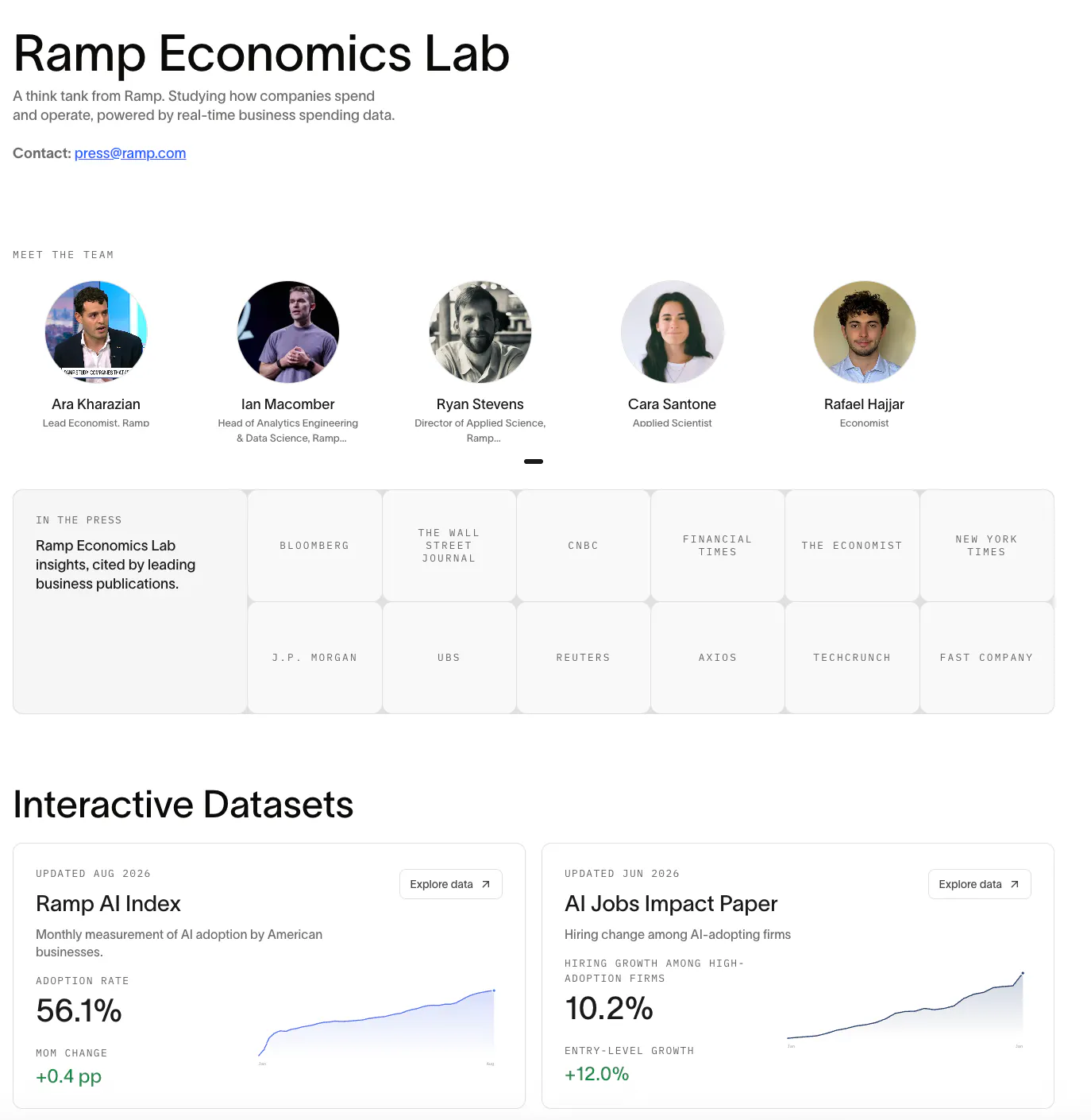
Rebecca’s vision for Leading Indicators was a weekly business and finance newsletter that leveraged Ramp’s proprietary research to offer readers a unique perspective on the biggest stories shaping the economy, from earnings reports to Federal Reserve decisions.
While Leading Indicators largely focuses on macro signals and industry shifts, the stories they’re putting out show the versatility of Ramp’s various datasets.
These stories span a wide range of topics but are united by a data-driven perspective:
- Corporate America flies on Starbucks: Ahead of Starbucks’ earnings report, Leading Indicators found that Starbucks is the most-expensed restaurant on business trips booked on Ramp, with more transactions than the next three chains combined.
- Who’s still paying to fax? Leading Indicators found that 13.3% of U.S. healthcare businesses on Ramp paid a fax-service provider between January and September 2026. It turned that finding into a story about the staying power of older technology, even as AI dominates the conversation.
- The World Cup’s hidden cost for business travelers. Ramp’s travel data revealed that companies were paying a premium to send employees to tournament host cities. The publication framed it as the “FIFA premium”: a major sporting event affecting the cost of client visits and team offsites.
- Why companies are spending more on gifts. Rising corporate gifting spend became “Swagonomics,” a reported feature pairing Ramp’s spend data with interviews with top gifting companies.
2. Give Readers a Reason to Step Into Your World
The audience is intentionally broad, from Fortune 500 CFOs to students just beginning to explore the business world. The goal is to make Leading Indicators a destination for anyone curious about business and the economy.
In fact, the newsletter barely mentions Ramp beyond the data that powers its stories. Instead, the focus is on delivering sharp, actionable reporting that helps readers make sense of the economy, discover something surprising, and come away a little smarter.
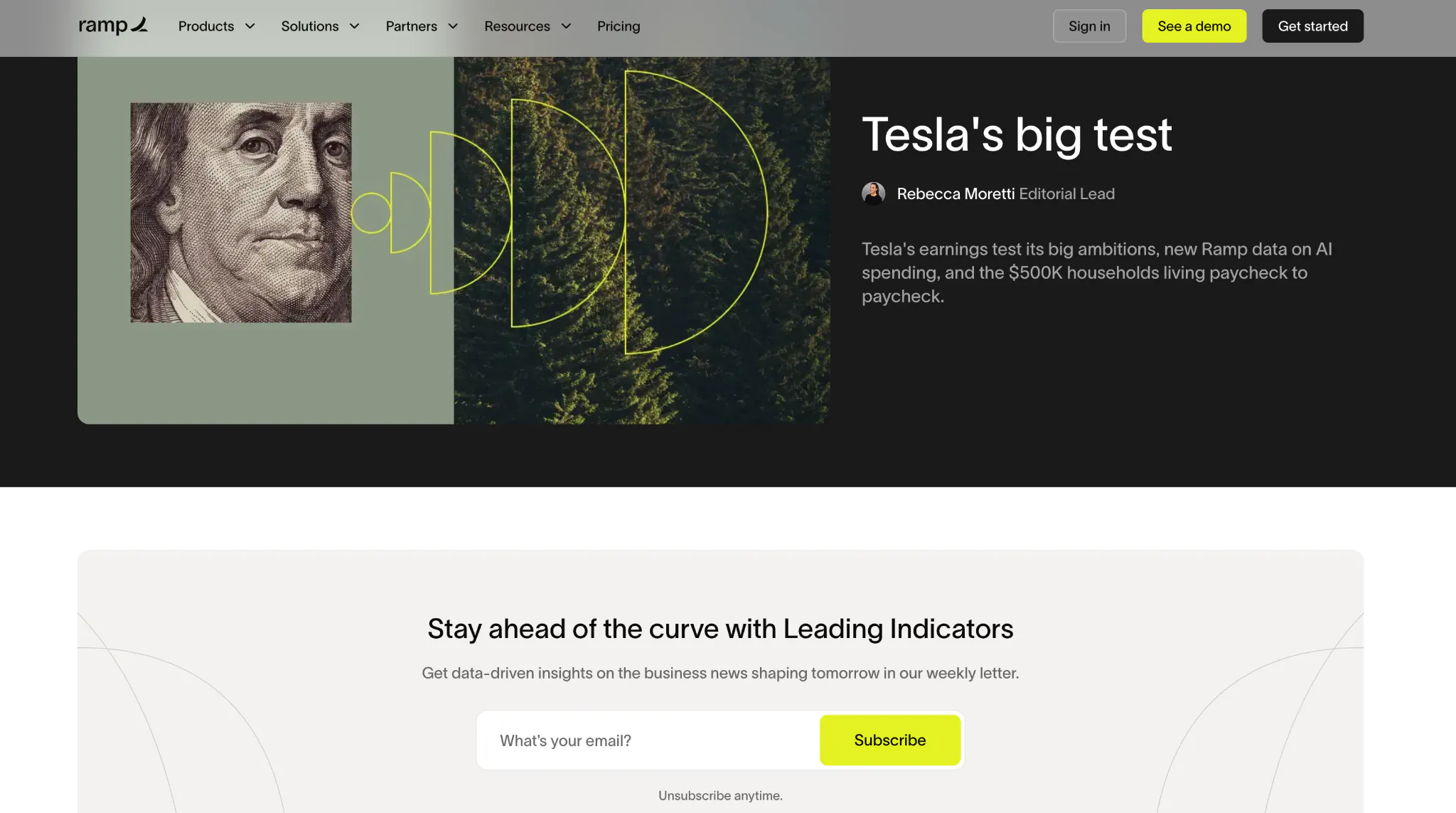
The goal is to build trust over time. Someone subscribes after reading one insightful piece, returns for another, and gradually gets to know Ramp as a credible source worth listening to.
For Rebecca, success starts with growing that relationship: bringing more engaged readers into the Ramp ecosystem through an accessible newsletter format.
For other B2B brands, the lesson is to create something people would want to read even if they aren’t yet familiar with the product. Give the publication a useful role in their lives, and you give the relationship room to grow.
3. Give the publication the tools to run independently
A media brand is only as durable as the publishing process behind it.
A lifecycle marketing platform is built to help teams manage campaigns and customer communications. An editorial publication operates on a different rhythm: stories respond to what’s happening now, content and presentation evolve together, and success depends on building an engaged readership over time.
Rebecca needed to run Leading Indicators independently, with direct control over the entire publishing process. When a story responds to an earnings report or a Federal Reserve decision, the editorial team needs to be able to act on that moment, refine the presentation, and get the issue out without another production handoff.
Rebecca needed a platform that could:
- Keep publishing close to the story. Move from draft to delivery without waiting on another team’s production queue, especially when a story is tied to a timely business or economic development.
- Connect content and presentation. Make editorial changes, refine the design, and introduce new sections directly in the publishing workflow, without separating the writing from how it reaches readers.
- Give the publication its own audience and purpose. Grow and understand a readership around useful business insights distinct from pure marketing campaigns.
Ramp chose beehiiv for its feature breadth and ease of use. Rebecca designed the Leading Indicators newsletter herself and now oversees the weekly editorial process, from collecting research from Ramp’s data team to hitting send on each edition.
Each issue begins with a single question: What is the leading indicator, and what does it tell us?
Rebecca brings together Ramp’s internal research, public news, her own reporting, and additional data analysis to build each edition. Once the content is ready, she takes it into beehiiv, where she handles everything from formatting and test sends to audience selection and scheduling.
“The ease of use of the CMS stands out… It really is like working in a Google Doc. And everything in the email builder is very intuitive.”
The beehiiv tools behind that workflow give other brands a practical starting point:
- Email editor and design tools: Rebecca built Leading Indicators’ distinctive look herself, and has the flexibility to introduce new sections as the publication evolves.
- Test sends: She reviews and refines each edition before it lands in readers’ inboxes.
- Audience segmentation: She sends to three distinct audience segments, making it easy to compare engagement across different groups.
- Post analytics: She dissects open and click rates by segment to understand what resonates and inform future editorial decisions.
These tools make it possible to run a sophisticated publishing operation without a massive production team. Together, they give Rebecca more time to focus on the reporting and storytelling that make Leading Indicators worth reading.
Why Owned Media Matters Now
As organic discovery becomes increasingly competitive, companies need ways to build relationships with their audiences beyond the next search result or social post.
Ramp’s approach offers a compelling alternative: build a media brand people actively seek out, and turn that attention into an audience you can reach directly.
A newsletter powered by original research, industry expertise, and compelling storytelling does more than distribute content. It gives readers a reason to come back, builds trust long before they’re ready to buy, and creates a lasting connection that isn't dependent on third-party algorithms.
That’s exactly how Leading Indicators has achieved a 58% open rate and 27% month-over-month organic subscriber growth.

How Ramp is Building for The Future
Five months after launch, Leading Indicators had established a weekly publishing operation with Rebecca managing the entire process from draft to delivery.
And that one-person operation is generating hundreds of thousands of high-quality impressions.
For Rebecca, the value of beehiiv comes down to making that kind of scale possible without a large team:
“Being a one-person newsletter team and still being able to use beehiiv to its fullest, I think is really valuable.”
Leading Indicators will continue to focus on growing its audience, publishing more original interviews and proprietary research, and expanding distribution through new channels.
The bigger lesson for B2B brands? Start building a relationship with potential customers through content before they’re ready to buy.
For Ramp, that starts with its unique visibility into business spending. A newsletter turns that expertise into a lasting media asset, creating opportunities to build trust, deepen relationships, and stay top of mind.
Leading Indicators gives readers a reason to return. beehiiv gives Ramp the tools to keep showing up.
Related Case Studies

How Stark Raving Dad Simplified His Business With beehiiv
A podcast, newsletter, and community, together on beehiiv.

How AI Central Built a 300,000-Reader Media Brand on beehiiv
Alex Fiore treats his newsletter like an investment portfolio, and beehiiv's data, API, and monetization tools are how he manages it.

How a Newsletter for Senior IT Pros Hit a 52% Open Rate and 2× Ad Revenue in One Quarter
How a Content-First Strategy Turned Readers Into Revenue
