- Home
- Posts
- Email Click-Through Rate Benchmarks: Real Data
Email Click-Through Rate Benchmarks: Real Data
Top Tips for Achieving Your Best Click-Through Rates

Nicola Vaughan
February 12, 2026

The email click-through rate (CTR) is one of the most reliable indicators of audience engagement for email campaigns. Many marketers typically focus on open rate, which can provide relevant insights into the success of your subject line, but clicks reveal far more about user intent.
In my own campaigns, I’ve seen how small changes in design, copy, and timing can directly influence performance. For example, a clearer call to action (CTA), fewer distractions, or sending on a different day can lead to more active users and higher CTRs.
beehiiv has played a major part in discovering this data, with its detailed 3D Analytics, segmentation tools, and built-in testing, which allows me to track and improve CTR.
In this article, I’ll explain my own email CTR benchmarks, share lessons I’ve learned from my data, and explain how you can determine those “good” click-through rates that emails can offer within your industry and campaigns.
Table of Contents
Why Click-Through Rate Is the Metric That Matters Most

Let's start with why CTR is so important. CTR represents real engagement and action, not just vanity metrics like opens.
You see a conscious decision from your audience when CTRs are high: someone saw your message, processed it, and chose to engage. This is what makes CTR a stronger signal of success and is directly linked to conversion-readiness.
When people ask “What is a good click-through rate for email?”, they’re often asking whether their audience is paying attention to their content. CTR demonstrates how persuasive your messaging is, whether you’re linking to a blog post, product page, or feedback survey.
In my experience, tracking average click-through rate email performance has been far more beneficial than chasing a high open rate. A small, engaged list with a good CTR will always outperform a large list of people who regularly open but never engage.
CTR also compounds over time, with a strong CTR leading to better sender reputation and deliverability.
What I’ve Learned From Tracking CTR Over Time
From my experience in digital marketing, I’ve seen average email click rate fluctuate based on content type, timing, and audience mood.
According to beehiiv’s 2025 State of Email Newsletters Report, average CTR can vary by send day and audience habits, showing the importance of testing timing as part of your strategy.
Educational issues tend to earn a steady CTR, while opinion-driven emails are often more volatile. Promotional campaigns usually dip unless the offer is particularly relevant to the user.
I found that looking at long-term trends using beehiiv helped me to stop overreacting to single sends. Instead of questioning why one campaign didn’t perform as I expected, I would look at what patterns were forming and which topics, formats, and tones generated clicks (and which didn’t).
How Industry Averages Can Be Misleading
While industry averages can help determine rough benchmarks, they can also cause panic and confusion. Seeing a report that says the “average” CTR is 3.01% (MailerLite) doesn’t mean that your newsletter should always reach that specific number.
I’ve seen plenty of marketers panic when their CTRs fall below the typical average, even though they’re meeting their primary conversion goals.
Benchmarks will vary depending on email types (transactional, promotional, and editorial). Plus, they don’t take into account list size, audience behavior, and niche. For example, it wouldn’t make sense for a software-as-a-service (SaaS) founder emailing chief technology officers (CTOs) to expect the same CTR as a lifestyle creator sharing weekly stories.
You should use benchmarks as a reference point, but don’t try to match an industry average. Aim to outperform your own historical baseline while serving better content to your audience each time.
Why Context Matters More Than Numbers
Campaign goals can significantly affect CTR expectations. A newsletter focused on awareness will naturally limit links, resulting in a lower CTR, while one driving direct sales with a single CTA can expect higher results.
Asking “What is a good click-through rate for email?” without context can lead to misleading expectations. When I aligned my CTR goals with my campaign purpose, my analysis started to become much more useful and practical.
For example, my weekly thought-leadership emails would average fewer clicks, but it was clear that my audience enjoyed this content from the messages I’d receive about them.
My product launches that followed these campaigns often exceeded previous CTRs because readers were already primed from previous emails.
Remember that numbers only make sense when measured against intent, rather than taken as gospel for every campaign.
How Consistency Builds Better Engagement
Consistency has been one of the biggest drivers of long-term CTR success within my own campaigns.
I’ve found that sending emails on a regular schedule has trained my audience on what to expect from me and to ultimately prioritize my emails. Over time, familiarity has turned into trust, which has later translated into clicks.
When I stick to my email schedule, my average CTR gradually climbs, even without making major changes. My readers can anticipate what they’ll receive and know that it matters to them.
On the other hand, if I have a chaotic month and send emails sporadically, my CTR usually dips. CTR isn’t just about what’s inside the email. It’s about the relationship you’re building with your subscribers overall. This compounds over time and will lead to better results in the long-term.
Why Listen to Me? I have been working in the digital marketing space for nearly 10 years, predominantly helping brands with their email marketing and online presence. I now specialize in creating great content for beehiiv to help people nail their email strategies!
Average Click-Through Rate Benchmarks by Industry

Over the course of testing different campaigns, I’ve found that most email click-through rate benchmarks fall between 1% and 4% (depending on industry and email type).
Transactional emails tend to see the highest CTRs, while editorial emails vary based on audience loyalty.
I recommend comparing like-for-like data to set a clear goal, e.g., transactional vs. transactional and editorial vs. editorial.
Take a look at the sections below to learn the average click-through rate benchmarks by industry to see roughly where you can expect your figures to be.
Software-as-a-service (SaaS) and business-to-business (B2B) newsletters typically report lower CTRs, with figures around the 1.67% mark for outbound email campaigns (HockeyStack). However, these clicks tend to carry more weight, with a single click representing higher buying intent than in other industries.
In my experience, decision makers don’t casually click. This is why average click-through rate email benchmarks in B2B campaigns look modest, but conversions are usually strong.
Educational content, case studies, and product updates often perform best when paired with a single CTA, with a low CTR often leading to qualified engagement.
E-commerce and Retail Brands
E-commerce campaigns tend to rely on heavy visuals and limited CTAs. From my experience working with E-commerce brands, limiting emails to one or two product-focused CTAs can dramatically improve CTR.
Average CTRs for E-commerce and retail tend to be around 1.74% (MailChimp), with product imagery, pricing clarity, and landing page quality all impacting CTR.
Too many options almost always suppress CTR, with strong design and restrained copy outperforming cluttered layouts in this category.
Creator and media newsletters are hugely influenced by storytelling. They live or die based on emotional investment, with story-driven emails typically outperforming transactional ones because readers click to continue a conversation, rather than just to buy something.
According to a recent beehiiv report, media and creator-led emails drove a high average CTR of 6.17% in 2025, which reflects my own experience of this industry exceeding average CTRs.
Readers click because they are already engaged in the story, with personality directly boosting CTR.
Nonprofits and Community Organizations
Mission-driven emails from nonprofits or community organizations often see higher CTRs, especially when readers feel personally connected to a cause.
Click-through rate emails in this industry benefit from emotional CTAs and transparent impact reporting, with average CTRs of 3.29% (Nonprofit Tech for Good).
In my experience, readers want to see how their click will make a difference, and with a clear purpose comes high engagement rates.
How I’ve Improved CTR in My Campaigns
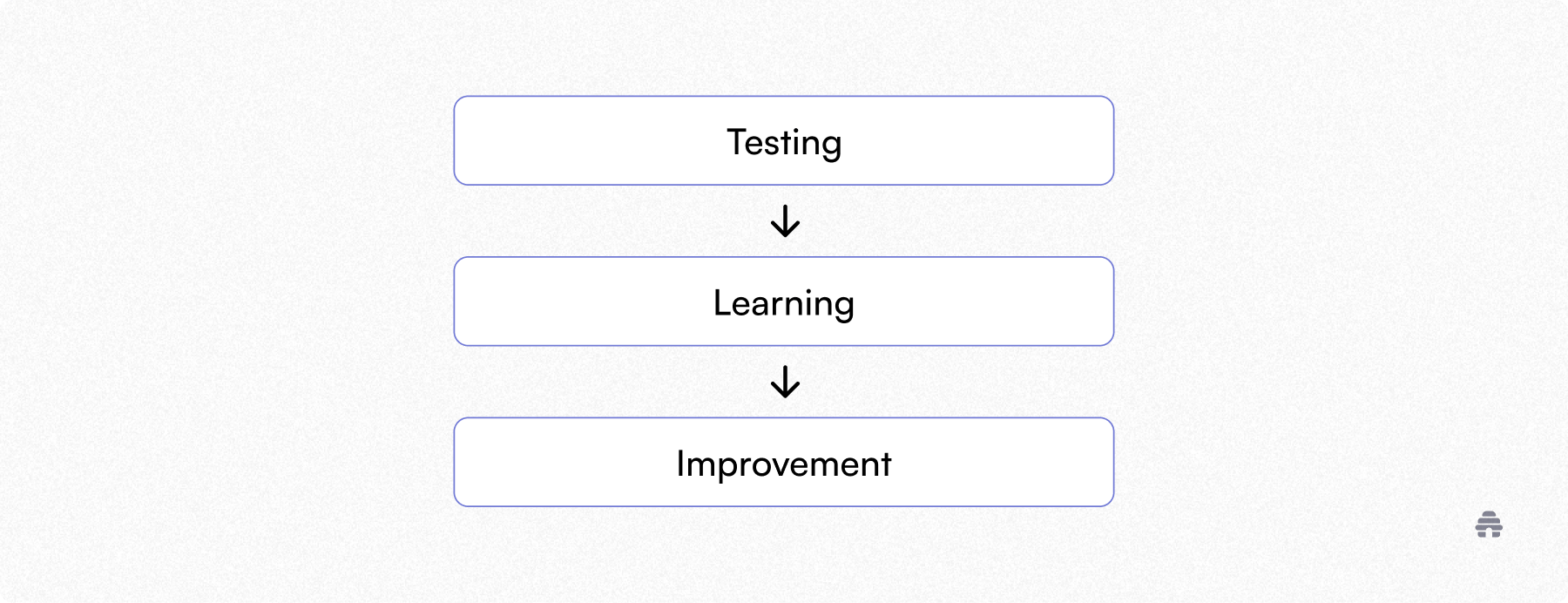
Improving CTR in my campaigns never came from quick hacks. It came from years of testing, refining CTAs, and running controlled experiments.
Using beehiiv, I’ve been able to track what moved my average click-through rate email upwards, with steady, repeatable growth as a result.
Here are some practical actions that you can take to improve your own CTR, with clear steps that you can test within the beehiiv platform.
Writing CTAs That Readers Actually Click
In my experience, using generic CTAs like “Read More” rarely works. I’ve consistently seen better results from action-oriented, emotional CTAs, with phrases that promise a clear outcome driving stronger clicks.
For example, “See How It Works”’ tends to underperform when compared to “Steal My Exact Framework.” Readers will respond when they know why they should click.
This approach alone improved my average email click rate, without needing to change anything else in my email content/design.
You should describe how action-oriented, emotional CTAs outperform generic ones.
Designing Emails for Simplicity and Flow
Fewer elements can make CTAs much more visible and increase clicks as there’s less distractions for readers.
I found that when I stripped my emails down to a single column template, with minimal images and one primary CTA, my CTR improved almost immediately.
There’s no doubt that white space guides attention, while a clear hierarchy guides user behavior. In a cluttered design, even the strongest of CTAs can get lost, while simplicity can make clicks more obvious.
Segmenting Audiences for Relevance
Segmentation has been one of my most powerful go-to tools for improving CTR.
Using beehiiv’s segmentation features, I’ve been able to tailor content based on reader interests and behavior and provide my audiences with emails much more relevant to them.
Highly relevant emails consistently outperformed general sends in CTR and conversion rates, and personalization didn’t have to be complex. As long as they were intentional and well-executed, they had a high chance of outperforming other campaigns.
A good example of this is how beehiiv customer The Fantasy Life newsletter significantly improved CTR rates by 200% with improved segmentation, analytics, and tracking. Read the full case study here to dive further into this real-world example.
Testing Send Times and Layouts in beehiiv
Running controlled A/B tests on send times and layouts revealed many insights in my email campaigns that I didn’t expect.
Some audiences clicked more on weekends, while others responded better to shorter email formats.
beehiiv made it super easy to isolate different variables and measure results and, over time, helped me to drive my CTR higher without guesswork.
My Take on What a “Good” CTR Really Means

It’s vital to remember that a “good” CTR depends on purpose, audience, and consistency. A 1.5% CTR might be excellent for a niche B2B email list, while 6% could be reached for a creator newsletter.
Instead of asking “What are the best click-through rates emails can achieve?”, you should ask whether your CTR is improving and is well aligned with your goals.
The only benchmark that really matters is the one that you build for yourself, tracking trends over time, testing intentionally, and learning from real user behavior.
Relying on beehiiv as my platform for email marketing has allowed me to use analytics, segmentation, and testing tools to understand why clicks happen and how I can improve them.
If you want to move beyond generic email click-through rate benchmarks and start optimizing CTRs for your own audience, start a free trial with beehiiv today.
Google's "People Also Ask" Questions
What is a good email click-through rate?
A “good” email click-through rate typically falls between 1-4% depending on industry, audience, and email type.
Editorial emails often have a lower CTR, while highly targeted campaigns will achieve higher CTRs.
You should focus on improving your own historical CTR with relevant, consistent emails, rather than chasing average benchmarks.
What is the 30/30/50 rule for cold emails?
The 30/30/50 rule for cold emails suggests that email success comes from the following efforts:
30% list targeting
30% copy and messaging
50% offer strength
It’s important to remember that even the strongest content won’t generate a high CTR if the email doesn’t solve a meaningful problem for subscribers.
What is the 60 40 rule in email?
The 60/40 rule in email states that 60% of email performance is driven by list quality and segmentation, while the remaining 40% is driven by copy, design, and layout.
Well-targeted subscribers are more likely to engage with a campaign, which is why improving relevance often increases average CTR more quickly than design tweaks alone.
What is the 80/20 rule in email marketing?
The 80/20 rule in email marketing refers to the idea that 20% of your emails will generate 80% of total clicks and conversions.
These top-performing sends tend to align closely with user intent, and analyzing this data can show patterns to improve future CTRs.
What is the rule of 7 in email marketing?
The rule of 7 in email marketing suggests that subscribers need to see your messaging seven or more times before they’ll take action.
Repetition drives trust and familiarity, which will, in turn, increase the chance of a higher CTR, and consistent messaging over a long period will compound and also result in a good CTR.
Is a 10% impression click-through rate good?
A 10% impression click-through rate is very good across most marketing channels.
In email marketing, a campaign must be extremely relevant, include a compelling offer, and instill strong audience trust to achieve results at this level.
Related Articles