- Home
- Posts
- How To Make Money Email Marketing: Here’s What I’ve Learned
How To Make Money Email Marketing: Here’s What I’ve Learned
7 Figures for Clients + $250K From My List - My Playbook

Brandon Storey
December 16, 2025
Learning how to make money with email marketing is not easy.
Yet, it’s the best opportunity in 2026.
That is, if you’re looking to make money online, generate repeat revenue, and grow your business.
When I first started freelancing back in 2019, I got my first taste of the power of email as a new copywriter. I’d help ecommerce brands write newsletters, product launches, and Black Friday campaigns.
Over time, I started managing lists of 30,000 to 100,000 subscribers, running full automation setups, and eventually generating seven figures in sales for clients.
The more I helped other people make serious money with their lists…
The more I realized how crazy I was for not doing this with my own list.
So in December 2023, I finally decided to build my own audience.
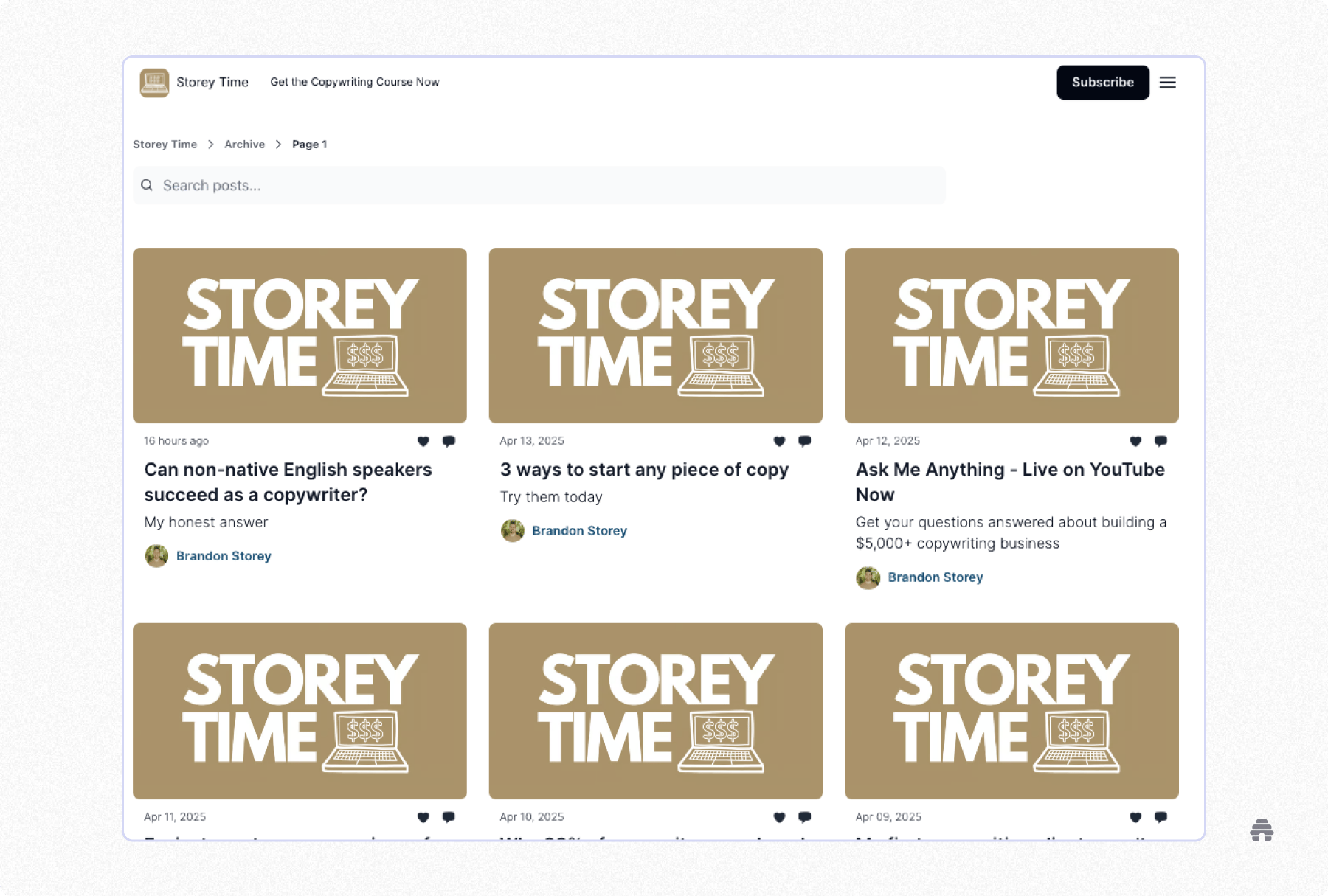
I launched Storey Time, my newsletter and website hosted on beehiiv. And within 3 months, I had monetized it. Within 12 months, it had brought in $100,000. Today, less than 2 years later, that total has crossed $250,000 in revenue.
In this post, I’ll break down exactly what worked and how you can make money with email marketing in 2026.
Let’s begin.
Table of Contents
How I Got Started With Email Marketing
When I first started freelance copywriting in 2019, I was doing everything: blogs, articles, website copy, and landing pages.
But six months in, I decided to learn email. At first, I thought it would be a waste of time because “Who reads emails nowadays?”
But I dove in, and it became my favorite type of copy to write. Not just because of the flexible style of writing, but because I quickly saw just how much money this channel can produce for brands.
One 200-word message could move tens of thousands of dollars in product sales.
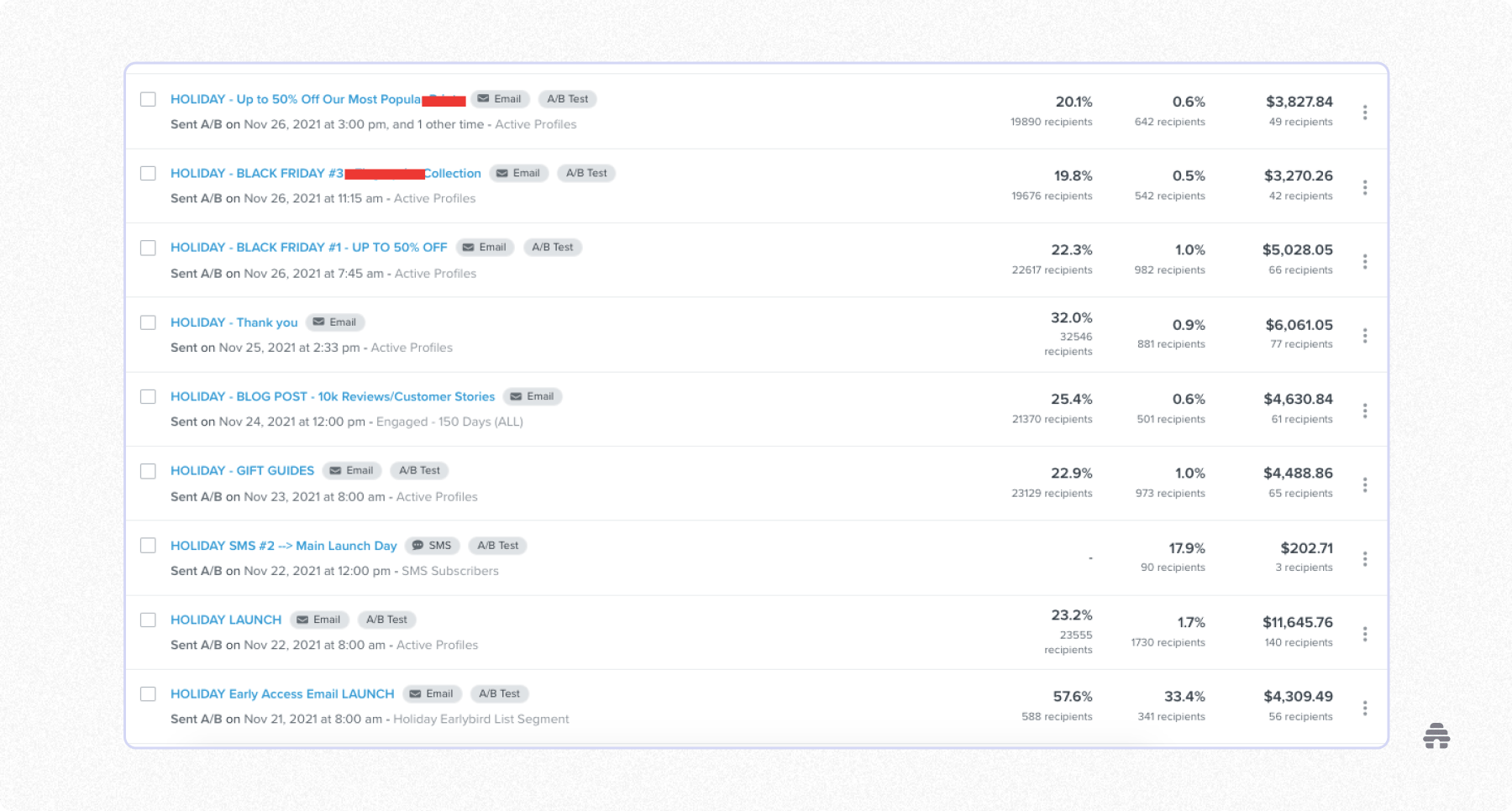
Plus, you know exactly how many people opened, clicked, and purchased.
Over six years, I:
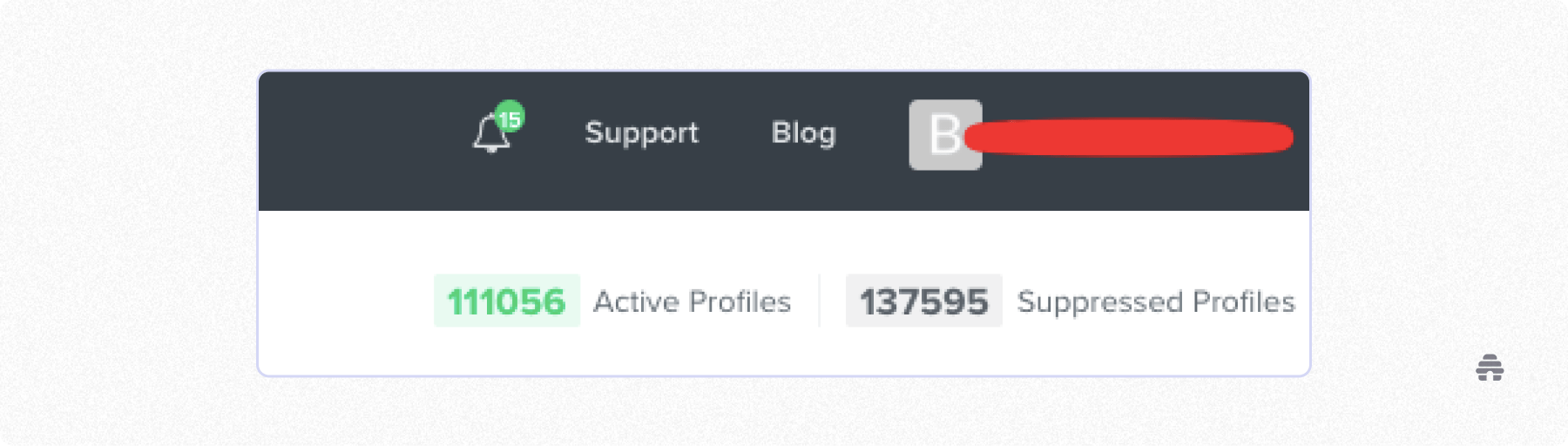
Managed email lists between 30K and 100K subscribers
Wrote hundreds of campaigns across multiple industries
Generated 7 figure revenue results for clients
And in late 2023, I decided to take everything I’d learned building revenue for others and apply it to my own brand.
How I Launched & Grew My Own List
In December 2023, I decided to launch Storey Time, a beehiiv newsletter to help people learn how to make a full-time income with freelance copywriting.
From the start, I understood the importance of building the list first before trying to monetize it.
So, the moment I went live, I let my audience on X (formerly Twitter) know.
Even though I had also just started on X two weeks before, I had about 200 followers and was able to get about 50-100 people on my email list.
From there, I layered multiple growth levers.
The first thing I did to set up list growth was create my newsletter landing page. This is the place people actually insert their email address to sign up to my email list.
The best part is, I didn’t actually have to touch a thing. beehiiv automatically gives you a basic newsletter signup page the moment you sign up.
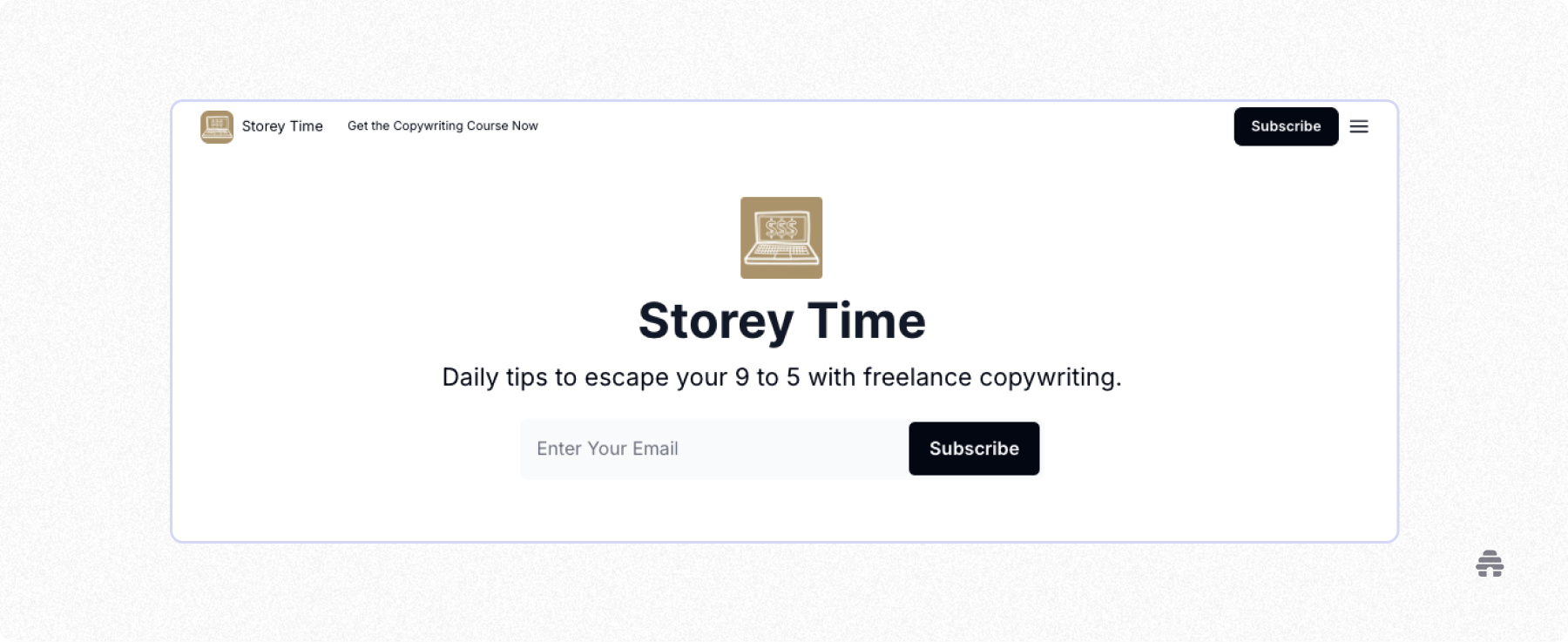
It may seem too basic or minimalistic, but that’s the point. beehiiv’s signup page is tried and tested to ensure it actually converts visitors into subscribers. There are no distractions; just a logo, headline, description of the newsletter, and a big button to sign up.
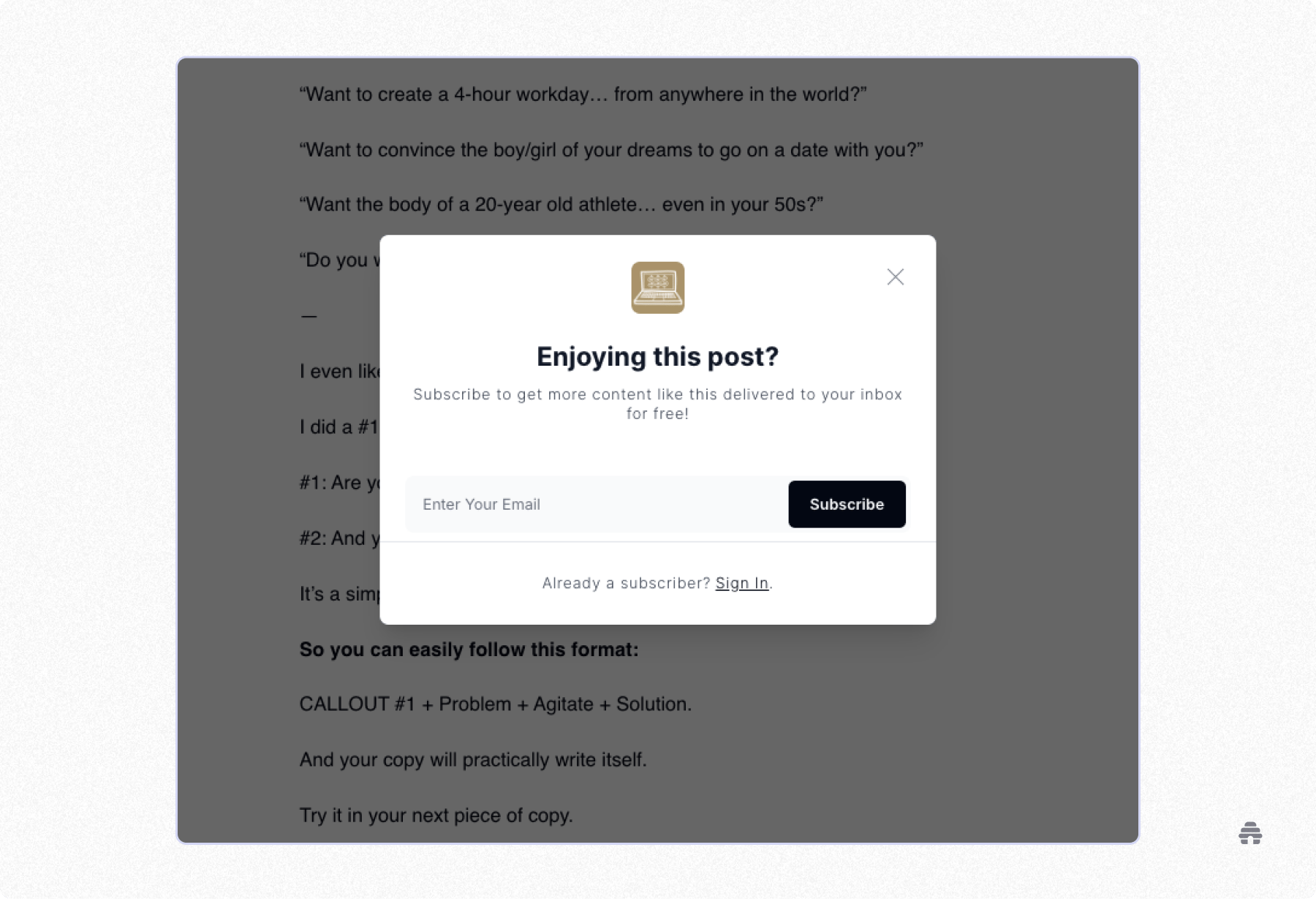
From there, people have the choice to read it first (below the CTA) if they aren’t quite ready to sign up yet. Then, within posts, beehiiv’s automatic popup allows you to capture email subscribers who didn’t convert on the original landing page.
The entire beehiiv website is optimized to grow your list for you, even if you aren’t “trying hard" to promote yourself.
Once my newsletter signup page was ready, I started promoting my email list.
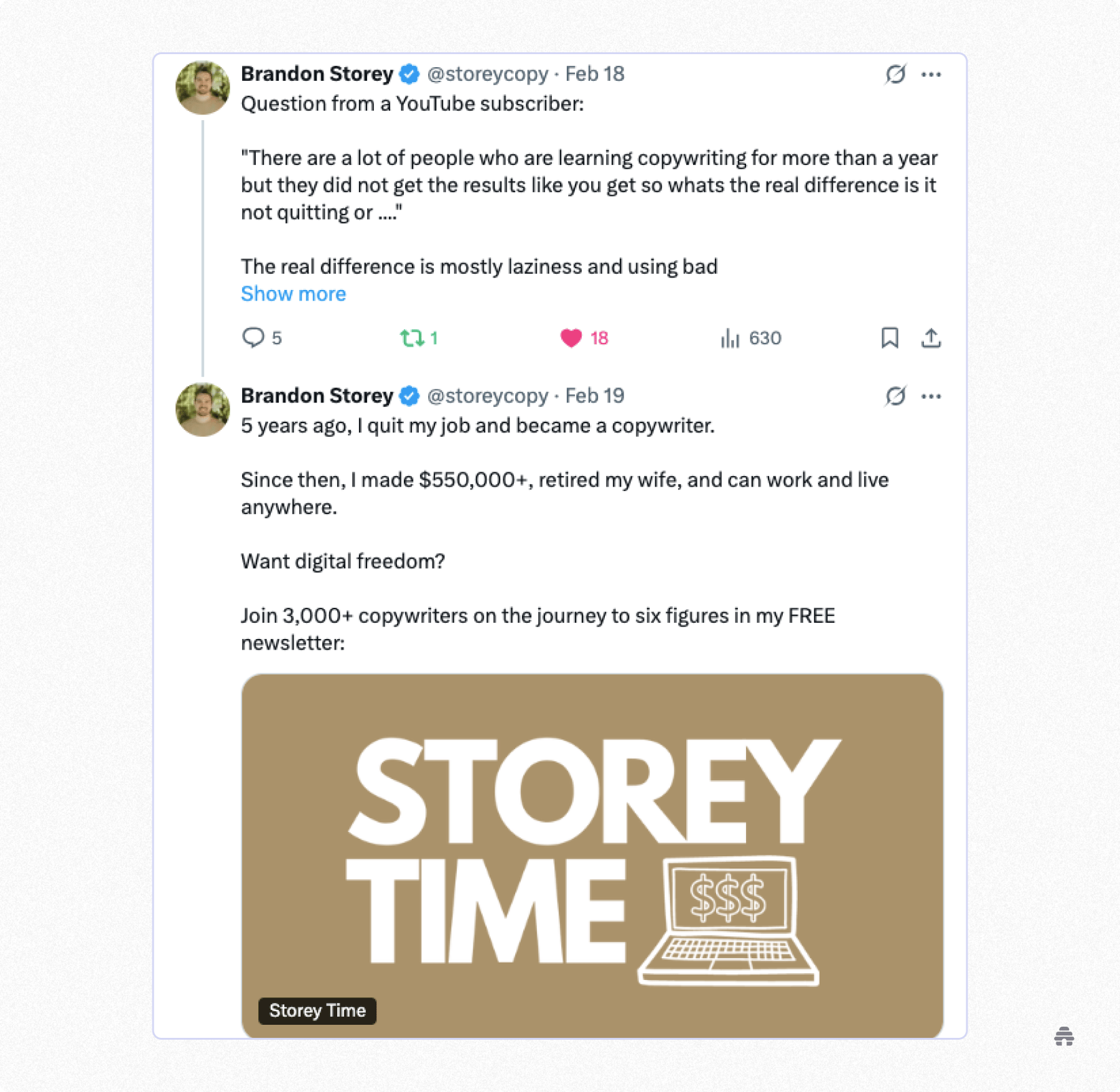
One of the first things I did was set up an automated “plug” for my newsletter that would show up under my Tweets after the post got about 10-15 likes.
All I had to do was write my tweet, put it into a software called TweetHunter, and make sure the auto-plug was set up. Then, every time I posted something on X, I would automatically promote my newsletter. This started to get the ball rolling for my list growth.
Lead Magnets

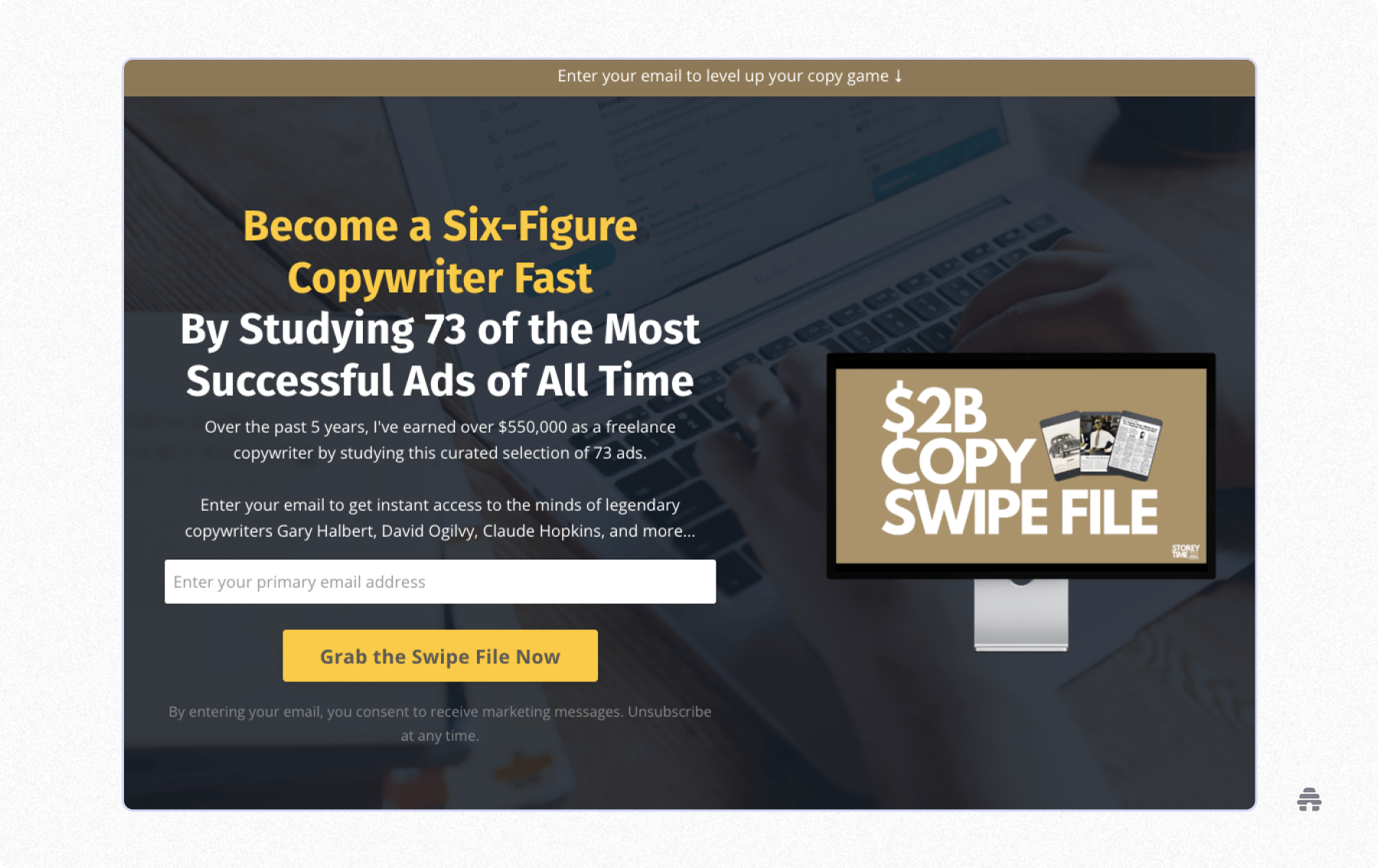
After I started pitching my newsletter below my Tweets, my list began growing steadily. About 100 subscribers per month. But, I wanted to grow even faster. So I started creating and launching lead magnets: free guides and tools to help freelance copywriters level up.
Each lead magnet solved a real, specific problem. The cool thing about someone downloading your lead magnet is that they’re essentially saying, “I want help with this exact thing.” So not only was I able to grow my list even faster–it was also priming my audience for a future offer.
beehiiv Boosts

After my list hit about 1,000 subscribers, I started playing around with beehiiv’s built-in paid acquisition tool, Boosts.
Boosts lets you place your newsletter on the beehiiv Boosts marketplace for other newsletters to promote. You set the price you’re willing to pay per subscriber (about $1-$3). And if they agree, you’ve got a paid acquisition channel set up for automatic list growth.
The moment someone subscribes to their newsletter, your newsletter will then appear immediately on that same page as a recommended newsletter to also sign up to.
Boosts has brought me over 1,000 subscribers without having to lift a finger. And the best part is, you can see the exact open rate from your “Boost” subscribers. They aren’t low-quality subscribers, but instead, they’re verified subscribers.
My average open rate overall for my newsletter is 36.71%.
But, my average open rate for my subscribers that came in via Boosts is 43.61%.
In total, they make up about one-third of my total subscribers. And when done with the right partners, these can add hundreds of new subscribers every month.
Can You Make Money Off Email Marketing?
Absolutely. Email marketing is one of the most reliable and profitable ways to make money online – I’ve seen this firsthand. Before launching my own newsletter, I spent years writing email campaigns for clients and watched simple 200-word messages generate tens of thousands of dollars in sales. And when I launched my own beehiiv newsletter, the same held true: email became the engine behind six figures of revenue.
Why Email Is So Profitable
High ROI: Industry averages hover around ~$36 earned per $1 spent, and in my experience, the returns can be even higher once your list is targeted and engaged.
Low cost to run: You don’t need ads. You don’t need a big team. A laptop and a consistent schedule can build a serious income stream.
You own your audience: Algorithms can’t throttle your reach. When you hit “send,” your message goes directly to people who asked to hear from you.
People convert from email: Across clients and my own list, email consistently outperformed social media for link clicks, purchases, and coaching inquiries.
How Email Actually Earns Money
There are multiple ways to monetize, and most profitable newsletters use several:
Affiliate marketing (works best when your audience already trusts your recommendations)
Coaching or services (my coaching program became my biggest revenue driver)
Digital products and courses (my courses now generate recurring revenue every month)
Memberships or paid communities (recurring revenue from my private community stabilized my cash flow)
Sponsorships (common once you build an engaged audience)
If you build an engaged list and send valuable, consistent content, email can become one of the highest-ROI skills and income streams you’ll ever develop. It certainly has been for me – and I’m about to share how.
What Actually Made Me Money From My Email List
When I initially launched Storey Time in December 2023, I didn’t have a product yet, just an idea. I knew I wanted to help people learn freelance copywriting, but I wasn’t sure what format would work best.
I just started posting on X. Some tips, some stories, and some long form posts. Then eventually I started taking those long form posts and repurposing them onto my beehiiv newsletter and sending them out to my list.
After three months of consistently hitting send, I decided it was time to start monetizing my efforts.
Here’s what actually brought in revenue:
Promoting Affiliate Offers to My Audience
One of the first things I tested early on was affiliate offers. Nothing crazy; just a few Amazon affiliate offers like copywriting books, and a few tools I used.
Over the next few months, I earned less than $100 total, which is barely worth mentioning. But that small test taught me an important lesson:
Affiliate marketing only works if it fits naturally into your existing content and audience’s goals. My readers trusted me for advice on copywriting and client acquisition, not software recommendations. They just weren’t ready for diving into the tools yet. They still needed to build their foundations in their writing skills.
So I stopped focusing on affiliate income and moved toward my own products and services.
Coaching Copywriters
After testing affiliate offers, I decided to trial a coaching offer. I kept getting more and more people asking me questions about how to build their copywriting business up. Many people asked me to get on a call with them so they could get even more help.
That was a major clue that coaching was an offer people wanted. My list was essentially telling me to coach them. The offer couldn’t have been a better fit. So, I launched one-on-one coaching in February 2024 and group coaching a few months later, teaching copywriters how to land clients and scale their businesses.
And since then (in about 1.5 years), I’ve coached over 85 copywriters. It’s been my largest income source to date.
Coaching alone has brought in around $170,000 in revenue.
The reason it worked?
I positioned my coaching as the next logical step for people already getting value from my emails. I didn’t have to sell hard, either. I just invited them to get even more help from me through a more personalized private mentorship.
Selling My Own Digital Products
After running my one-on-one coaching and my group coaching for a few months, I could see that there was another opportunity to monetize my list even further. As my list grew, and I started getting clients results, I naturally raised my coaching rates, which helped me make even more income.
But, it made the gap between my “free” audience and my paying clients bigger. So I looked back at the things I bought as a new copywriter in 2019 to see if there was something else I could offer.
I realized I primarily bought self-paced copywriting courses as a beginner.
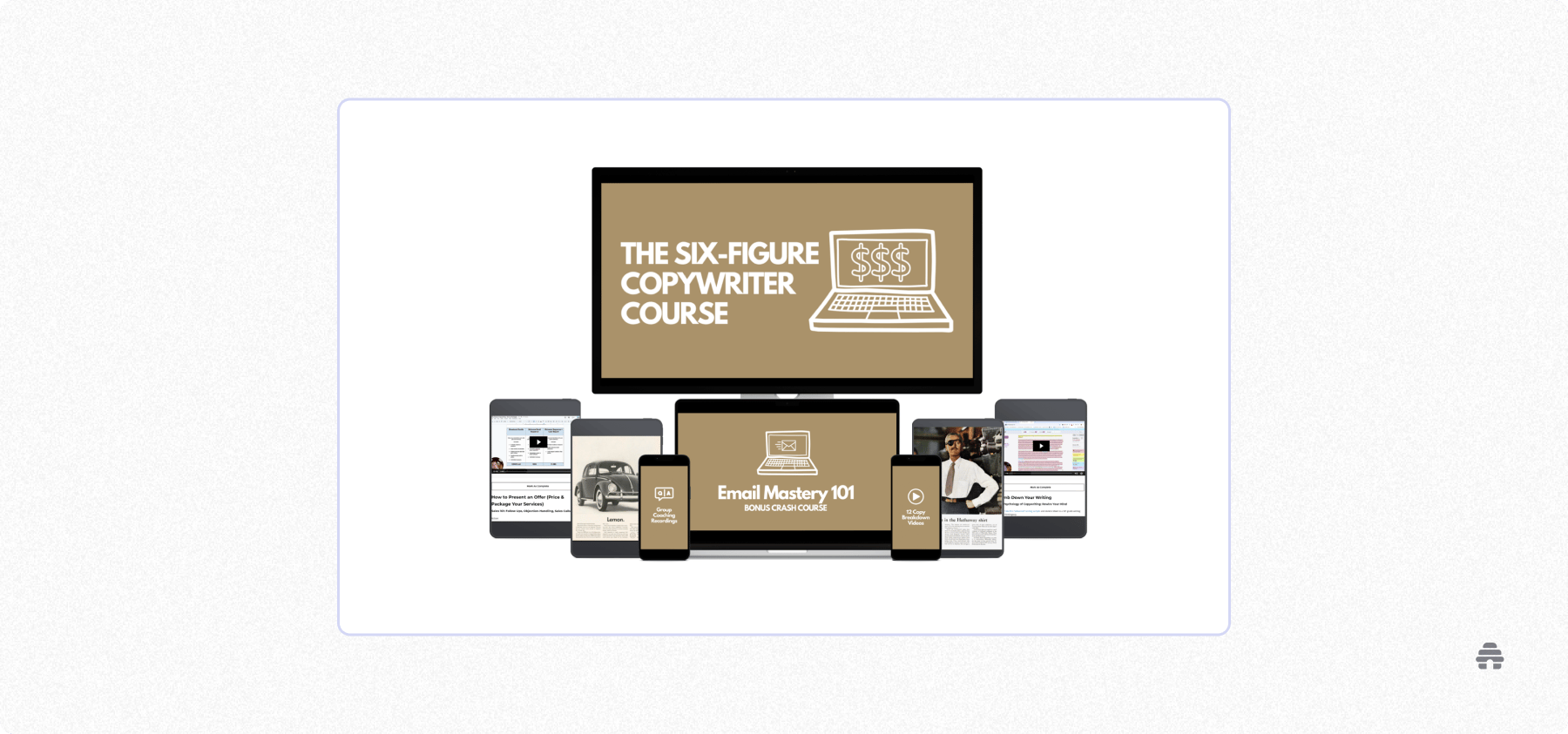
So I decided to package up my knowledge from my coaching and turn it into a digital product: The Six-Figure Copywriter Course. The course is everything someone needs to learn how to write copy and land clients to build a full-time income online.
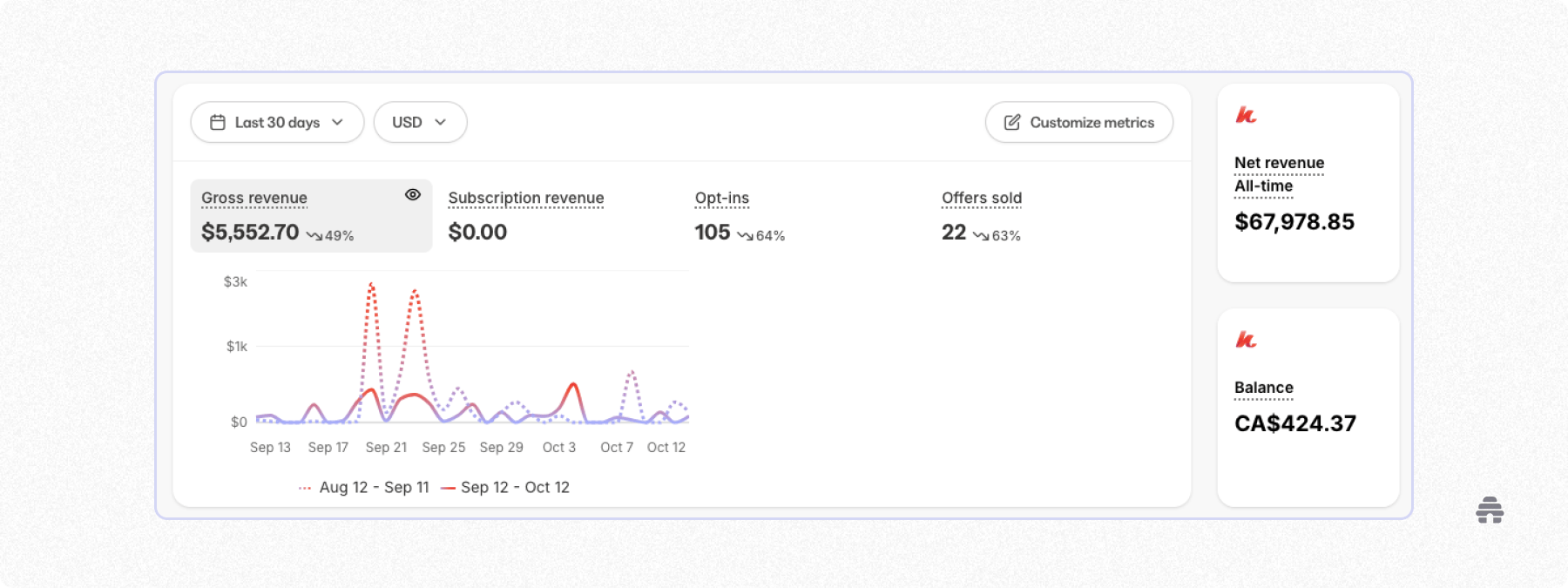
And it worked wonderfully. The initial launch brought in about $7,000. And in about one year, the course has generated over $67,000 in revenue.
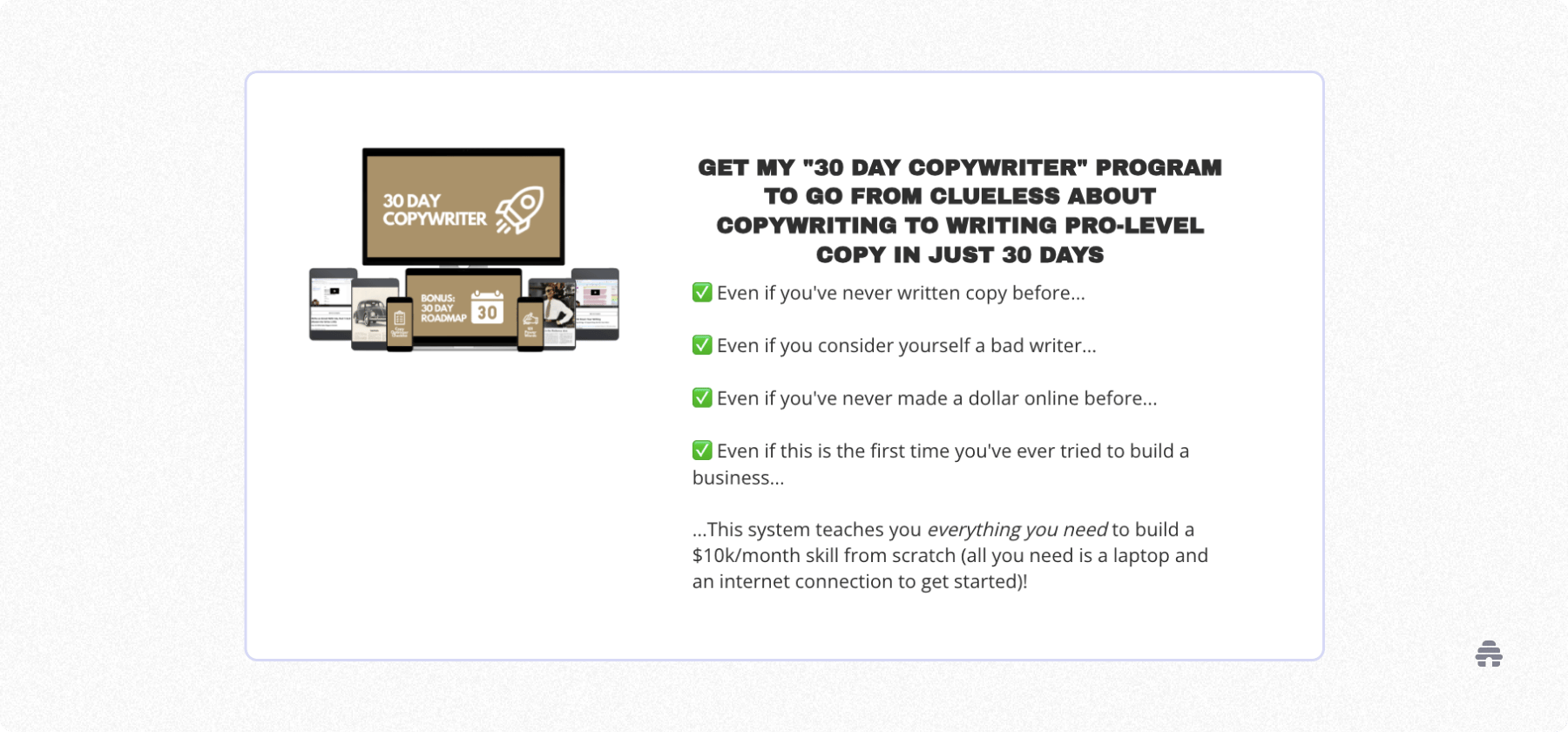
After that, I introduced an even lower ticket intro course called the 30 Day Copywriter, which is all about the basics of copywriting to get someone started.
That led into upsells like Copy Cheat Sheet Pack, Niche Mastery Toolkit, Inbox Ninjas Email Crash Course, and Copy Breakdown Vault.
In about 12 months, my digital product sales have totaled about $80,000.
Launching a Community Subscription

Just under two years into Storey Time, I wanted to start generating recurring income with my email newsletter. I was used to constantly depending on one-off launches and primarily one-time purchases. So I wanted to introduce something new that would focus on monthly recurring revenue (MRR).
That’s when I introduced The Six-Figure Copy Academy, a private paid community for copywriters.
Members get:
Access to courses
Group coaching calls
Copywriting feedback
Accountability threads
A daily copywriting job board
Client-getting challenges (and prizes)
Daily support from me and other members
It’s priced as a monthly subscription, so even if I’m not “actively” promoting, the revenue continues.
I simply write the same emails I’ve been writing, and at the bottom, just place a call to action to join the paid community, and people join automatically.
Recurring income was a game-changer because:
It stabilized cash flow
It rewarded consistency instead of constant launches
It turned my one-time offers into an ongoing ecosystem
If you’re building your own email list, try to think of ways you can introduce some kind of subscription or recurring model. That way, you can dramatically increase the revenue potential of each email you send, getting you a higher ROI from your efforts.
7 Email Marketing Best Practices (To Maximize Revenue)
After six years of managing client campaigns and running my own email list, I’ve seen what separates profitable lists from ones that barely break even.
Here are the best practices that have consistently moved the needle (both for my clients and for me):
1. Lead With Value Before You Sell
Your readers subscribed because they wanted help. If every email you send is a heavy sales pitch (without value), they’ll unsubscribe.
Now, this doesn’t mean you can’t sell in every email. You can. But you want to make sure every email includes one of these three: entertainment, practical tips, success stories.
Pitching your offers is more palatable when you lead with a funny story, a step-by-step that solves a problem, or a case study of a successful customer that encourages them to keep going.
Remember, when your audience sees you as someone who helps first, selling becomes effortless.
2. Write Like You’re Talking to One Person
Write to one person, not a group. This is one of the core rules of good copywriting.
If you want to make your audience feel small and convert less, then say “hey guys, hope you’re all doing well today… Here's what I got for you guys…”
Don’t write like that. Sure, you might be sending this email to thousands of people. But they’re not all gathering together to read your email together in a movie theatre.
They’re reading it individually, one at a time.
Write like you’re speaking to a friend sitting across from you at a coffee shop.
Practically speaking, that means being generous with the words “you” and “I” in your copy.
Plus, keep sentences conversational. Share real examples and small details from your life or business. Emails that feel personal get opened, read, and acted on.
3. Keep Your Emails Skimmable
The majority of people read emails on their smartphones now. You have seconds to grab their attention.
Use:
Short paragraphs (1–3 sentences max)
Bold subheads or bold key phrases
Bullets for skimmability
Whitespace to make it breathe
This doesn’t mean you have to always send a super short 150-word email. My emails range from 200 words to 2,000. You can write long emails as long as they’re still skimmable.
Your goal is to just make sure your email is so easy to scan that even a distracted reader can’t help but finish it.
4. Send Consistently
Consistency builds trust. It builds a relationship. And it builds your income.
It doesn’t matter if you send it once a week or every day. Just stick to your rhythm.
And never send less than once per week.
Here’s what consistency does:
Keeps you top of mind
Improves inbox placement
Increases replies and feedback
More importantly, it builds your identity as the go-to expert in your niche.
If you don’t send emails to your audience often enough, here’s a tough pill to swallow:
They will forget you exist.
It’s harsh, but it’s true. So hit send. Build that relationship. And converting your list will become second nature.
5. Track the Right Metrics
Open rates, click rates, unsubscribe rates, spam are all important. You should know how many people are opening and clicking your emails. But, these metrics aren’t everything.
At the end of the day, your open rate doesn’t define your success in business; your revenue does.
I read an analogy about this the other day: it doesn’t matter how many girls' phone numbers you can get. What matters is whether you actually go on a date or not.
The same is true for your open rates vs. revenue generated.
For context, here are a few benchmarks to keep note of:
Open rate (aim for 30%+ for a weekly email, and 20%+ for a daily email)
Click-through rate (2–5% is healthy)
Unsubscribes (normal up to 0.5% per send)
And, you should aim to earn at least $1 per subscriber per month. So if you have a list of 5,000 people, you should be earning at least $5,000 per month from your list.
10,000 subscribers means $10k/month. 50,000 subscribers means $50k/month.
Keep note if single sends have dramatically different results. But more importantly, look at trends. Is your open rate climbing or shrinking over time?
Is your revenue growing or staying flat?
If your metrics start slowly declining, re-engage your list with a new offer, fresh story, or a survey to see what they’d like from your emails.
6. Always Include a Clear Call to Action
Every email should answer one question:
“What do I want my reader to do next?”
This doesn’t mean you always have to sell something with your call to action (CTA), but it does mean you need to always tell them what to do next.
That might be:
Reply
Click a link
Watch a video
Read another email
Book a call with you
Join your product waitlist
Or complete a task at home
Even small CTAs condition readers to take action. And that’s what will help turn your emails into consistent income.
7. Keep Your List Healthy
List health is something most beginners neglect, but it’s crucial–not just to keep subscribers happy, but also to squeeze the most revenue out of your list.
Every 60-180 days, you need to remove unengaged subscribers. This means anyone who hasn’t opened or clicked an email in a set period of time.
If you have a weekly email, aim for about 90-180 days. If you have a daily email, aim for 45-90 days.

It may sound counterintuitive to want to remove subscribers because you’re trying to grow your list, right? Well, the reality is that you actually want to grow your engaged subscriber list. Those are two very different things. Someone’s list size isn’t a true tell of how strong their list is. It’s how big their engaged list is.
The dangerous part of keeping people on your list who don’t read your email is deliverability issues. If you keep sending emails to people who don’t open, Gmail and other email service providers (ESPs) will see you as spamming people.
And, if you keep sending to a large enough percentage of people who don’t open, Gmail will start sending your emails to spam folders.
The worst part is, this will force people who actually do want to receive your emails, and who read them consistently, to miss your emails entirely. That can lead to a downward spiral of even more unopened sends.
Thankfully, with beehiiv, you can set up an easy solution: a list cleaning automation.
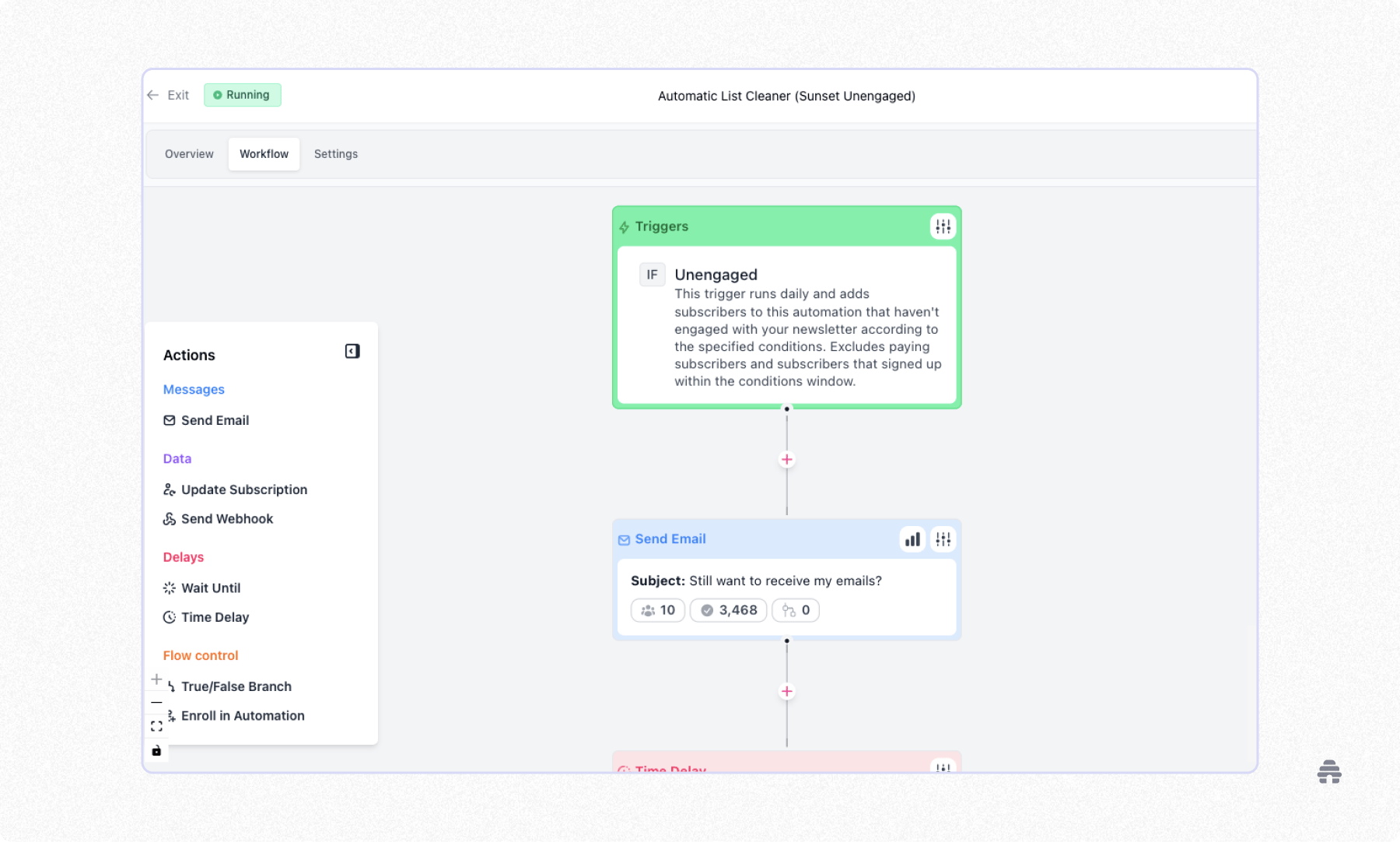
I set up an automation that automatically sends an email to unengaged people after 90 days asking if they want to stay on my list. Then I send a second email to give them one last chance. If they don’t click that email, I automatically unsubscribe them.
So I rarely think about deliverability since I have systems in place to keep my list healthy. And you should do the same to maximize your deliverability (and ultimately revenue).
Final Thoughts: Master Email to Master Revenue
After six years of being in the internet marketing world, email is one of the most profitable skills I’ve ever learned.
It’s helped my clients generate millions of dollars, and it’s built me a six-figure business from a laptop… all from knowing how to send simple emails.
If there’s one thing I’ve learned, it’s when you own your list, you control your income.
Social platforms can change overnight. Algorithms can bury your reach. But your email list is an audience that truly belongs to you.
That’s why I built Storey Time entirely on beehiiv. Because beehiiv gives you everything you need to make money with email marketing in one place: from list growth to automations to monetization.
You can set up your entire email marketing on beehiiv in just a few simple steps for free.
Ready to tap into the power of email newsletters?



The one place to build.
Social Media Auto-Plug Newsletter CTAs