- Home
- Posts
- How To Start a Newsletter for Operators and COOs
How To Start a Newsletter for Operators and COOs
A Practical Guide for COOs and Operations Leaders

Kanishka
March 18, 2026

Why Operators Are Well Positioned To Write Newsletters
Operators and COOs spend their time on work most people never see.
They design systems that have to hold up under pressure. They fix processes after they break. They make tradeoffs between speed, cost, and quality, usually with incomplete information and real consequences.
None of that shows up in public threads or highlight reels.
That is exactly why operator-ed newsletters work.
In 2026, readers are tired of abstract advice and recycled frameworks. They are looking for perspective from people who have actually shipped, scaled, and fixed things. Operators do that work by default.

A newsletter turns that execution experience into something durable. It compounds over time, builds trust quietly, and creates leverage long after the decision itself is made.
Who Is the Audience for an Operator or COO Newsletter?
The strongest operator newsletters are written for peers and near-peers.
Common audiences include:
Founders running small to mid-sized companies
Heads of operations, finance, or people
Product and engineering leaders
Operators preparing for their next role
A weak audience definition sounds like “anyone interested in operations.”
A strong one sounds like:
“This newsletter is for founders running teams of 10–100 who want to build scalable internal systems.”
Clarity here determines whether readers stay.

What Operators Should Write About in a Newsletter
Operator newsletters work best when they focus on decision-making, not theory.
Topics that consistently resonate:
How you structured a team or workflow
Tradeoffs you made and why
Systems that failed before they worked
Metrics that mattered and those that did not
What broke at scale
The most valuable operator writing explains why a decision was made, not just what happened.
Readers are looking for frameworks they can adapt, not instructions to copy blindly.
How Often Should Operators Publish?
For most operators, biweekly or weekly works best.
Operators tend to have demanding roles. Publishing less frequently but consistently is better than aiming high and disappearing.
Consistency builds trust. Readers understand that operators have real jobs.
Operator newsletters grow through relevance, not reach.
Strong growth channels include:
Peer sharing inside companies
Forwarding among founder groups
Search traffic for evergreen operational topics
Speaking or workshops that point back to the newsletter
The audience may be smaller, but it is highly engaged.
Why Trust Me: I’ve been strategizing content at beehiiv for over 3 years, with hands-on experience across email, the content economy, and audience-led growth.
Many operators do not earn directly at first.
Instead, newsletters generate:
Inbound job opportunities
Advisory and consulting roles
Speaking engagements
Board or fractional COO opportunities
The newsletter becomes a public record of how you think.
Common Mistakes Operators Make
Writing too abstractly
Avoiding specificity out of caution
Publishing inconsistently
Treating the newsletter as a diary instead of a resource
Operator newsletters succeed when they are useful, not performative.
Why Operators and COOs Should Start Using beehiiv
Operator-led newsletters benefit from:
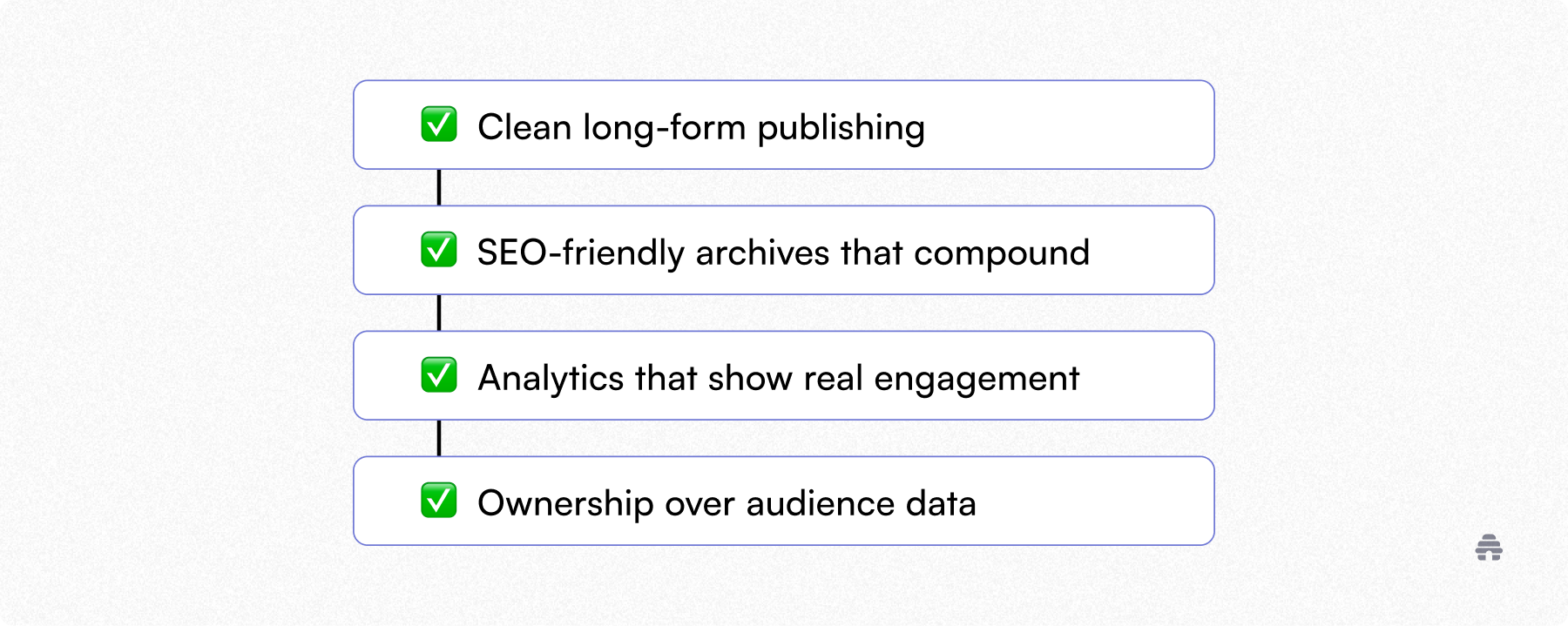
beehiiv is designed for people building long-term assets, not chasing short-term reach.
Start using beehiiv if you want your operational experience to compound into career leverage and trust.
Final Takeaway
If you are already making hard decisions every week, a newsletter lets you turn that experience into durable visibility.
Operators do not need to invent content. They need to document what they already know.
Related Articles



The one place to build.