- Home
- Posts
- Video Newsletters: Boost Engagement With Multimedia
Video Newsletters: Boost Engagement With Multimedia
Learn How To Boost Growth With These Newsletter Swap Examples

Linda Hwang
March 12, 2026

You know that feeling when you hit "send" on your newsletter and immediately open your analytics like you're checking if your crush texted back?
Just me? 😳 😳
I've spent too many Tuesday mornings refreshing my subscriber count, hoping to see something beyond my mom (hi, Mom!), my college roommate, and what I'm pretty sure are three bots.
I learned about newsletter growth the hard way. I burned through $300 on paid ads in my first month, watching my cost per mille (CPM) climb while my actual engaged subscribers stayed flat.
And social media? I'd craft witty posts, hit share, and get... crickets. 🦗
But then I discovered newsletter swaps.
A newsletter swap is straightforward: I tell my readers about your newsletter; you tell yours about mine. I’d seen newsletter swap examples that worked well for other creators, but here’s what surprised me when I did my first one: it didn't feel like some sterile business transaction. It felt more like finding another creator in the trenches with you, each trying to build something real, and deciding to help each other out.
I've tested this extensively over the past few years. I’ve had some wins and some spectacular flops (we'll get to those), and figured out strategies that move the needle.
Whether you're running an author newsletter, a business digest, or a wonderfully specific niche hobby publication, swaps can be your secret weapon for growth.
Table of Contents
That peer recommendation? It crushes any Facebook ad I've ever run.
My readers trust my judgment (that's why they subscribed in the first place), so when I recommend another creator, most follow my recommendation.
The magic happens when you find partners with shared audience interests. When I swapped with a creator who writes about time management (one of my clients covers productivity), it just made sense. I wasn't spamming my readers with random content. I was connecting them with something they'd genuinely value. This is what email promotion should be: strategic, helpful, and built on real relationships instead of cold ads.
I’ve helped my clients gain 200-500 subscribers from single swaps. But what matters even more is that these people stick around. They didn't accidentally click on an ad or stumble onto my client’s newsletter. Someone they trust sent them. That subscriber quality is everything.
Swaps also level the playing field. You don't need a big marketing budget or thousands of subscribers already. You just need to find the right partners: creators who serve a similar (not identical) audience.
It's genuinely one of the most effective growth strategies I've used. And when you learn how to promote a newsletter through swaps, the results compound. Each swap builds your list, making you more attractive to future swaps, which in turn grows your list further.
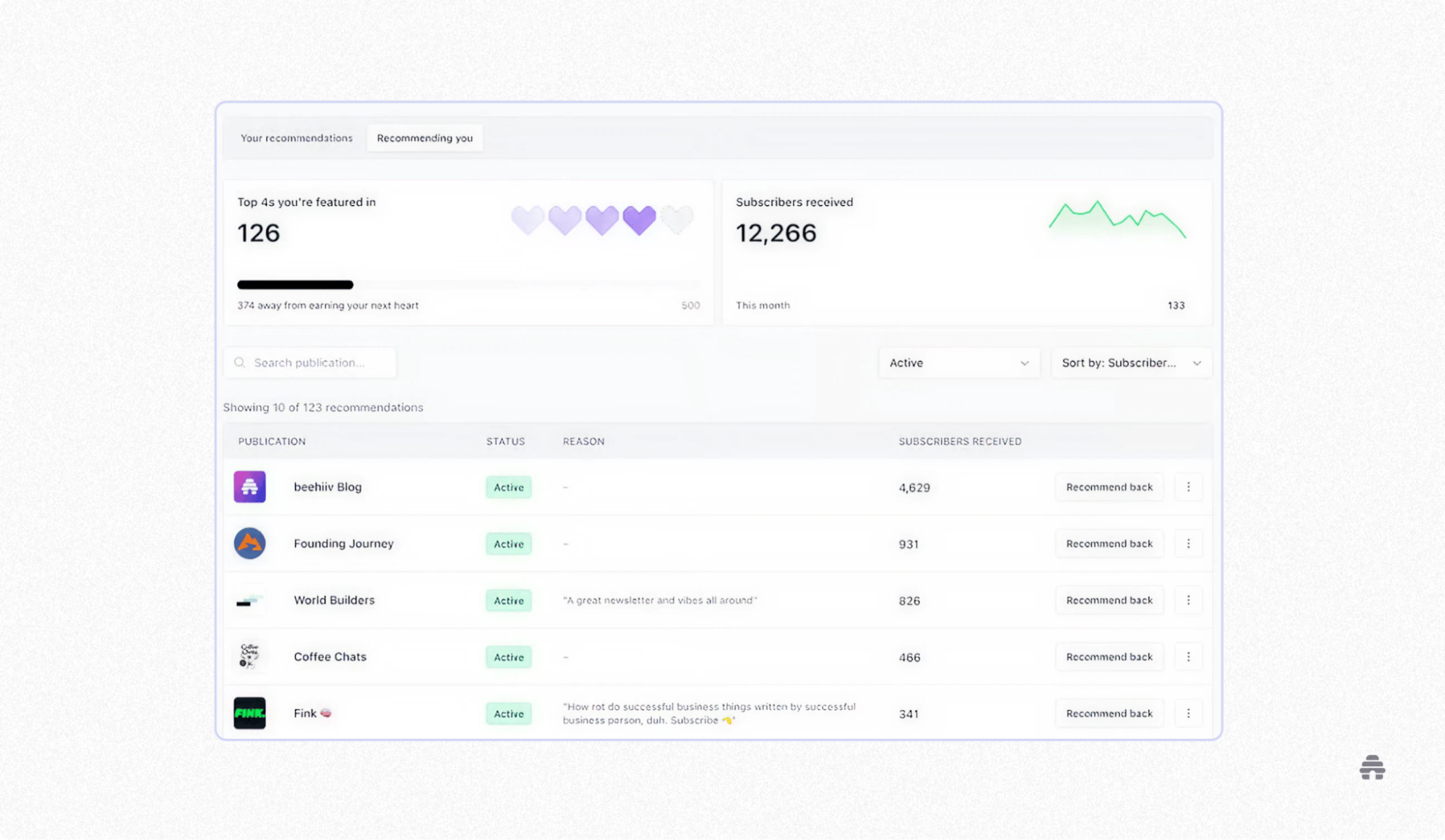
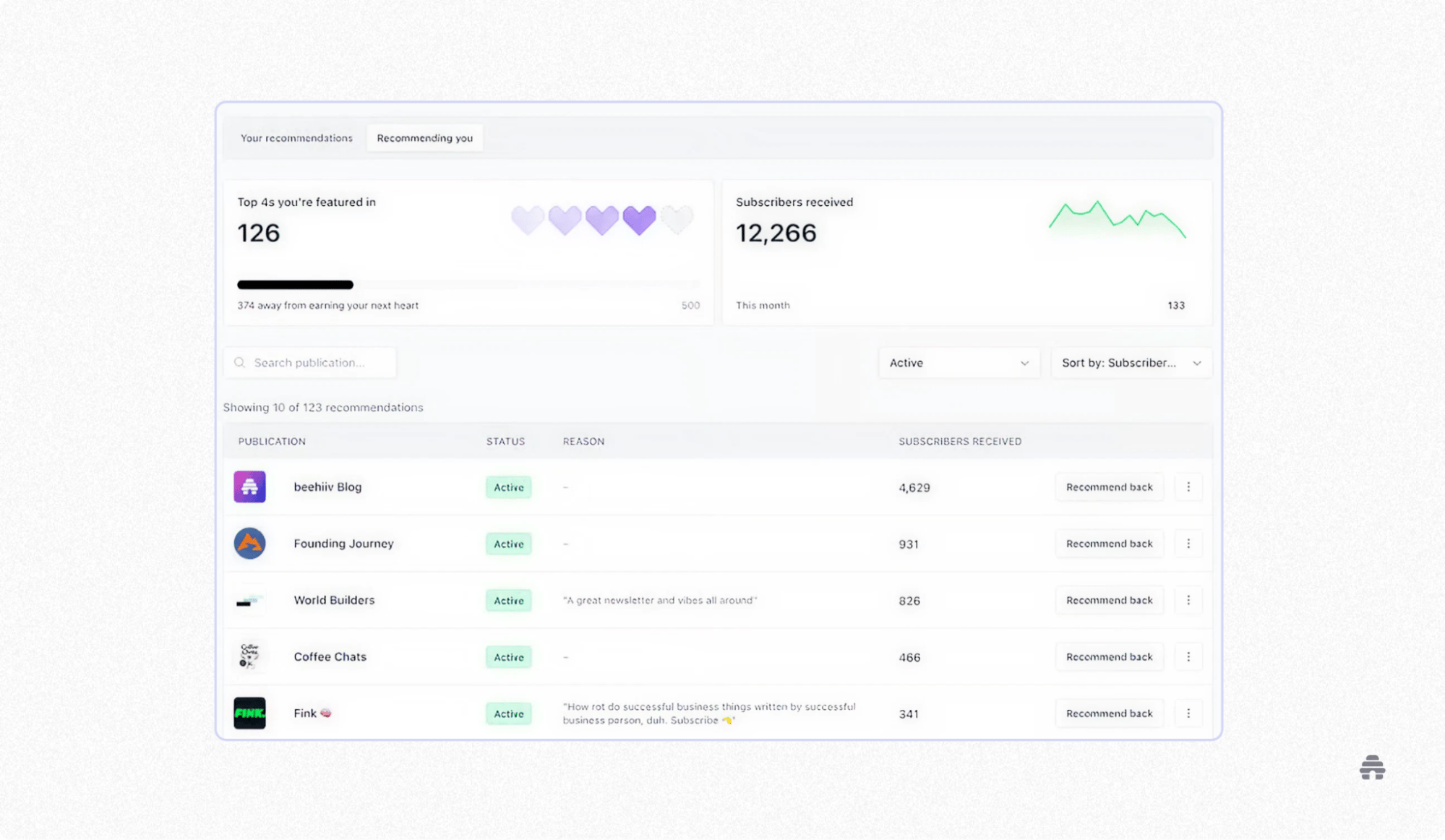
To make swaps even easier, beehiiv recently introduced a Top 4 Recommendations feature. This enables publications to seamlessly exchange high-intent subscribers without introducing another paid acquisition channel to oversee.
In fact, the Almost Friday newsletter team had this to say about beehiiv’s move: “The Top 4 feature is the best free growth channel we’ve used. We’re not just seeing subscriber counts rise; we’re attracting the right readers.”
Common Mistakes I've Seen in Newsletter Swaps

I've messed up enough swaps to write a masterclass in what not to do. Let me save you the pain.
Mismatched audiences will kill your swap. I once partnered with a "productivity" newsletter. Perfect match, right? Except that their readers were college students seeking study hacks. Mine were entrepreneurs building companies. Each of us had about 15 subscribers, and half unsubscribed within a week. The fix: don't just look at surface topics. Ask who's reading. Get specific about demographics, goals, and interests.
Over-promoting burns trust fast. I watched a creator blast their list with three promotional emails in one week. Their open rates tanked. So, limit to one dedicated email or one tasteful mention. That's it.
Lack of follow-up wastes the whole swap. You gain new subscribers, and then ignore them? No welcome email, no engagement, nothing? A simple welcome sequence makes a huge difference.
Not tracking results means you'll repeat mistakes. If you're on beehiiv, tracking is built in. You can see exactly where every subscriber came from. Without this data, you're guessing. And guessing means wasting time on swaps that don't work.

I've tried most swap formats, and they don't all work the same.
Some formats crushed it for me. Others flopped hard.
With beehiiv, swaps can be done as recommendations (free growth), or paid Boosts (sponsored placements from revenue/acquisitions). Matt Navarra, founder of Geekout Newsletter, commented about beehiiv, “I carefully select newsletters that align with my audience's interests, ensuring a high return on investment for both myself and the newsletters I boost.”
Let me walk you through newsletter swap examples I've tested and the actual results you can expect from each.
Dedicated Email Swaps
This is the format that's given me the best results.
A dedicated email swap means I send one full email to my list that's entirely about my swap partner's newsletter. They do the same for me.
It performs better than any other format because there's no competition for attention. No other links, no distractions. Just one clear message: "Here's why you should subscribe to this newsletter." When I nail the audience match, I've seen 3-5% conversion rates. Sometimes higher.
But you need strong audience alignment for this to work.
You're sending your readers an entire email that isn't your usual content. If the fit is off, you'll get unsubscribes. Or worse – angry replies asking why you're promoting random stuff. I only make dedicated swaps with creators I believe my readers will love.
Author swaps work particularly well in this format.
Author swaps are newsletter swaps between authors who write in similar genres. A romance author partners with another romance writer to cross-promote their mailing lists and new releases.
It’s a win-win: readers who love one romance author will likely enjoy another.
In-Section Mentions or Link Shoutouts
This is my go-to format for ongoing swaps.
I’ll add a quick mention of my partner's newsletter inside my regular content, or to my "Recommended Reads" section at the bottom. Other times, I'll reference them naturally when they're relevant to the topic.
My readers are already reading my usual stuff, and then I casually say, "By the way, if you liked this, you'd probably love [Partner's Newsletter]." Conversion rates are lower (1-2%), but there's also less friction. Nobody feels like I'm suddenly selling them something or breaking my normal rhythm.
This format taught me real email newsletter best practice: make recommendations feel natural, not forced. Don't just slap in a link and move on. Give context. Explain why you read it and what specific value they'll gain.
When it works, readers don't even realize it's a "swap." They just think you're sharing something useful, which, honestly, you should be.
Multi-Partner Swap Chains
Want to grow faster?
Identify 3-5 newsletters in your niche and run a coordinated group swap in which everyone promotes each other over a month.
I did one of these last Spring, and it was incredible.
Five business newsletters, each with 2,000-8,000 subscribers. Over four weeks, we each did one dedicated swap for every partner. At the end, I gained about 800 new subscribers. Everyone else saw similar or better numbers.
We created a simple shared spreadsheet where everyone logged their send dates and subscriber counts. That transparency kept everyone accountable and motivated.
Without tracking, group swaps fall apart fast.

There are directories and marketplaces popping up where you can find swap partners.
But honestly? My best swaps have come from direct outreach. Finding someone whose work I read, sending them a genuine email, and building a real connection. The algorithm can't replicate that.
If you're on beehiiv, you don't need third-party tools to manage swaps. I use custom audience segments to organize subscribers by source, tag subscribers by referral source, and track exactly how many subscribers each swap brings in. All the performance metrics are available in real time. No spreadsheets, no guessing.
This is how to do email newsletters without drowning in admin work. The tools should make tracking easy so you can focus on writing and building relationships with swap partners.
Why Trust Me
Linda Hwang has extensive B2B marketing experience and previously worked at a renowned international facilities management company. There, she played a crucial role in creating effective content and social media marketing plans. Now, Hwang is a marketing consultant who helps small businesses create compelling brand stories.

Alright, enough theory. Let's discuss how to run email newsletter swaps that actually move the needle. Here's my repeatable process.
Finding Relevant Swap Partners
Start by making a list of 10-20 newsletters in adjacent niches. Not your direct competitors (that's weird), but creators who serve a similar audience with a slightly different angle. If you write about personal finance, look at productivity newsletters, entrepreneurship newsletters, or investing newsletters.
Be specific. Refer to the potential partner’s recent newsletters. Show that you've read their stuff. Building long-term swap relationships is better than one-off transactions.

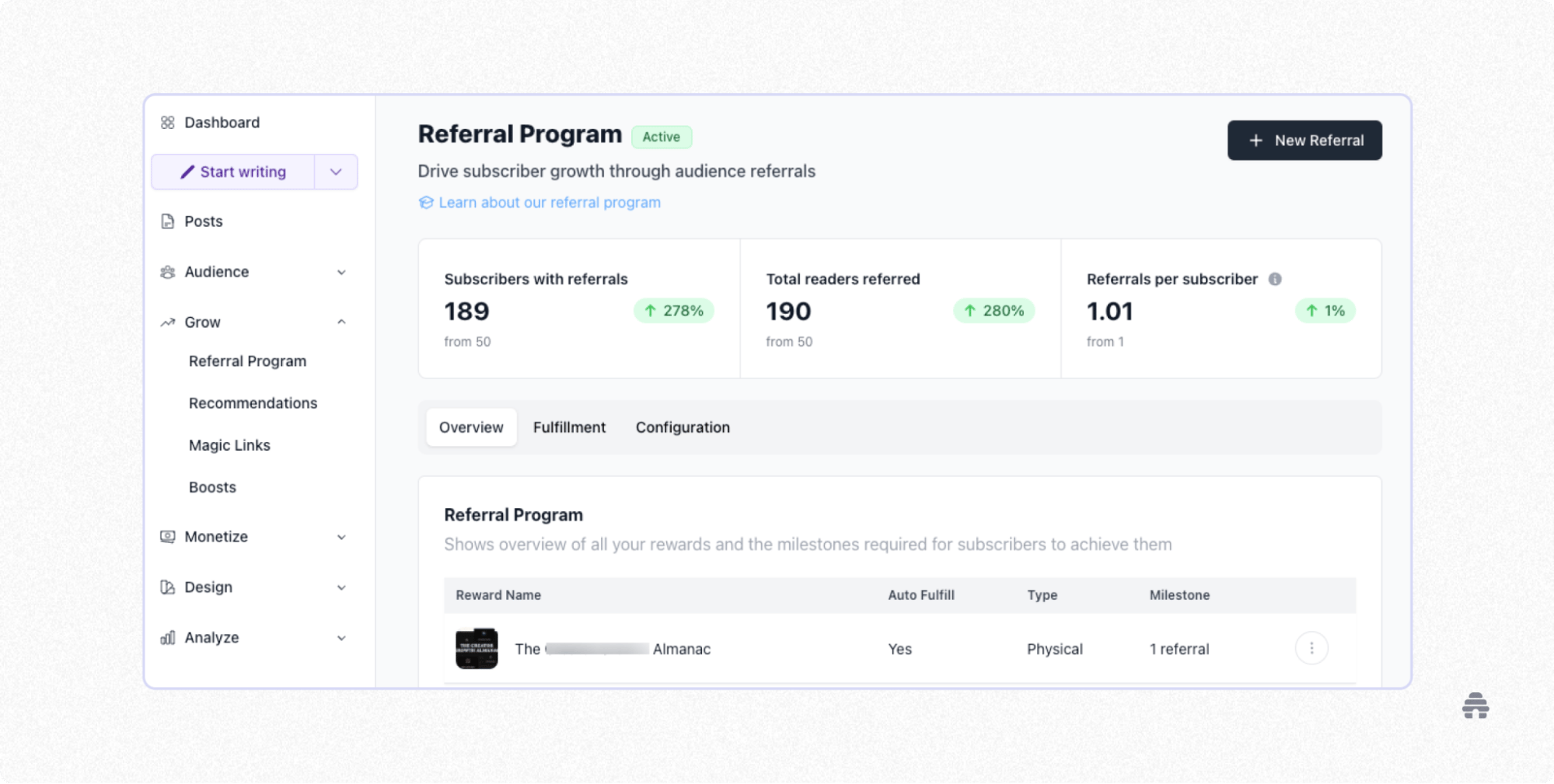
With beehiiv, you can “recommend” other newsletters to your audience. This referral model connects with like-minded publishers, delivers value to subscribers, and drives organic growth.
Writing the Perfect Swap Copy

Your swap copy needs to answer one question: "Why should I care?"
Here's what works for me: Start with a pain point your readers have. Introduce the newsletter you're recommending and say what makes it different. End with a clear call to action.
Here’s a newsletter swap example I used a few months ago for my client: "Struggling to make your side project profitable? I've been reading [Newsletter Name] for six months, and every issue gives me actionable revenue strategies from founders who've done it. No theory, just tactics that worked. Check it out here: [link]."
See what I skipped? All the hype.
No "amazing" or "incredible" or "you absolutely must subscribe." Just specific benefits. I tell readers exactly what they'll get and why I personally find it useful.
Concise, benefit-driven copy converts best, especially when it sounds like you're texting a friend, not writing ad copy. This is an email newsletter best practice that applies to swaps and to pretty much every promotional email you'll send. Be specific. Be honest. Skip the superlatives.
Tracking Conversions & Measuring ROI
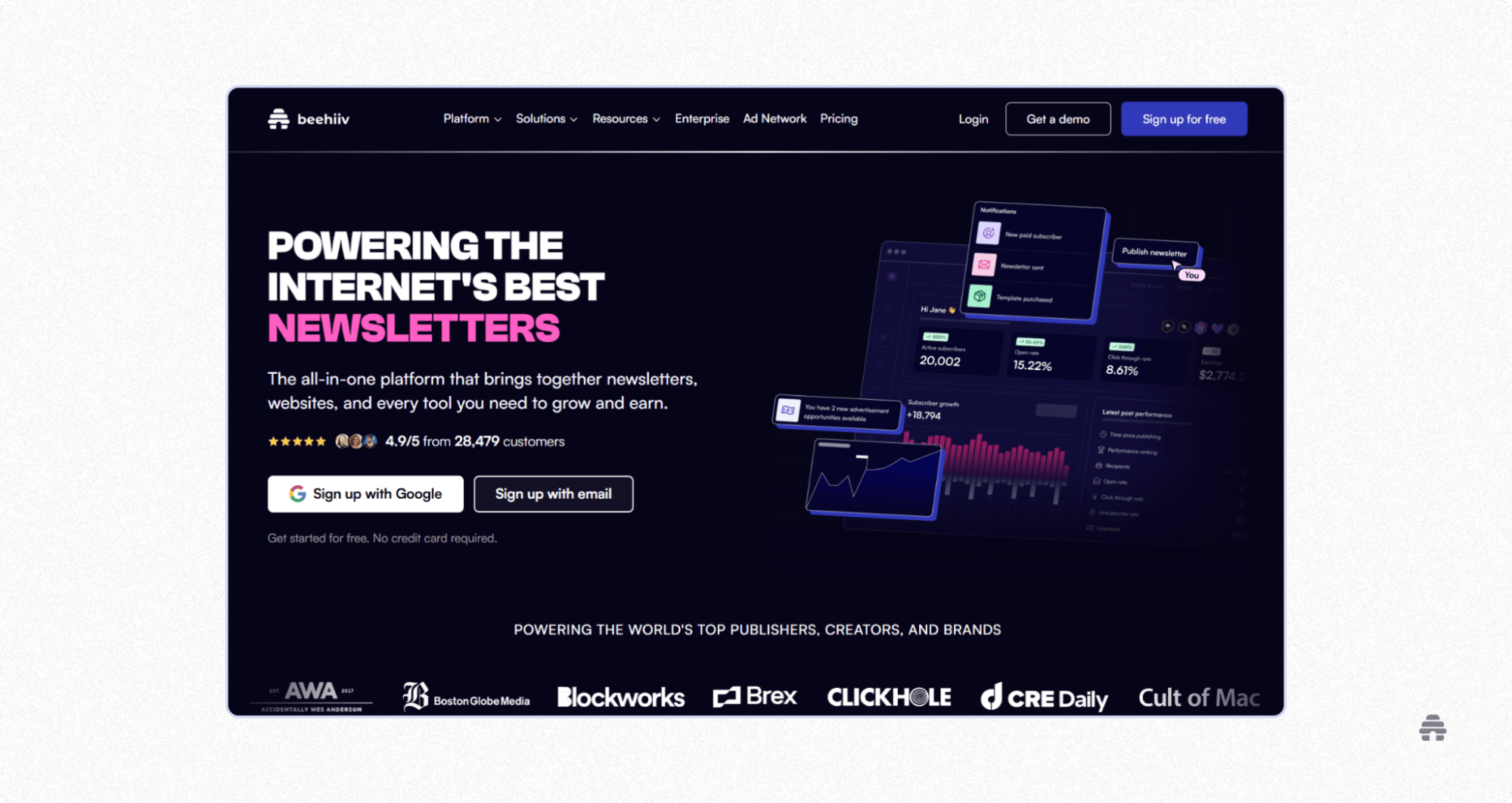
Use UTM parameters or create unique landing pages for each swap.
If you're on beehiiv, it's even easier. You can generate custom referral links that automatically track where every subscriber came from. No manual work. You'll know exactly which swaps crushed it and which partners to avoid next time.
I also calculate the cost per subscriber for every swap.
Yes, swaps are "free," but there's an opportunity cost.
Say you have 5,000 subscribers. When I do a newsletter swap, I'm giving up space I could use to promote my own products.
If my email normally generates $500 and I gain 200 subscribers from the swap, my cost per subscriber is $2.50.
Industry estimates range for a 1,000-subscriber email list are anywhere from $1-$10 per subscriber per month, depending on the niche and how you monetize.
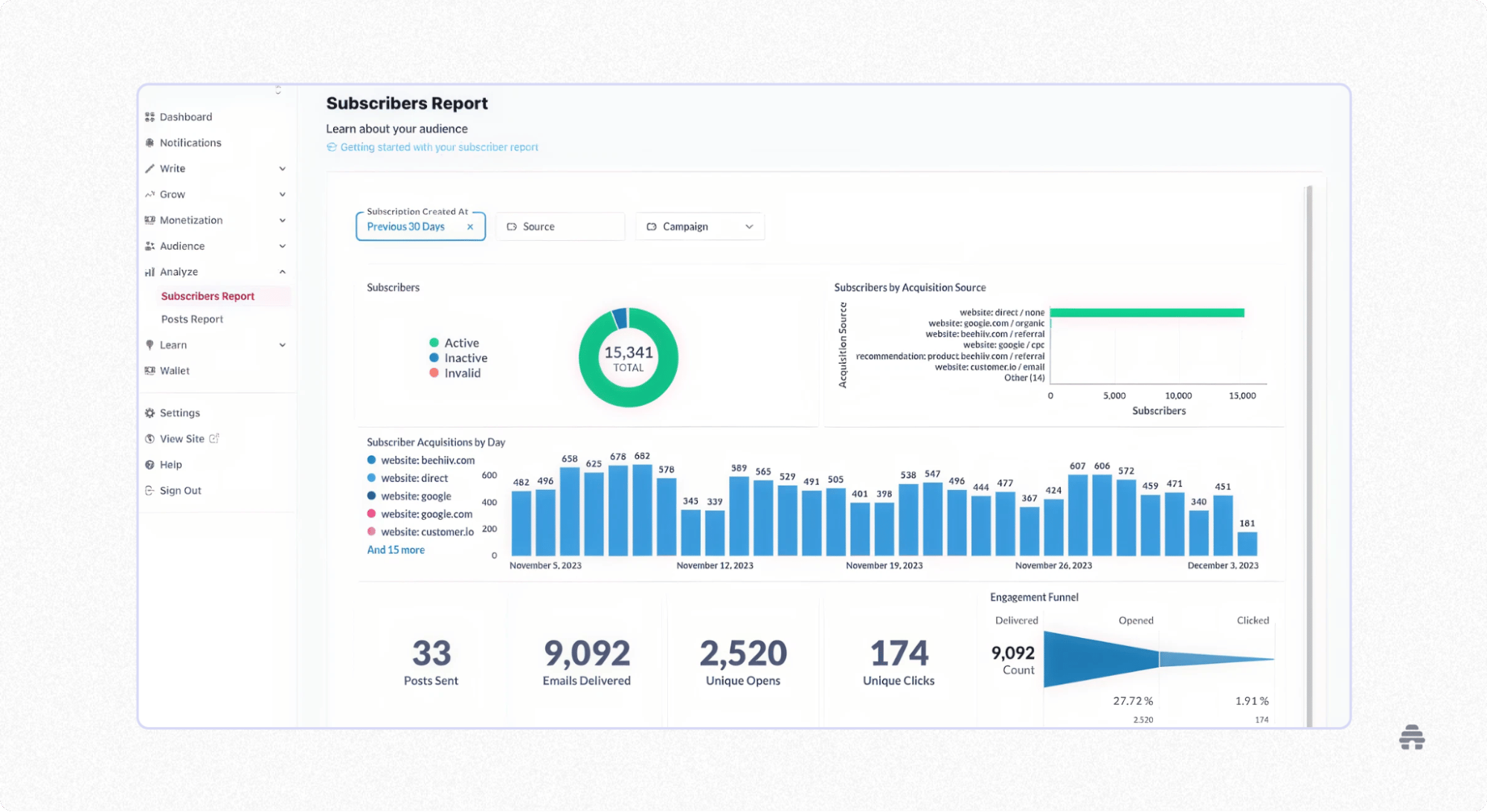
Track retention too. I check if subscribers from swaps are still opening my emails three months later. If they're not, something's wrong. Either my audience matching was off, or my welcome sequence needs work. The data tells you what to fix.
Managing Swaps Inside beehiiv

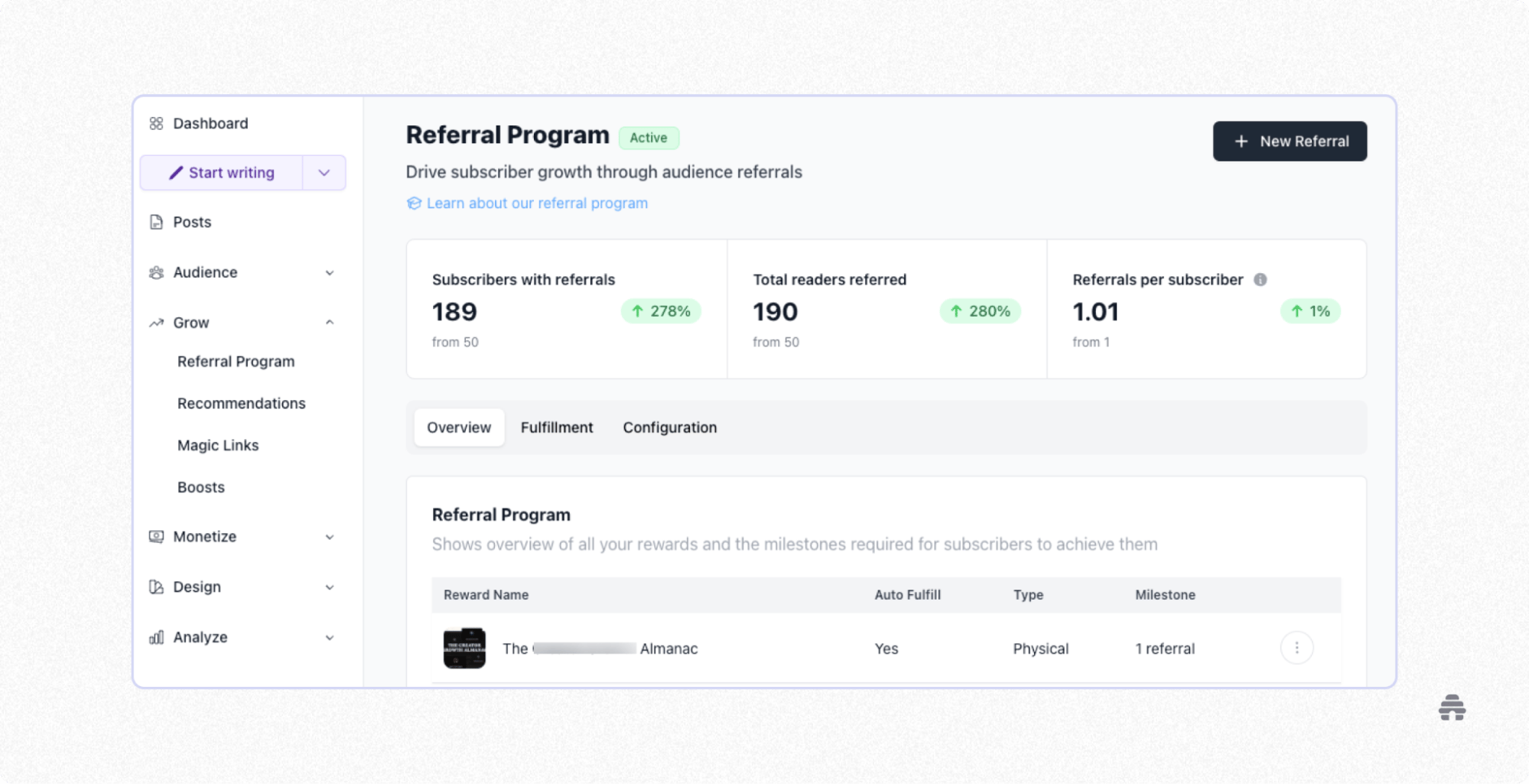
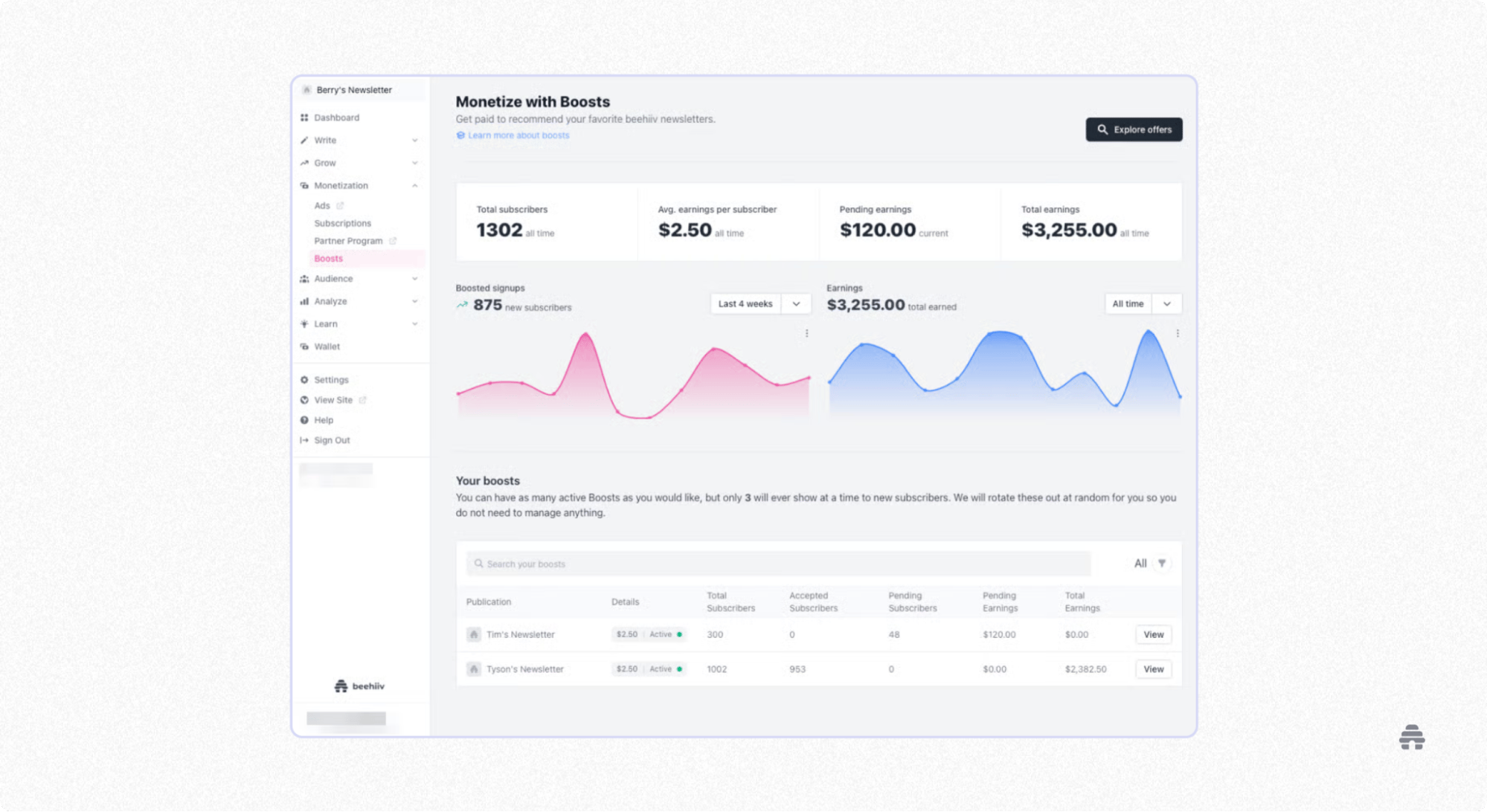
This is where beehiiv saves me hours of admin work.
When someone subscribes through a swap referral link, beehiiv automatically tags them with the source. I can then create segments based on those tags and send targeted welcome sequences.
For example, I'll write: " Thanks for joining! Sarah recommended you check out my newsletter, which means you probably care about the science behind fermentation." That acknowledgment makes the transition smoother. New subscribers immediately understand why they're here and what they'll get.
I also love the real-time tracking. My swap email goes out at 9 AM. By lunch, I can see exactly how many people clicked and subscribed. I don't need to wait for my partner to send stats or update a spreadsheet. The platform just shows me the data.
This is what email promotion is in 2026. It's not just blasting emails anymore. It's smart segmentation, precise tracking, and building relationships without drowning in busywork. The automation handles the tedious stuff so I can focus on writing and finding new swap partners. Less time in spreadsheets, more time growing.
beehiiv also offers Boosts, which are paid recommendations. Each new subscriber will be shown your boosted recommendations. When they opt-in to a Boosted recommendation, you get paid.
How I'm Using Swaps To Grow an Engaged Audience
Let me be honest with you. When I started doing newsletter swaps almost four years ago, I was obsessed with one thing: growing my list. More subscribers meant winning, right?
Not even close. 🤯
I learned fast that newsletter growth without engagement is pointless. I'd take 1,000 readers who open my emails and reply to over 10,000 people who ignore everything I send. Swaps taught me this the hard way.
Now, when I consider a swap, I don't ask, "Will this grow my list?" I ask, "Will this bring me the right subscribers? People who'll stick around and engage?"
That shift changed everything.
I got pickier about partners. I wrote better swap copy that set real expectations. I built a stronger welcome sequence that turns swap subscribers into actual fans.
Swaps work when you do them with the right intent. They're not a growth hack. They're a way to build a community of readers who trust your judgment because you've shown you're selective about who you partner with. Every swap is a bet on your reputation. Make it count.
The goal isn't a bigger list. It's a community of readers who care about what you say.
beehiiv makes swaps easy with built-in analytics, custom referral tracking, and segmentation tools that eliminate spreadsheet chaos. Whether you're just starting or ready to scale, you get everything you need to manage successful swaps.
Start your beehiiv newsletter today and discover how to promote a newsletter the smart way with tools that help you grow an engaged audience, not just numbers.
Related Articles