- Home
- Posts
- How beehiiv Lets Creators Sell Products and Keep All Revenue
How beehiiv Lets Creators Sell Products and Keep All Revenue
The Best Platforms To Sell Digital Products in 2026 Reviewed

Linda Hwang
May 01, 2026

What if choosing the right platforms to sell digital products determined how much of your revenue you actually keep?
A creator I know spent two years building five digital products, only to realize that between 💸platform fees, payment processing, and subscriptions, he'd half forgotten about, 25% of his income vanished before he even touched it.
He wasn't asking for much. Just to sell his stuff, keep what he earned, and stop rebuilding everything from scratch every time he launched something new.
Does this sound familiar?
The fix is simple: stop patching things together and get on the right platform.
Revenue improves quickly, not because of some grand strategy, but because the whole operation finally stops working against you.
The good news is that switching is faster than most people expect. You can have products, pricing, and checkout fully configured in under an hour.
The effort required is often less than the cost of staying on the wrong platform. This guide breaks down the best platforms for selling digital products in 2026, as well as those that look attractive at first but introduce costly limitations later.
Table of Contents
Quick Verdict: Best & Worst Platforms To Sell Digital Products

If you’re short on time, here’s my honest review before we get into the details:
🏆 Best Overall: beehiiv Digital Products: 0% platform fees, built-in newsletter integration, and full audience ownership.
🏆 Best for Beginners: Payhip: Start free, pay 5% per transaction, and upgrade to $99/month with 0% fees once sales are consistent. It's the most forgiving place to figure things out without getting punished for it.
🏆 Best for Subscriptions: Podia: Courses, memberships, and downloads all under one roof with solid automation built in. If recurring revenue is the goal, Podia is designed around it.
Platforms That Look Good Until They Don’t
This is the part most comparison articles skip over.
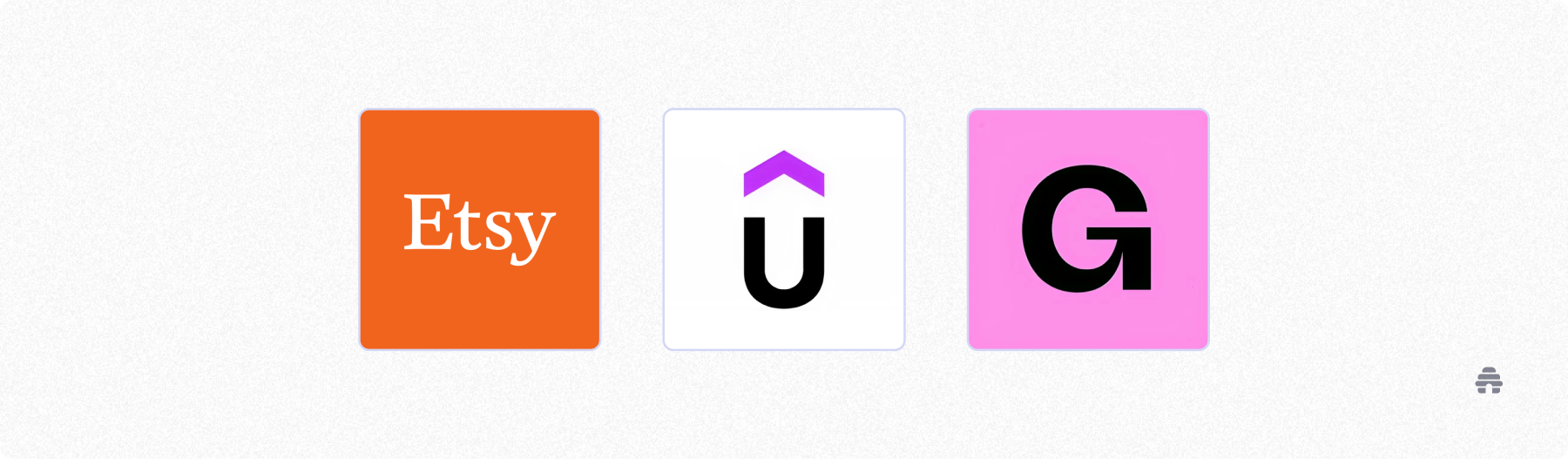
Gumroad: Charges 10% + $0.50 on every sale. That feels fine at $500 a month. At $8,000 a month, you're handing over $800 for the privilege of using a checkout link.
Etsy: Stacks fees on top of fees. One-time setup, listing, transaction processing, payment processing, and mandatory offsite ads can quietly push your total cost per sale past 20%.
Udemy: Cut instructor revenue share to 17.5% in 2025, with another cut to 15% planned for 2026. On a $500 course, you keep $75.
Why Choosing the Right Platform Matters
I’ll let you in on a little secret: I picked my first-ever platform to sell digital products because someone in a Facebook group mentioned it.
I did zero research or fee comparison… Just "that sounds fine,” onto the next.
It cost me more than I'd like to admit before I finally paid attention to what I was giving away with every sale.
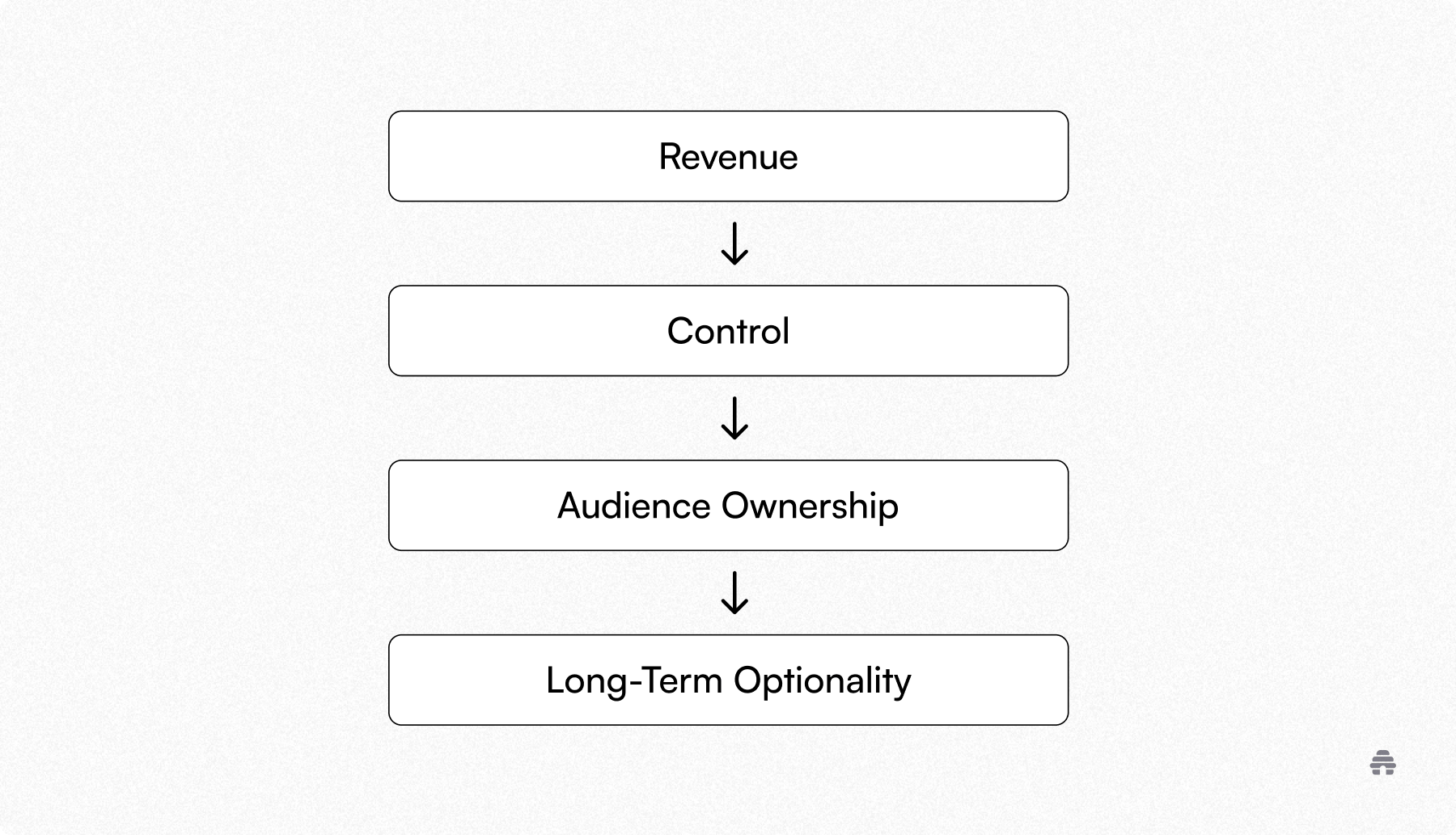
That one decision shapes more than most people realize until it's too late:
Revenue: 10% platform fee on $100,000 in annual sales is $10,000 down the drain. Not invested, not reinvested, just gone. A platform with 0% fees keeps that money where it belongs. That's a product launch, a contractor, or simply more breathing room.
Control: Some platforms own your checkout, your customer data, and your ability to follow up with buyers after the sale. Once you give that up, you can't upsell, you can't build relationships, and you can't do much if the platform decides to change the rules on you.
Audience Ownership: Etsy and Udemy will send you customers, but those customers belong to the platform, not you. The moment fees go up or the algorithm shifts (and both will happen), your income shifts with it. You want a platform that hands you the customer data, so you're building something that compounds over time.
Long-Term Optionality: I've spoken with creators who spent months migrating from a platform they outgrew. Rebuilding automations, re-importing customer lists, redirecting links. It's miserable and completely avoidable if you choose well upfront.
The Proof: Take it from Dr. Jen Ashton, creator of Ajenda, a free weekly wellness newsletter. She turned her newsletter into a product launch for a wellness program on beehiiv.
At $59, the offer included:
Weekly content on fitness, nutrition, and wellness
A tailored exercise library for her demographic
A members-only community
Live Q&A with Dr. Jen and trainer Korey Rowe
In 90 days, she turned her newsletter into $750,000 in revenue.
How I Evaluated These Digital Product Platforms
Most platform reviews are basically just reformatted feature lists.
I wanted to do things differently, so I actually stress-tested each platform by using it consistently.
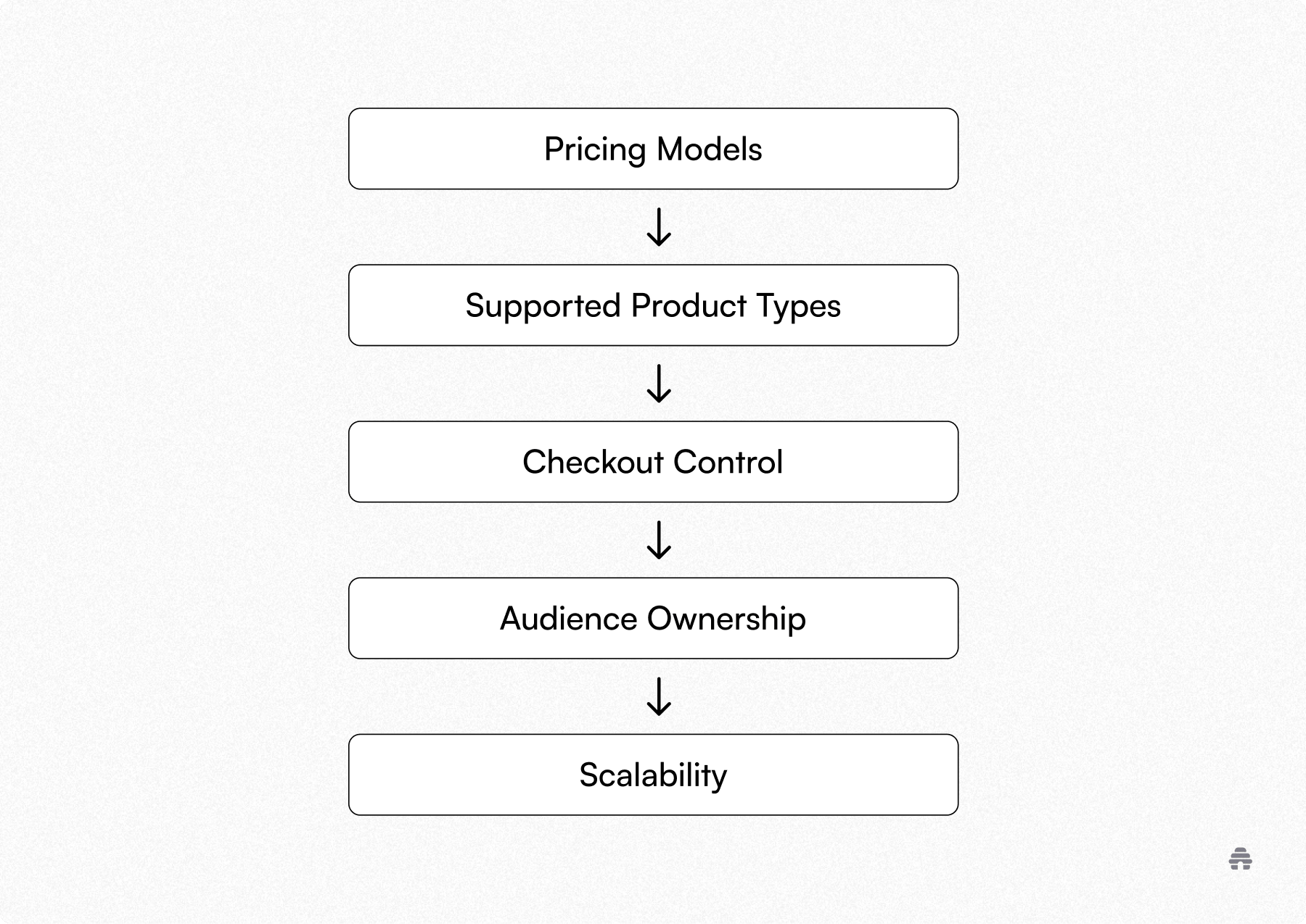
These are the five things I kept coming back to:
Real-World Pricing Models: What does it cost? Not the headline number, but the real number once you factor in transaction fees, payment processing markups, and the add-ons that somehow didn't make the pricing page. I did the math at multiple revenue levels, so you don't have to.
Supported Product Types: Downloads, courses, memberships, coaching, bundles. Can the platform handle it all, or does it do one thing well and quietly unravel the moment you try something different?
Checkout Control: Whose checkout is it really? Can you collect meaningful customer information, or just an email? And if something goes wrong, can you issue a refund yourself, or are you writing a support ticket and crossing your fingers?
Audience Ownership: Can you export your customer list and actually take it with you? Or have you been building your business inside someone else's walls this whole time?
Scalability Tax: What changes when revenue gets serious? Do the fees start feeling like a business partner who does nothing but still wants a cut? Can you bring in teammates, build automations, and plug in the tools you already use?
A platform that passes all five of these is one you can build on. One that fails even two of them is one you'll eventually need to leave.
Platforms To Sell Digital Products Comparison Table
Platform | Monthly Fee | Transaction Fee | Best For | Worst For |
beehiiv | $43-$96 | 0% | Creators with newsletters | Standalone stores without email |
Payhip | $0-$99 | 5% (Free Plan)/ 0% (Pro) | Budget-conscious beginners | Complex product catalogs |
Gumroad | Free | 10% | Quick validation | Scaling past $50K/year |
Podia | $39-$89 | 0% | Courses & memberships | Simple digital downloads only |
Sellfy | $29-$159 | 0% | Beginners wanting simplicity | Advanced automation |
Lemon Squeezy | Free | 5% + payment processing | SaaS & software products | High-volume sellers |
Shopify | $39-$399 | 0% + payment processing | Existing Shopify stores | Digital-only businesses |
Best Platforms To Sell Digital Products in 2026
I've wasted more money on the wrong platforms than I'd like to admit, so here are the ones I trust.
beehiiv Digital Products

When beehiiv added Digital Products in late 2025, they charged 0% platform fees.
Who it's best for: Anyone building a business around email.
Where it shines:
Zero Platform Fees: You pay Stripe's processing (2.9% + $0.30) and nothing else.
Embed Product Links Straight Into Emails: Simple as using a backslash command. Readers buy without leaving their inbox. The conversion rates speak for themselves.
Sell Anything: Downloads, coaching sessions, and exclusive content access. You're not locked into one format.
Automations: Trigger instantly when someone buys. Deliver onboarding, upsell products, and nurture relationships without touching them again.
Actual Customization: beehiiv's Website Builder lets you make product pages that match your brand, not generic templates.
Everything In One Dashboard: Product revenue sits next to ad earnings, paid subscriptions, and boosts in the beehiiv Wallet.
Recent Upgrades (February 2026): Product reviews, image carousels, international currency support, Apple Pay/Google Pay, discount codes.
The honest tradeoff:
Digital Products are available only on the Scale ($43/month), Max ($96/month), and Enterprise plans. If you're not on beehiiv already, that's a barrier. But if you're building with email and content, $43-$96 for newsletter + website + products + 0% transaction fees becomes a no-brainer in a hurry.
Gumroad

Gumroad built its reputation on being stupid simple: paste a link, get paid, deliver the file.
Who it's best for: Anyone launching their first product who needs to validate demand fast.
Where it shines:
Live and selling in under 10 minutes. Product page, price, link. Done.
Internal marketplace that brings organic traffic without you having to drive every visitor yourself.
Pricing flexibility: pay-what-you-want, subscriptions, memberships, one-time purchases.
Revenue splitting with collaborators built in.
Email tool included so you can contact buyers without another service.
The honest tradeoff:
The free plan takes 10%. At $500/month, that's $50 and feels fine. At $5,000/month, that's $500 for hosting a checkout link. At $50,000/year, you're handing over $5,000.
Red flag issue: Gumroad owns the customer relationship. You can email buyers, but you don't own the checkout or customize the experience.
Podia

Podia is built for courses, memberships, and recurring revenue. If that's your model, this is your platform.
Who it's best for: Educators and coaches whose business depends on courses or membership communities, not one-off sales.
Where it shines:
Course builder is legitimately good. Unlimited modules, lessons, quizzes, and assessments. Interface makes sense even for first-timers.
Membership management is core: tiered pricing, drip content, exclusive resources, and community access.
Email marketing is included with automation sequences, broadcasts, and segmentation. Not the most powerful tool, but it works.
Webinar hosting for live and recorded sessions.
Real migration support. Podia actually helps you move instead of handing you a CSV.
Zero transaction fees. You pay processing only.
The honest tradeoff:
Podia starts at $39/month, more than Payhip or Sellfy. If you're selling simple downloads like PDFs or templates, this is overkill. Use it for what it's built for, or you're paying for features you won't touch.
Sellfy

Sellfy markets itself as the easiest E-commerce platform for digital products, and it mostly delivers.
Who it's best for: Beginners who want a complete solution without technical complexity.
Where it works:
Quick setup with pre-made templates. Professional store in minutes.
Sell digital downloads, subscriptions, physical products, and print-on-demand.
Video streaming with anti-piracy protection.
Marketing tools included: discount codes, upsells, pixel tracking, and email marketing.
Custom domain support for stronger branding.
Zero transaction fees on all plans.
The honest tradeoff:
Plans run $29-$159/month with 0% transaction fees, but email automation and segmentation are basic. Lower tiers limit file storage, which matters if you're selling large video files or extensive course materials.
Shopify Digital Products

Shopify is an absolute powerhouse, but it's built for physical products. If you're only selling digital, you're overengineering.
Who it's best for: Existing Shopify stores adding digital products, or creators who need total control and don't mind complexity.
Where it shines:
Massive app ecosystem. Thousands of integrations, themes, and tools. If you can imagine it, there's an app for it.
Handles enterprise-level traffic without breaking. Your store could go viral overnight and Shopify won't flinch.
You own the entire customer experience: design, checkout, branding, everything. More control than any other platform here.
Abandoned cart recovery is built-in.
Multi-channel selling syncs across the website, Instagram, Facebook, Amazon, and in-person without managing separate systems.
The honest tradeoff:
Shopify starts at $39/month, but you'll need apps for digital delivery, email marketing, and advanced features. Bills creep to $150-$200/month fast.
Real learning curve. If you're only selling digital products and want to launch quickly, Shopify feels like way more platform than you need.
Lemon Squeezy

Lemon Squeezy's pitch: sell software globally without tax nightmares.
SaaS founders jumped on it immediately.
Stripe acquired them in 2024. By 2026, they're transitioning to Stripe Managed Payments, which creates some uncertainty.
Who it's best for: Software creators and SaaS founders who want to offload global tax compliance.
Where it shines:
Merchant of record status. They handle sales tax, VAT, and compliance across all jurisdictions. Sell globally without thinking about it.
Automatic license key management. Issue, track, deactivate, and manage everything.
Unlimited file hosting. No storage caps, no surprise bills.
Solid subscription management with recurring billing, upgrade paths, and churn reduction.
AI-powered fraud protection catches issues before they become your problem.
Developer-friendly API and webhooks.
The honest tradeoff:
No monthly fee, but they take 5% per transaction plus payment processing.
At $10,000/month, you're paying $820 total ($500 to Lemon Squeezy, $320 processing). At $20,000/month, it's $1,640. The fee scales with your success; fine at $1,000/month, painful at $10,000.
Customer support has been inconsistent. The transition to Stripe Managed Payments means some features are being rebuilt with unclear timelines.
Payhip
Payhip is the best “zero-budget” starting point. Genuinely free to start, no artificial limits.
Who it's best for: Anyone testing their first product without money to burn, or established creators who've done the math and don't need features they won't use.
Where it shines:
Actually free. No monthly fee, no credit card. Payhip takes 5% per transaction.
Sell anything: digital downloads, courses, memberships, coaching, physical products.
No caps on uploads, bandwidth, or sales volume. Some "free" plans stop working when you make real money. Payhip doesn't.
Upsells and cross-sells across all plans, including the free plan. Most platforms gate this behind premium tiers.
Built-in affiliate management.
Basic email marketing included.
The honest tradeoff:
The 5% fee adds up: At $2,000/month, that's $100 to Payhip. Upgrading to Plus ($29/month) or Pro ($99/month with 0% fees) makes more financial sense. Pro pays for itself fast once you're clearing $2,000-$3,000/month.
Design customization is limited. Clean and professional, but not unique. If you're used to Shopify or beehiiv's control, Payhip's templates feel restrictive. But "professional enough" beats spending three weeks tweaking fonts.
Why Trust Me
Linda Hwang has extensive experience in business-to-business (B2B) marketing and previously worked at a renowned international facilities management company. There, she played a crucial role in creating effective content and social media marketing plans. Now, Hwang is a marketing advisor who helps small businesses create compelling brand stories.
The Worst Platforms To Sell Digital Products for Long-Term Growth
These platforms aren't necessarily bad. They're just bad for building something that lasts.
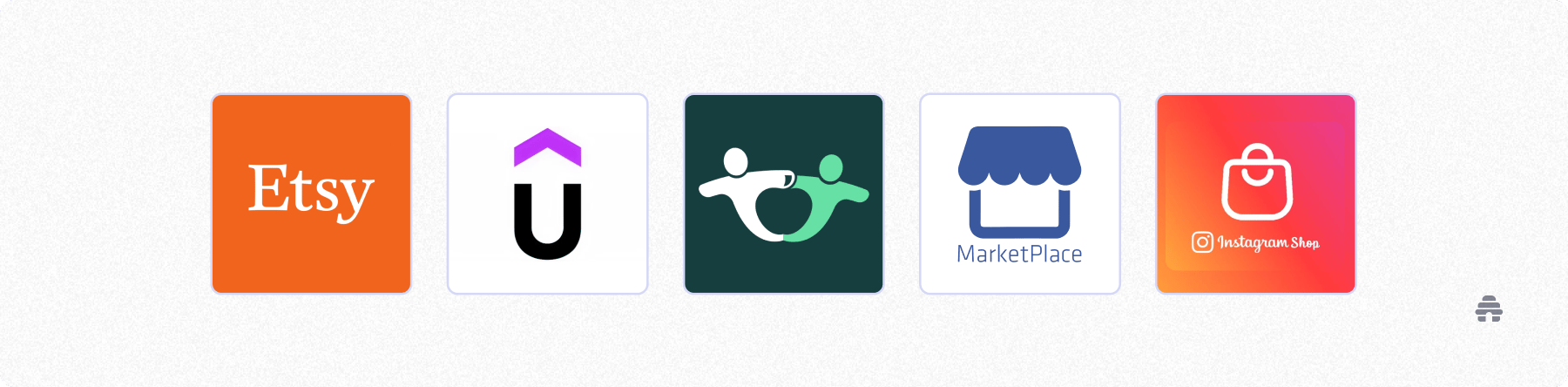
Etsy: Feels safe because there's built-in traffic. But you're paying for that traffic in ways that don't show up on the pricing page. Listing fees ($0.20 per item), transaction fees (6.5%), payment processing (3% + $0.25), and mandatory offsite ads can push your total cost to 20-25% per sale. Worst of all? You don't own any customer relationships, so you're starting from zero with every sale.
Udemy: Revenue share dropped to 17.5% in 2025. It's scheduled to hit 15% in 2026. Let that sink in; on a $500 course sale, you keep $75. Udemy keeps $425. They also own your students. You can't email them. You can't move them to your own platform. You're renting space in someone else's classroom, and they're charging you most of the tuition.
Teachers Pay Teachers (TpT): TpT takes 45% of every sale (20% if you pay for a premium membership). It's a discovery marketplace that works when you're starting, but the economics make zero sense once you have any kind of audience.
Facebook Marketplace/Instagram Shops: Sounds convenient until you try to use them. Clunky checkout, no real automation, no meaningful customer data. They work for impulse buys, not for running an actual business.
Don’t fall for these platforms.
Brandon Storey, creator of Storey Time, started by growing his newsletter for aspiring copywriters. He created a free newsletter and tiered it with online courses with different prices and focuses.
He launched The Six-Figure Copywriter course first. This self-paced flagship course is designed around the top challenges new copywriters face: writing high-performing copy, landing clients, and building consistent income.
The product launch generated $270,000 in 90 days on beehiiv!
Pricing & Fees Breakdown
Most people pick a platform based on how it feels at $0.
The smarter move is looking at how it costs you at $5,000 or $10,000 a month, because that's where the real money gets made or lost.
Here’s what the math actually looks like:
At $1,000/Month in Sales
Platform | Plan Fee | % Revenue |
beehiiv | $43-$96 Plan Fee | 5-10% of Revenue |
Payhip | Free Plan (5% fee) | 5% of Revenue |
Gumroad | Free Plan (10% fee) | 10% of Revenue |
Lemon Squeezy | Free Plan (5% fee) | 5% of Revenue |
At $5,000/Month in Sales
Platform | Plan Fee | % Revenue |
beehiiv | $43-$96 Plan Fee | 1%-2% of Revenue |
Payhip | Pro Plan $99 | 2% of Revenue |
Gumroad | Free Plan (10% fee) | 10% of Revenue |
Lemon Squeezy | Free Plan (5% fee) | 5% of Revenue |
At $20,000/Month in Sales
Platform | Plan Fee | % Cost |
beehiiv | Plan $96 | 0.5% of Revenue |
Payhip | Pro Plan $99 | 0.5% of Revenue |
Gumroad | Free Plan (10% fee) | 10% of Revenue |
Lemon Squeezy | Free Plan (5% fee) | 5% of Revenue |
Subscriptions, Bundles, and Upsells
One-time sales are fine, but recurring revenue is what builds a business.
Here's how each platform handles the stuff that turns customers into long-term income:
beehiiv: Paid Subscriptions feature (separate from Digital Products), product bundles, automated upsells. Not as subscription-focused as Podia, but solid if you're already here.
Podia: Built specifically for subscriptions and memberships. Drip content, tiered pricing, and automated upsells are core features, not add-ons. Best choice if recurring revenue is your primary model.
Payhip: Subscriptions, bundles, and upsells on all plans (even free). Cart abandonment emails on paid tiers quietly recover more sales than you'd expect.
Sellfy: Handles subscriptions and checkout upsell. Automation is basic compared to Podia, but it works.
Lemon Squeezy: Excellent subscription management with usage-based billing. Rare feature that matters if you're selling SaaS or variable pricing models.
Gumroad: Simple and functional Subscriptions, memberships, and one-click upsell.
How To Switch Platforms Without Losing Customers
Platform migration is annoying. I used to think migrating to another platform was super risky, but it’s not as terrifying as it may seem.
Here's the process that works:
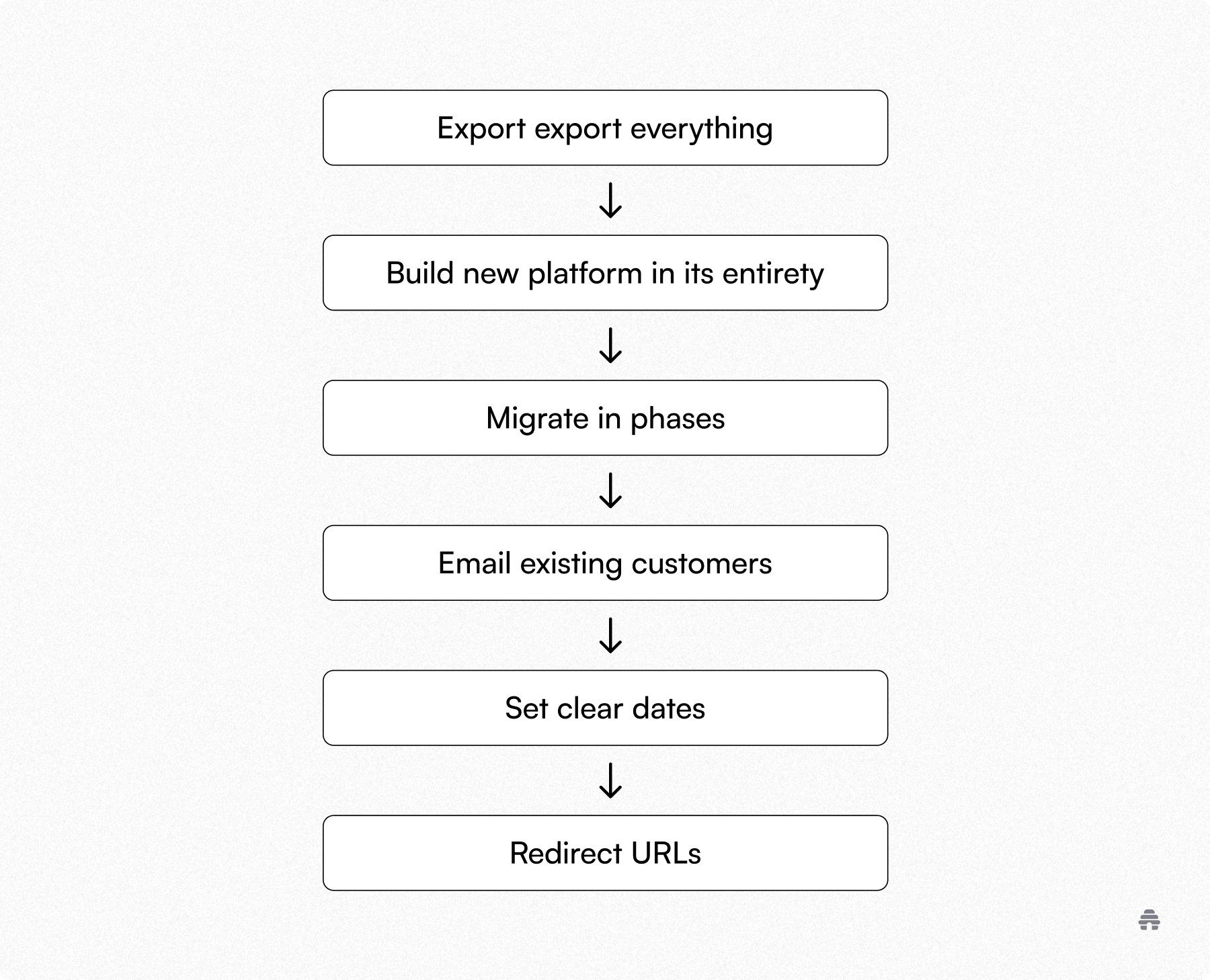
Export everything first. Customer list, product files, sales data, course materials, membership content. Get it all out in a format you control (usually CSV for customer data).
Build the new platform in its entirety before going public. Products uploaded, pricing configured, checkout tested, automations set up. Your new platform needs to be 100% live and functional before you touch the old one. Run test purchases. Make sure everything works.
Migrate in phases, starting with new customers. Direct all new traffic to your new platform. Existing customers can keep using the old one temporarily. This keeps sales running while you transition without forcing everyone to move at once.
Email your existing customers with a migration offer. Frame it as an upgrade. Better features, exclusive content, cleaner experience, whatever's true. Offer free access or a discount if they move over within a certain window. Make it feel like they're gaining something, not losing access.
Set clear dates. Give people 30-90 days to migrate, depending on the complexity of the move. Communicate this multiple times. People miss emails. Send reminders.
Redirect URLs if you can. If you're on a platform with custom domains (Gumroad, Shopify, etc.), set up 301 redirects to your new product pages. This maintains SEO and keeps external links working.
The key is running both platforms at the same time during the transition. Don't shut down the old platform until everyone's moved or you've given so much notice that it's on them, not you.
Which Platform To Sell Digital Products Is Right for You?
Stop overthinking this.
Here's the honest breakdown based on what you're trying to build:
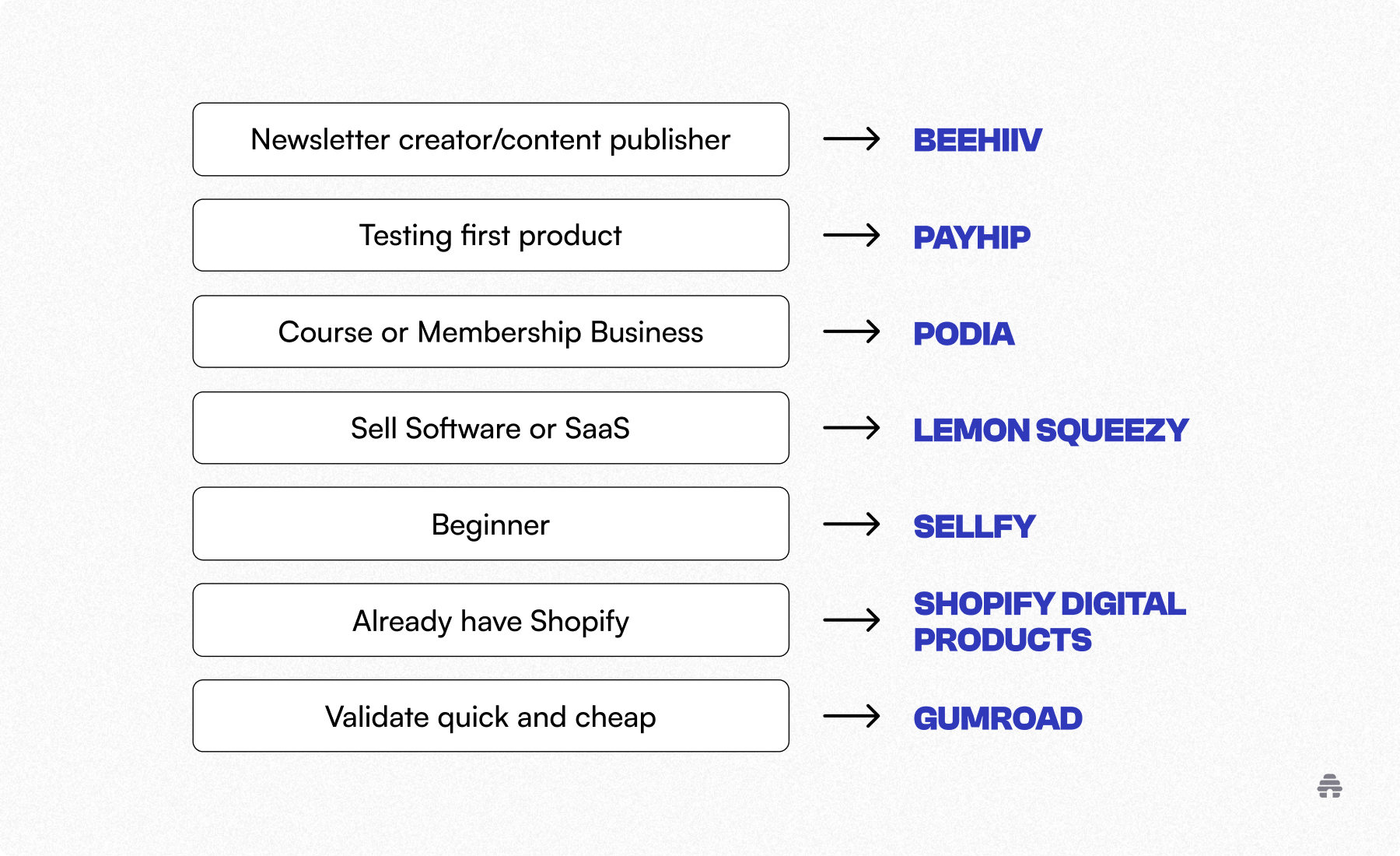
Fornewsletter creator or content publisher:
➡️ beehiiv. The 0% fees and native integration make this a no-brainer.
For tight budgets:
➡️ Payhip. Free tier, no upfront cost, no artificial limits.
For courses/memberships:
➡️ Podia. It's built specifically for recurring revenue. Use it for what it's designed for.
For software/SaaS:
➡️ Lemon Squeezy. The merchant-of-record status and license key management justify the 5% fee.
For simple setups:
➡️ Sellfy. Fast setup, no transaction fees, reasonable pricing.
For existingShopify users:
➡️ Shopify Digital Products. No reason to manage a separate platform.
For quick & cheap validation: You need to validate quickly and cheaply:
➡️ Gumroad. Great for testing, but plan your exit once sales become consistent.
The biggest mistake I see is people choosing a platform that worked at $500 a month and staying on it when they're doing $5,000 or $10,000.
Pick based on where you're going, not where you are right now.
FAQs on Platforms To Sell Digital Products

Q: Do I need a website to sell digital products?
A: No. Platforms like Gumroad, Payhip, and Lemon Squeezy offer hosted storefronts with shareable links. If you want full branding control, beehiiv, Podia, or Shopify let you use custom domains and build actual sites.
Q: Can I sell on multiple platforms at the same time?
A: Yes, but be strategic. Some creators use Etsy for discovery while building on beehiiv or Payhip. The risk is managing pricing and communication across multiple places. Pick one platform as your primary home where you own the customer relationship.
Q: What's the difference between a marketplace and a platform?
A: Marketplaces (Etsy, Udemy, Gumroad Discover) bring built-in traffic but take higher fees and own your customers. Platforms (beehiiv, Payhip, Sellfy) give you a storefront, but you drive traffic.
Q: Do these platforms handle sales tax and VAT for me?
A: Lemon Squeezy acts as the merchant of record and handles all global tax compliance. Most others (beehiiv, Payhip, Gumroad, Shopify) make you responsible, though some offer calculation tools. If international tax scares you, Lemon Squeezy's 5% fee might be worth it.
Q: How long does it take to set up and start selling?
A: Gumroad and Payhip: under 10 minutes. beehiiv and Sellfy: 30-60 minutes. Shopify and Podia: a few hours to a full day if you're building courses or complete sites. Simpler products go live faster.
Q: What happens to my customers if a platform shuts down or gets acquired?
A: This is why audience ownership matters. Platforms that give you customer emails and data (beehiiv, Payhip, Podia) let you export and move. Marketplaces that own the relationship (Etsy, Udemy) leave you stuck. Always choose platforms that let you export your list.
Can You Really Afford To Build on the Wrong Platform?

Let me put this in terms that matter.
If you build a $10,000/month business on Gumroad, you're handing over $12,000 a year in platform fees. On beehiiv or Payhip Pro, you're paying under $1,200.
That's $10,800 you're not keeping. Every single year.
That's your next product launch. A contractor who could actually help. Better tools. Or just money that stays in your account instead of disappearing into someone else's margin.
Most people don't fail because they picked the wrong product. They fail because they didn't realize how expensive convenience gets when it compounds month after month.
beehiiv gives you everything you need to sell digital products without platform fees.
Build your audience with newsletters. Sell your products with 0% fees. Own your customer data.
Create your free account at beehiiv and launch your first digital product today. No credit card required.

Related Articles



The one place to build.
Get beehiiv updates delivered directly to your inbox.
By subscribing you agree to our Privacy Policy and provide consent to receive updates from our company.