- Home
- Posts
- Email Marketing Metrics That Actually Matter
Email Marketing Metrics That Actually Matter
Conversion Tracking Secrets That Transform Newsletter Performance

Linda Hwang
December 28, 2025

Here's the cold, hard truth: email marketing is one of the easiest channels to track and one of the easiest to misinterpret. I've learned this the hard way. 🫣
After I hit ‘send’ on my newsletter that I spent hours “perfecting,” I would refresh my dashboard obsessively. That open rate climbs to 45%, and I feel a moment of success. I might've even texted my husband about it.
Then, I dig a little deeper. Zero clicks. Not a single reply in my inbox. And tucked away in the corner of my analytics? Unsubscribed = 3 people. 🤦🏻♀️
But, hey, that open rate looked pretty, right?
We've been conditioned to worship at the altar of open rates and total subscriber counts. These vanity metrics appear appealing because they involve large numbers that trend upward.
But here's what I've learned after years of running email campaigns: the metrics that make you feel good are rarely the ones that make you money.
Real email marketing tracking isn't about watching numbers go up. It's about understanding what actions your audience takes that indicate genuine engagement. Are they clicking through? Are they replying?
When I switched to beehiiv about two years ago, something shifted. No manual Urchin Tracking Module (UTM) parameter setup. No spreadsheet gymnastics.
Just clean data showing what works and what doesn't.
Table of Contents
What Is Email Marketing Tracking?

Once you hit ‘send,’ what happens next?
Did anyone read it? Did they click through to that article you researched forever? Or did they take one look and hit unsubscribe?
These questions keep me up at night.
Your email service provider (ESP) tracks all of this behind the scenes. Every time someone opens your email, clicks a link, or opts out, that action gets recorded.
How tracking used to work: Open rates were tracked through a tiny 1x1 pixel image hidden in your email. When that invisible pixel or image loaded, your ESP knew someone opened it. Click rates work by routing your links through your ESP's tracking domain first, then redirecting to your actual destination. Simple, reliable, straightforward.

In 2021, Apple dropped a privacy bomb that changed everything. They introduced Mail Privacy Protection (MPP), and the tracking game became significantly more complicated.
Apple decided to protect its users' privacy by preloading email content, including tracking pixels, on its own servers before users even saw an email.
For creators like me, every single email sent to an Apple Mail user appeared as "opened" in my dashboard, regardless of whether the person viewed it or immediately swiped it into the trash.
For example, I sent an email and watched my open rate climb to 65% within an hour. I was thrilled! That is until I checked my click rate and saw it was at 1.2%.
Something didn't add up. Turns out, I wasn't suddenly writing the world's most compelling subject lines. Apple's privacy features were just preloading my emails and triggering false opens.
Google followed suit with similar privacy measures in Gmail. And honestly? I get it. Privacy matters.
Here's what I want you to understand, though: tracking still absolutely matters.
In fact, tracking matters more than ever now.
Good tracking helps you with the following tasks:
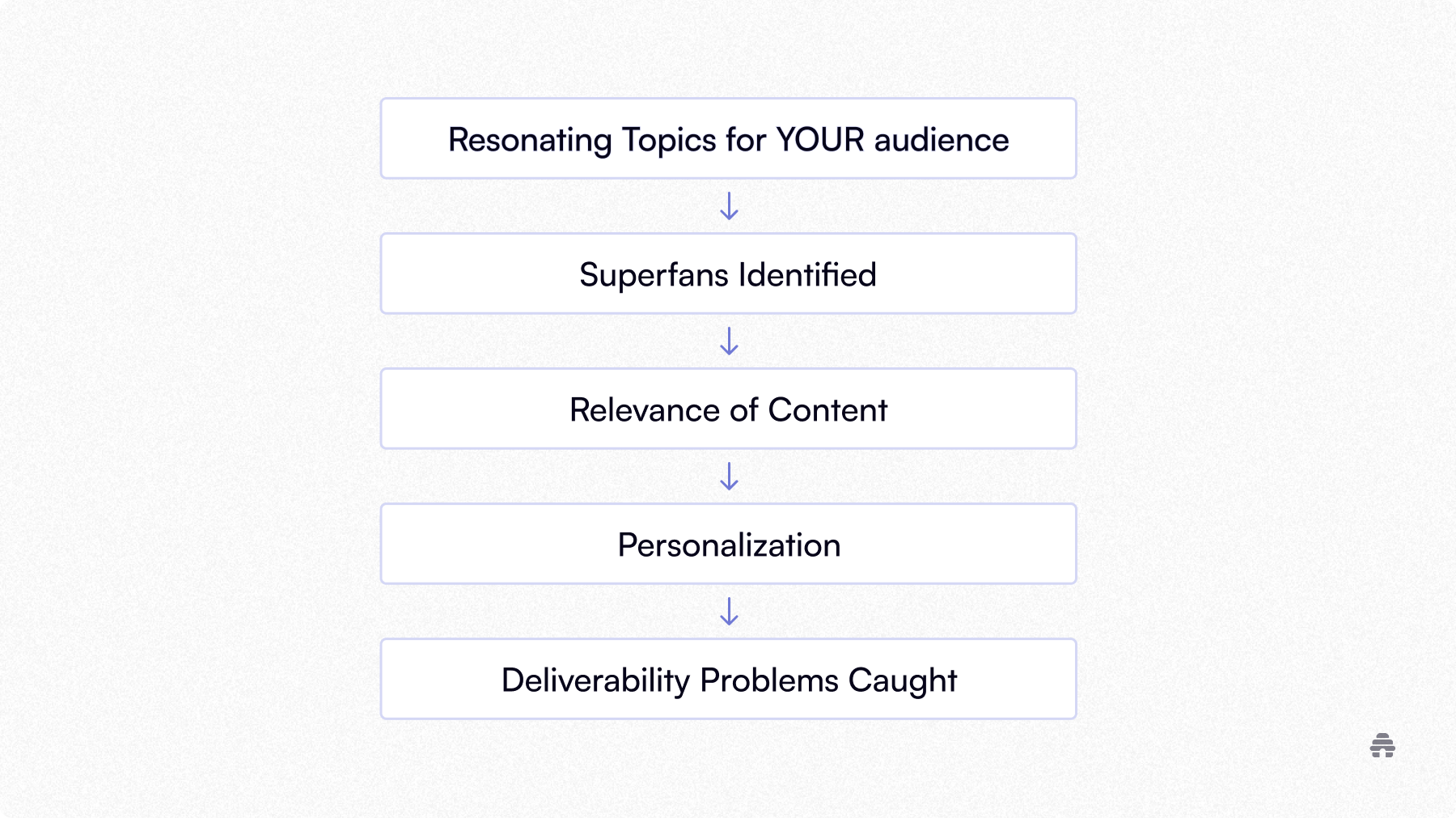
Figure out which topics and content styles resonate with your specific audience (not what works for some guru's audience, but yours)
Identify your superfans who engage with everything you send
Maintain relevance by adapting to what people want to read
Personalize your content based on past behavior and interests
Catch deliverability problems before they snowball into disasters
If you want to dive deeper into how Apple's privacy changes specifically impact your metrics, check out our detailed breakdown of Apple MPP and what it means for email marketers.
So what should you actually be tracking in this new era of privacy-first?

I focus on four core metrics that, when viewed together, tell me the real story of my newsletter's health:
Open Rates: Open rates show the percentage of recipients who opened your email. But here's the thing: this number is now massively skewed by privacy features. I still check it, but I don't make decisions based on it. Think of it as a rough signal, not the truth.
Click Rates: Click rates measure what percentage of recipients clicked at least one link. This is becoming our most reliable metric because it shows actual action. Apple can fake opens all day, but they can't fake someone clicking through to read your post.
Conversion Rates: Conversion rates track how many recipients took your desired action after clicking, such as buying something, signing up, or replying, to determine your goal. This is where tracking gets real. This metric shows whether your newsletter drives results or just sits in inboxes collecting dust.
Unsubscribe Rates: Unsubscribe rates show you the percentage of users who opted out. A sudden spike here is your warning light.
Here's why all four matter together:
High open rate but low clicks? Your subject lines are effective, but your content fails to deliver.
Moderate clicks but great conversions? You have a small but super-engaged audience.
High opens, low clicks, rising unsubscribes? You're annoying people and need to change course fast.
The key to effective email marketing tracking in 2025 isn't just knowing these metrics; it's understanding how they interact and which ones actually deserve your attention.
Spoiler: they’re probably not the metrics you're obsessing over right now.
Why Trust Me
Linda Hwang has extensive experience in business-to-business (B2B) marketing and previously worked at a renowned international facilities management company. There, she played a crucial role in creating effective content and social media marketing plans. Now, Hwang is a marketing consultant who helps small businesses create compelling brand stories.
The Three Email Marketing Metrics That Actually Matter
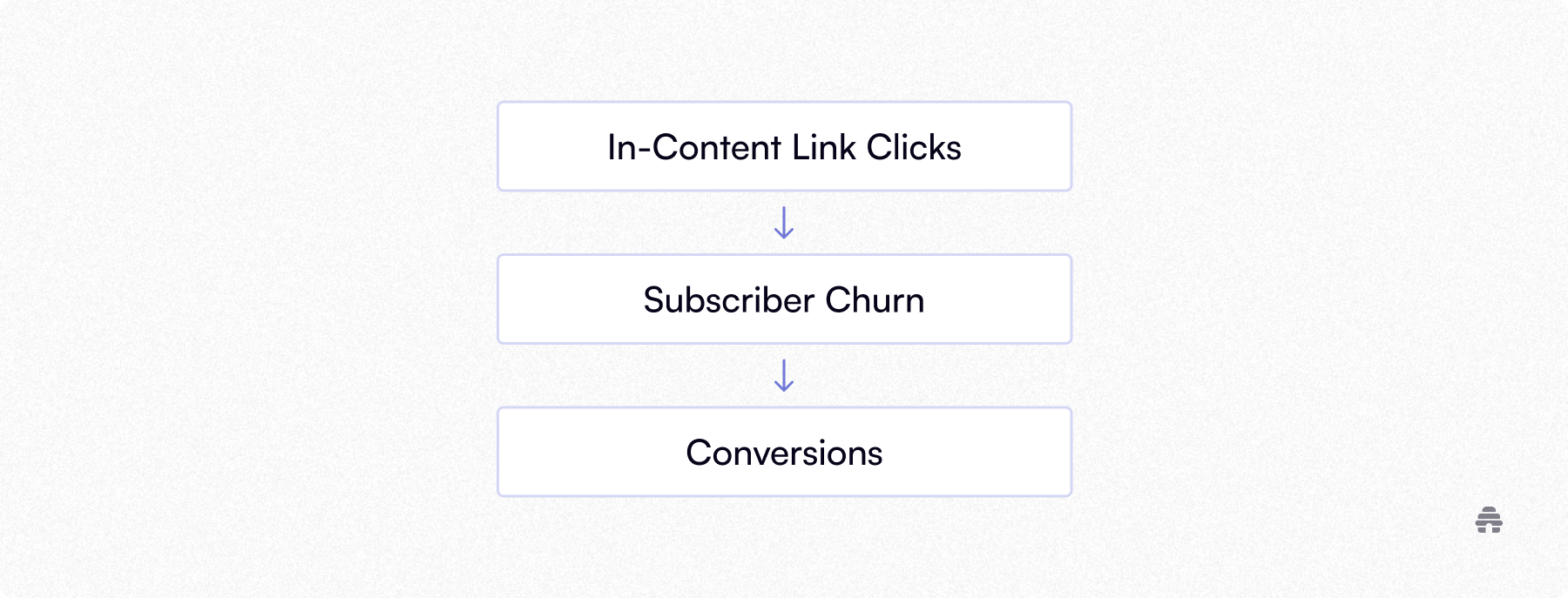
I've narrowed my focus to three key metrics that consistently indicate whether I'm winning or losing.
In-Content Link Clicks
Click-through rate (CTR) is my North Star metric. 🌟
Click-through rate shows me who cared enough to engage – not just the people who opened my email because the subject line looked interesting, but the ones who thought, "Okay, this is worth my time," and clicked through.
On beehiiv, I can see exactly which links people clicked, how many times, and who clicked them.
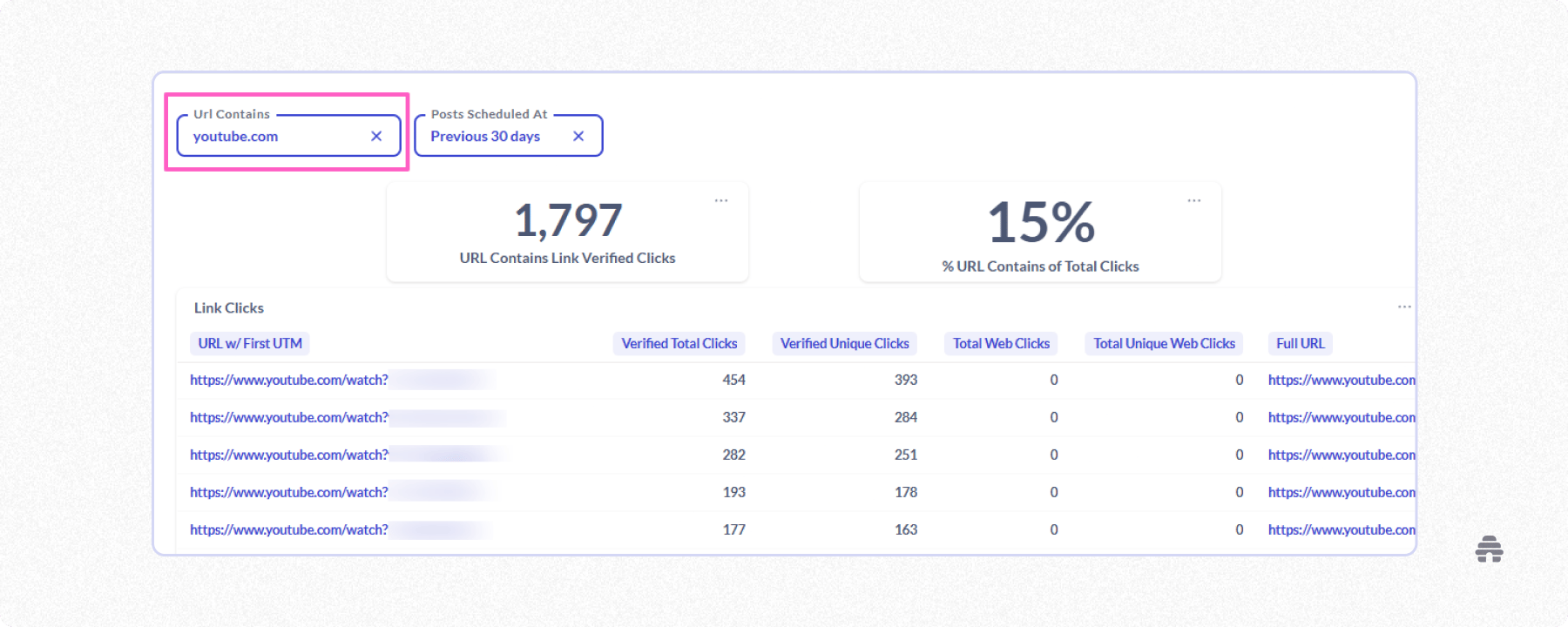
I trust click rate more than anything else because it can’t be faked by privacy features. Apple can preload my tracking pixels all they want, but they can’t fake a human choosing to click a link. That's a real signal.
Ryan Schneider, co-creator of Thrive25 newsletter, once praised beehiiv by saying, “We have good engagement with our subscribers, 50+% open rates, and excellent click-through rates. Sponsors actually approached us because they liked the quality of our content. beehiiv has been a driver for a lot of our organic growth.”
So what is a good CTR for email? Benchmarks vary, but here's the breakdown:

2-3% is solid.
5%+ is great.
10%+ means you're absolutely crushing it.
But here's what I do: I compare my CTR to my own historical performance, not industry averages. If my usual CTR is 4% and an email hits 8%? That's my audience telling me they want more of that type of content.
beehiiv’s click maps make this super easy. Every link is highlighted with its click count right there. I can instantly see which content resonated and which was ignored.
Clicks are the gateway to everything that matters.
No clicks = no conversions. No clicks = no revenue.
It all starts here.
Subscriber Churn

Growing your subscriber list doesn't mean your newsletter is successful. That’s a hard pill to swallow. 💊
If you're growing 1,000 subscribers per month but losing 900, you're barely treading water. And here's the kicker: you're probably losing your best, most engaged readers while gaining people who'll never open a single email.
Subscriber churn is one of the most overlooked metrics in email marketing tracking.
The real question isn't "How fast am I growing?" It's "How well am I keeping the people I already have?"
With beehiiv, I can track all of this: new subscribers, unsubscribes (and the reasons behind them), net growth after churn, and how long-term subscribers engage compared to new ones.
When my churn starts climbing, it means I'm sending at the wrong frequency, my content has drifted from what people signed up for, I'm not segmenting properly, or my subject lines are overpromising.

Here's what works to reduce churn:
Segment ruthlessly: Not everyone wants the same content. Send your superfans the premium stuff.
Run re-engagement campaigns: I send emails to anyone who hasn't clicked in 90+ days, asking, "Should I keep sending these?" Some wake up and re-engage. Others unsubscribe. Both outcomes clean my list.
Make leaving easy: If someone wants out, let them go. Dark patterns that make unsubscribing hard just breed resentment and spam complaints.
Conversions

Here's where everything comes together: conversions are the metric that pays your bills.
A conversion is any action you want subscribers to take, such as buying something, upgrading to a paid plan, registering for your webinar, replying to initiate a conversation, or sharing your content. It's the moment when engagement turns into something tangible.
This is where beehiiv really shines for me.
I can track conversions through custom links and see exactly which emails drove which actions, what the conversion rate was, and even the revenue tied to each one. No spreadsheet acrobatics required.
Let me give you an example: I sent a promotional email with three different calls to action (CTAs) for the same product: one text link in the content, one button in the middle of the email, and one in the P.S. section.
beehiiv's tracking revealed the P.S. converted at nearly double the rate of that in-content link. Now I know exactly where to put my CTAs in every future promo.
Conversion tracking answers the big question everyone asks: Is email marketing still effective?
The answer is yes… if you're tracking the right stuff and optimizing for actions that matter.
Here's something crucial I learned the hard way: not all conversions are created equal. A reply to your email might not generate immediate cash, but it builds relationships that compound over time. A share extends your reach. A webinar signup could lead to a sale six months down the line.
Track all of it. Just understand how each type contributes to your broader goals.
Metrics I Want You To Stop Obsessing Over
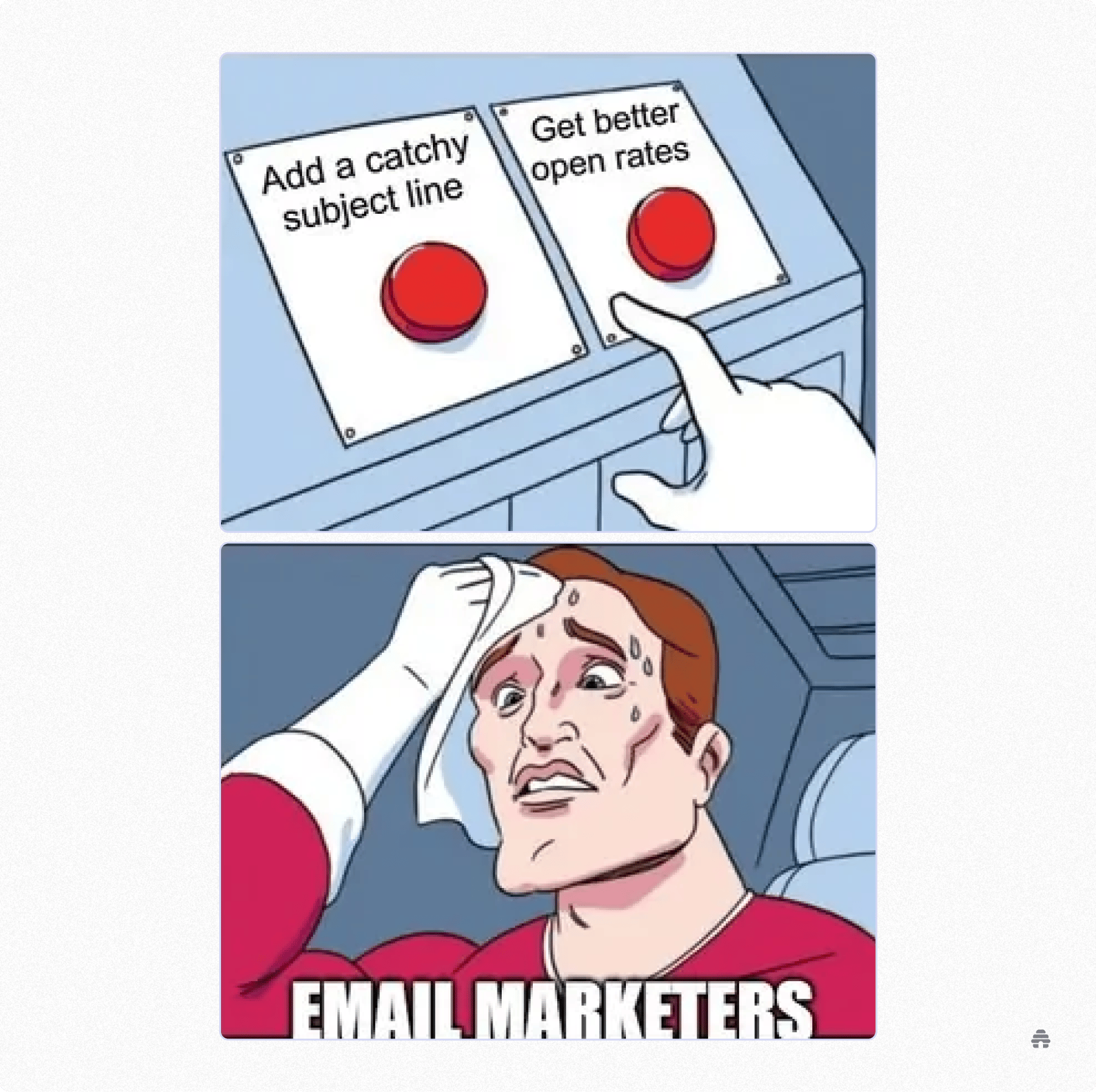
We need to have an intervention about some metrics that are consuming your brain space while providing absolutely nothing useful in return.
Open rates: The ghost metric of 2025
As we stated above, thanks to Apple's Mail Privacy Protection, open rates have become almost meaningless.
Are open rates completely dead? Not quite. If your open rate suddenly crashes from 40% to 15%, something's probably broken. However, you can no longer use open rates as your primary engagement metric.
The good news?
beehiiv automatically filters out inflated MPP data, so you get a cleaner picture of actual human opens versus robot preloads.
Subscriber count: The vanity metric we all love to brag about
Here's some tough love: your total subscriber count means almost nothing.
Would you rather have 50,000 subscribers with a 1% engagement rate (500 people actually reading) or 5,000 subscribers with a 20% engagement rate (1,000 people reading)?
The math is obvious. That 5,000-person list is objectively better: your readers are more engaged, more likely to buy from you, more beneficial for your deliverability, and significantly more profitable per subscriber.
What shift am I making in email marketing reporting? I’m focusing on engaged subscriber count: people who've opened or clicked in the last 30-90 days, instead of total list size.
This brings us to the 80/20 rule in email marketing: 80% of your results come from 20% of your efforts.
What does this mean in email marketing tracking?
20% of your subscribers drive 80% of your engagement.
20% of your emails generate 80% of your conversions.
20% of your subject lines account for 80% of your clicks.
Smarter Ways To Track Email Performance in beehiiv

Most ESPs drown you in data. beehiiv does the opposite: they focus on simplicity and accuracy over complexity and noise.
Real-Time Dashboards and Clean Analytics
When I log into beehiiv after hitting send, here's what I see:
Delivered count
Current open rate (with MPP filtering)
Click-through rate with visual breakdown
Unsubscribes or spam complaints
Revenue generated
That's it. No 20-tab dashboard labyrinth. Just the insights I need.
And here's the part I love: the dashboard updates in real-time. I can watch engagement roll in as it happens. This has saved me countless times: catching deliverability issues immediately, identifying which subject lines win in A/B tests, and determining when my audience is opening emails.
Moyo Sulyman, founder of AI with Vibes newsletter, once mentioned how his previous newsletter platform took three hours to update its analytics. That’s why he made the move to beehiiv. “With beehiiv, anytime I open it, within like two or three minutes, I see the new open right on my dashboard. It’s been fantastic,” he shared.
How beehiiv Filters Out Inflated MPP Data Automatically

Remember how Apple's privacy features made open rates unreliable?
beehiiv automatically detects and filters out those machine-generated opens, giving you a much cleaner picture of what's happening.
How?
beehiiv's system spots the signature patterns of automated preloading versus genuine human opens. When Apple's servers preload your email, the behavior looks different from when an actual person opens it in their inbox.
This doesn't make open rates perfect again (nothing can), but it makes them significantly more trustworthy. When I check my beehiiv dashboard, I know I'm seeing something closer to real human behavior, not just robots doing their thing.
Why does this matter?
You can trust your subject line tests again. If I A/B test two subject lines and Version A shows a 35% open rate while Version B shows a 25% open rate, I can feel confident that Version A actually resonated better. I'm not just seeing noise from which version hit more Apple Mail users.
Other platforms?
They either ignore the MPP problem entirely or make you figure it out manually. beehiiv handles it automatically in the background, so you can focus on creating great content instead of becoming a data scientist.
Understanding True Engagement Through Reader Behavior

Here's where email marketing tracking gets interesting: we're moving beyond simple opens and clicks into behavioral analytics that provide meaningful insights.
beehiiv tracks signals that most platforms ignore:
Reply rates: These indicate the number of subscribers who respond and initiate genuine conversations. This is, in fact, honestly, one of the strongest engagement signals you can receive. Someone who replies is infinitely more valuable than someone who just opens.
Sharing and forwarding: This happens when subscribers believe your content is good enough to pass along. It's both an engagement signal and a growth engine rolled into one.
Read depth: This tracks how far people scrolled when they opened your email in a browser. Did they read the whole thing or bail after the first paragraph?
These behavioral metrics are the next evolution of email marketing tracking. They're harder to fake, more closely tied to actual audience value, and significantly more resistant to privacy changes that disrupt traditional tracking.
This addresses the popular question: What are the 4 Ps of email marketing for a digital-first strategy?

Modern email focuses on four key aspects: Permission, Personalization, Performance, and Privacy. Your tracking needs to respect privacy while still giving you the performance data to personalize content for subscribers who've given you permission to reach them.
beehiiv gets this balance right. The platform isn't trying to track every possible data point; it's surfacing the signals that matter while respecting your subscribers' privacy.
Don’t just take it from me! David Thurin, founder of Movement by David newsletter, shared, “beehiiv’s analytics have been eye-opening. We now measure success not only by open and click rates but also by the quality of engagement—like replies, poll votes, and questions.”
Here's What I'm Focused on Going Forward

After all this talk about dashboards and data, let me get real about what I check when I log into beehiiv.
What’s the best email marketing tip I can give you?
Focus on metrics that align with your goals, not what some X guru says you should care about.
For me, the first number I look at is reply rate. Every meaningful opportunity from my newsletter – consulting clients, speaking gigs, partnerships, and actual friendships – started with someone hitting reply. Subscribers who reply become customers, collaborators, and evangelists.
The second number I look at is earned clicks. These are clicks on links that don't benefit me at all. When I share someone else's article or recommend a tool with zero affiliate relationship, and people click? That's pure trust.
And the third metric I check is week-over-week engagement consistency. I don't get excited when one email pops off. I care about whether my baseline is steady or climbing. That tells me I'm building something sustainable, not just getting lucky.
So what are KPIs in email marketing? KPIs (key performance indicators) are specific metrics that show progress toward your goals.
Here’s mine:
Reply rate = relationship KPI
Earned clicks = trust KPI
Week-over-week consistency = sustainability KPI
Conversion rate = business KPI
Your KPIs should be completely different if your goals are different, and that's the point.
I live by the 60/40 rule in email: Spend 60% of your time creating killer content and 40% analyzing what worked, so you can make the next one even better.
Here's what I'm doubling down on:
Keep creating first. I'll never sacrifice content quality just to optimize some metric. The work is the thing.
Track everything; change little. I monitor all my stats, but I only pivot when I see clear patterns, not random fluctuations.
Relationships > list size. I'd take 1,000 subscribers who know and trust me over 100,000 who ghost my emails every single time.
Trust unfakeable data. Clicks, replies, conversions: these show real engagement.
And if you're ready for a platform that makes email marketing tracking simple, accurate, and actually useful?
Try beehiiv today!
beehiiv was built for creators who want clean insights without the overwhelm. The dashboard shows you what matters, filters out the noise automatically, and gets out of your way, so you can focus on creating great content.
Now stop reading this and check your dashboard – not to obsess over numbers, but to find that one insight that'll make your next email even better than your last.
That's email marketing tracking done right.

Related Articles



The one place to build.
Get beehiiv updates delivered directly to your inbox.
By subscribing you agree to our Privacy Policy and provide consent to receive updates from our company.